Key Takeaways
- Fleet management solutions can connect driver compliance, vehicle inspections, maintenance workflows, mileage reporting, and operational records, but the regulatory requirements depend on the carrier, driver, vehicle, and route.
- Most interstate drivers who must maintain records of duty status must use a registered ELD unless a specific exception applies. Vehicle weight alone does not determine whether an ELD is required.
- For property-carrying operations, 49 CFR 396.11 generally requires a post-trip DVIR when a defect or deficiency is discovered or reported; the pre-trip inspection duty is addressed separately in 49 CFR 396.13.
- Driver qualification files are governed principally by 49 CFR 391.51, while CDL licensing requirements are addressed separately in Part 383.
- FMCSA’s Safety Measurement System uses 24 months of inspection and crash data to prioritize carriers for monitoring and intervention. It is not a single overall “CSA score” or a federal safety rating.
- When FMCSA removes an ELD from the registered list, carriers should follow the replacement deadline and temporary recordkeeping instructions in the notice for that specific device.
- A compliant ELD must support one complete roadside transfer option: telematics using both web services and email, or local transfer using both USB 2.0 and Bluetooth.
- Provider selection should also consider record access, malfunction support, vehicle compatibility, IFTA-supporting mileage tools, and clear procedures for edits and annotations.
Introduction
This fleet management solutions guide explains how ELD records, hours-of-service monitoring, vehicle inspections, driver qualification files, maintenance workflows, and IFTA-supporting mileage tools fit together. The right mix depends on the vehicles you operate, where they travel, and which federal, state, provincial, and tax requirements apply.
Connected tools can reduce duplicate data entry and make required records easier to retrieve, but software does not make every feature a federal requirement. ELD rules are in 49 CFR Part 395, vehicle inspection requirements are in Part 396, driver qualification files are addressed in Part 391, and IFTA is a separate fuel-tax program.
This guide separates those responsibilities, explains what a fleet platform can support, and provides practical questions to ask before choosing a provider. You can also review the Geosavi ELD platform or contact our team about a specific fleet.
What Are Fleet Solutions and Why Do They Matter?
Fleet solutions are the systems, tools, and processes used to manage vehicles, drivers, compliance records, maintenance, routing, and reporting. Some functions are legally required for particular operations; others improve visibility or reduce administrative work.
For example, an ELD can automatically record driving time and other required data for drivers subject to the ELD rule. A fleet platform may also organize DVIRs, driver qualification reminders, maintenance records, and mileage by jurisdiction. Those functions can share data, but they remain subject to different rules and retention periods.
ELD applicability generally follows whether a driver must prepare records of duty status under 49 CFR 395.8, subject to the exceptions in that section. IFTA applies separately to qualified motor vehicles operating in multiple member jurisdictions. Driver qualification and vehicle inspection duties also depend on the operation, so a carrier should map requirements before selecting software.
The practical value of a connected system is consistent data: dispatch can see available driving time, maintenance staff can review reported defects, and the back office can retrieve records without rebuilding them from separate files.
What Role Does ELD Compliance Play in Fleet Solutions?
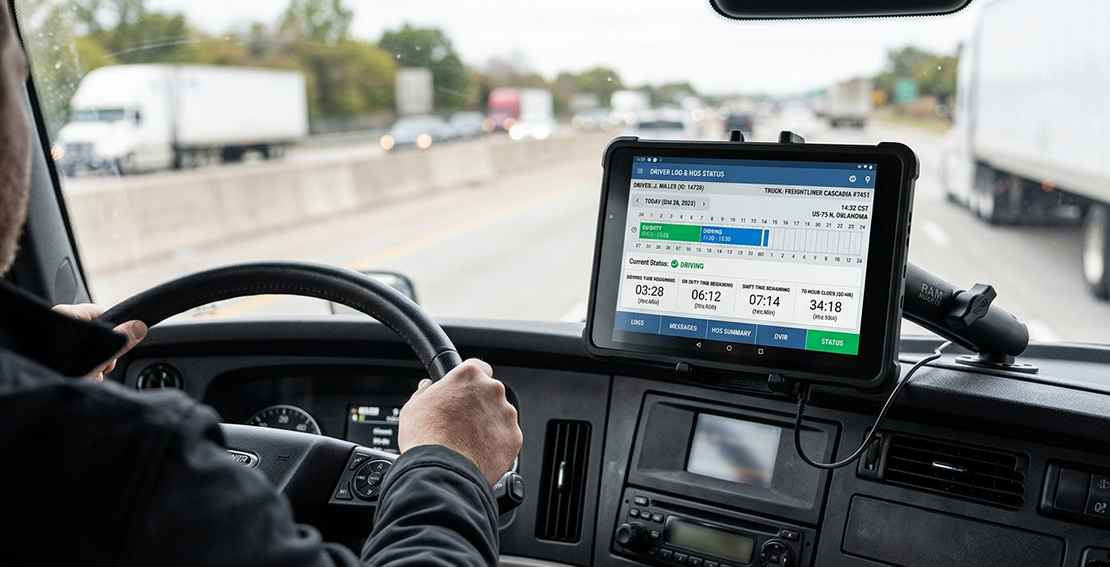
An ELD is a core compliance tool for most interstate drivers who are required to maintain records of duty status. The rule is not triggered by a 10,001-pound vehicle threshold alone: the driver must be operating a covered commercial motor vehicle, be subject to the HOS recordkeeping rules, and not qualify for an applicable exception.
Short-haul drivers who meet every condition of 49 CFR 395.1(e) may use time records instead of RODS. Separate ELD exceptions apply to drivers who use paper RODS on no more than eight days in any rolling 30-day period, qualifying driveaway-towaway operations, and vehicles manufactured before model year 2000.
Carriers should verify the exact device and model on the FMCSA Registered ELDs list. If FMCSA removes a device, follow the specific removal notice: discontinue using the revoked device as directed, use the permitted temporary recordkeeping method, and replace it by the stated deadline. Recent notices have often allowed up to 60 days, but the notice controls.
Civil penalties depend on the violation and the current inflation-adjusted schedule in Appendix B to Part 386. Fixed dollar amounts become stale, so this guide does not present one penalty figure as the automatic result for every HOS or ELD violation.
How Does Hours-of-Service Tracking Work in a Fleet Solution?
Hours-of-service tracking records driving, on-duty, sleeper-berth, and off-duty time. For property-carrying drivers subject to 49 CFR 395.3, the common limits include 11 hours of driving after 10 consecutive hours off duty, no driving after the end of a 14-hour window, a 30-minute break after eight cumulative hours of driving without a qualifying interruption, and applicable 60- or 70-hour limits.
An ELD synchronizes with the vehicle engine to record required data such as vehicle motion, engine power status, miles, and engine hours. Fleet dashboards can use that information to warn drivers and dispatchers about approaching limits, but carriers remain responsible for accurate records, proper annotations, and lawful dispatch decisions.
The FMCSA Safety Measurement System uses applicable violations recorded during inspections, together with crash and investigation data, to evaluate carrier performance. The system generally considers 24 months of on-road data and gives greater weight to recent events. It does not create one overall “CSA score” and does not replace a federal safety rating.
For related detail, see Geosavi’s guide to how ELD violations affect carrier and driver records.

What Is a DVIR and Why Is It Part of Fleet Management?
A Driver Vehicle Inspection Report documents defects or deficiencies discovered by or reported to a driver. For property-carrying vehicles covered by 49 CFR 396.11, a driver generally prepares the report at the completion of the day’s work when a defect or deficiency is discovered or reported. A no-defect post-trip report is generally not required, and the section includes specified exceptions.
The driver’s pre-trip duty is separate. Under 49 CFR 396.13, the driver must be satisfied that the vehicle is in safe operating condition and review the previous DVIR when required. When a DVIR lists a safety-related defect, the carrier must repair it or certify that repair is unnecessary before the vehicle is operated again, and required reports and certifications are retained for three months.
A digital DVIR workflow can route a reported defect to maintenance staff and preserve the inspection and repair trail. Integration with an ELD or fleet platform can make those records easier to find, but DVIRs remain Part 396 records rather than ELD records under Part 395.
Geosavi’s guide to ELD and DVIR records explains how the two workflows can support one another.
What Is IFTA Reporting and Does Your Fleet Need It?
IFTA stands for the International Fuel Tax Agreement. It generally applies when a qualified motor vehicle travels in two or more member jurisdictions. Applicability depends on the vehicle and operation, so crossing a state line does not by itself establish that every vehicle is subject to IFTA.
The way IFTA works is that your fleet pays fuel taxes to your base state, which then distributes the correct share to each state or province where your vehicles traveled. Without automated tracking, this means manually rebuilding miles driven per jurisdiction each quarter, cross-referencing fuel receipts, and filing a return that has to be accurate enough to survive an audit. That process alone takes hours every quarter and leaves plenty of room for errors that can follow you into an audit.
A fleet platform may use ELD or telematics mileage and location data to support IFTA calculations. Fleets should confirm that the system captures the jurisdiction and distance information their base jurisdiction requires, preserves source records, and allows mileage totals to be reconciled with fuel purchases before filing.
For owner-operators and small fleets, IFTA can feel like one more burden on top of everything else compliance-related. Connecting it to your ELD platform removes most of the manual work. If you have questions about how the Geosavi platform handles multi-state mileage and IFTA, our answers to common compliance questions cover the most frequent ones.
How Does a Fleet Solution Handle Driver Qualification and Safety Records?
Driver qualification files document whether a driver meets applicable federal qualification requirements. Under 49 CFR 391.51, a motor carrier must maintain a file for each driver it employs.
Depending on the driver, the file includes the employment application, motor vehicle records, road-test certificate or accepted equivalent, annual driving-record review, medical qualification documentation, and any applicable variance or Skill Performance Evaluation certificate. CDL licensing and endorsements are governed separately under Part 383.
A fleet platform can track expiration dates and organize records, but it does not change the carrier’s underlying qualification duties. Keeping files current and retrievable helps the carrier respond efficiently during an investigation or compliance review.
What Makes a Fleet Solution Right for a Small Fleet or Owner-Operator?
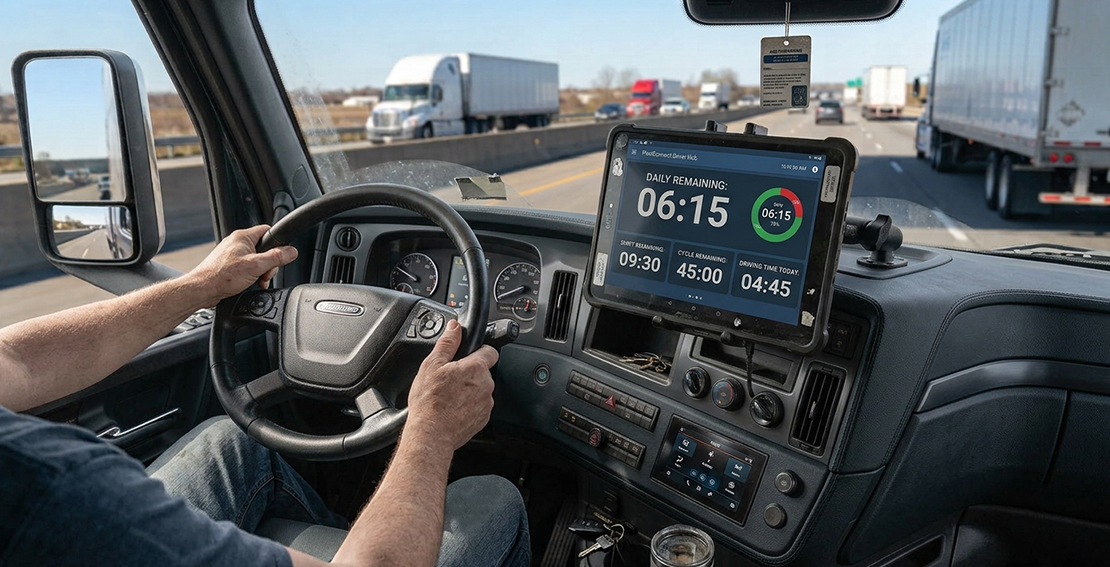
Small fleets need the same accuracy as larger fleets, but not necessarily the same feature set. Start with the rules that apply to the actual drivers, vehicles, routes, and jurisdictions, then choose tools that reduce administrative work without adding unnecessary complexity.
Important considerations include whether the exact ELD model is currently registered, whether its engine interface matches the vehicles, how drivers transfer records at roadside, how records are retrieved, and what support is available during a malfunction. Fleets operating in Canada should also confirm that the platform supports the applicable Canadian HOS rules.
Hardware durability claims should be supported by the provider’s test documentation rather than a vague “certified” label. Ask which environmental tests were performed, which product configuration was tested, and whether the documentation applies to the hardware being purchased.
You can compare Geosavi options with the pricing calculator and review guides covering box-truck ELD requirements and local-driver recordkeeping.
How Can Fleet Solutions Support FMCSA Safety Monitoring?
FMCSA’s Safety Measurement System organizes inspection, crash, and investigation data into Behavior Analysis and Safety Improvement Categories, or BASICs. It uses those results to prioritize carriers for monitoring and possible intervention. SMS results are not a single overall “CSA score” and are not the same as a safety rating.
Applicable inspection violations are weighted by severity and time. Recent events receive more weight, while inspections without violations can improve the data used in a BASIC. A carrier’s on-road performance generally reflects the previous 24 months.
A fleet solution can support better record review by showing available driving time, unresolved events, inspection defects, and recurring exceptions. It cannot guarantee a particular SMS result, insurance price, or enforcement outcome.
When FMCSA-maintained safety data appears incomplete or incorrect, carriers and drivers can submit supporting information through the DataQs system. A request initiates review; it does not automatically change the record.
What Should You Look for in a Fleet Management Platform?
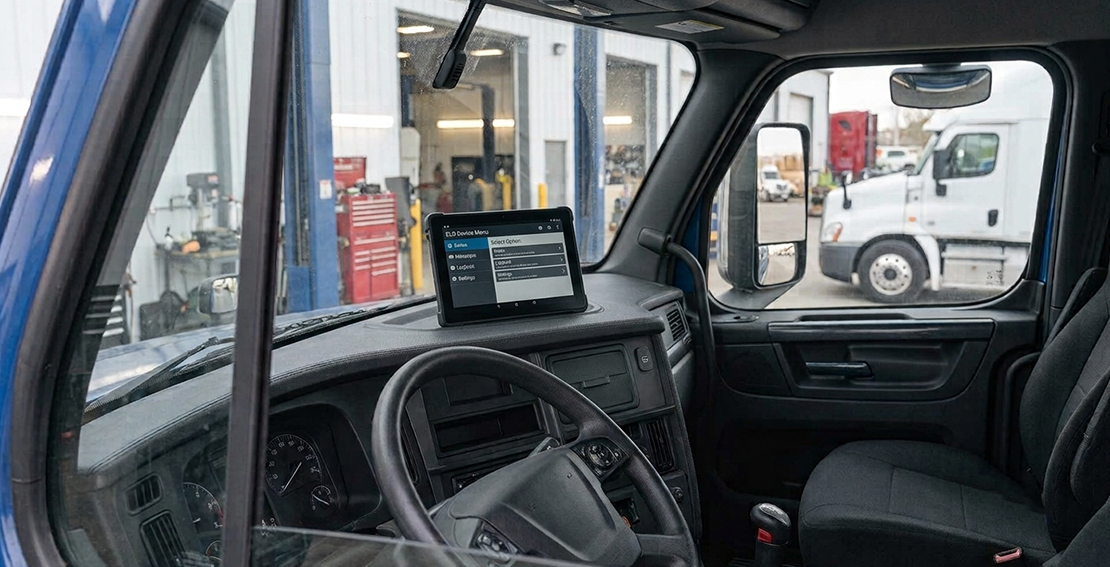
Use the following checklist to compare platforms against your actual compliance and operating needs.
| Feature | Why It Matters | What to Verify |
|---|---|---|
| ELD registration | Covered drivers must use a registered device unless an exception applies | Exact model and identifier on FMCSA’s current list |
| Vehicle compatibility | Engine synchronization and cab hardware must work with each vehicle | Supported interfaces, cables, mounting, and installation requirements |
| Roadside transfer | Required ELD records must be transferable or displayable for inspection | One complete option: web services plus email, or USB 2.0 plus Bluetooth |
| Record access | Carriers must retain and retrieve required records | Six-month ELD/RODS access, separate backup, and usable exports |
| DVIR workflow | Reported defects require review and, when necessary, corrective action | Defect reporting, repair certification, and three-month retention |
| IFTA support | Qualified multi-jurisdiction fleets need defensible mileage records | Jurisdiction mileage, source data, reconciliation, and export options |
| Edits and annotations | Original ELD records must be preserved and changes documented | Driver review, annotations, audit trail, and original record preservation |
| Malfunction support | Drivers and carriers have specific duties when required HOS data cannot be recorded | 24-hour notice workflow, record reconstruction guidance, and replacement process |
| Support and terms | Response time and contract terms affect operations | Support hours, escalation path, pricing, retention after cancellation, and return terms |
Questions to Ask Before Choosing Fleet Management Solutions
Is the exact ELD model currently registered, and how are removals handled?
Confirm the model and identifier on FMCSA’s current list. Ask how the provider monitors removal notices, alerts customers, preserves historical records, and helps fleets meet the deadline in the notice for the affected device.
Which HOS rules and operating regions does the platform support?
Confirm the rulesets that apply to your routes, including U.S. and Canadian support when relevant. Ask how drivers select or transition between rules and how the platform handles exceptions.
What happens if the ELD malfunctions during a run?
Under 49 CFR 395.34, the driver must note the malfunction and notify the carrier in writing within 24 hours. If required records cannot be retrieved, the driver must reconstruct the current day and previous seven days and continue using paper graph-grid logs or another compliant method until the ELD is serviced. The carrier generally has eight days to correct, repair, replace, or service the ELD unless FMCSA grants an extension.
How does the platform handle log edits and annotations?
Under 49 CFR 395.30, edits and additions must be annotated and the original record preserved. Carrier-proposed changes require driver review and confirmation. Ask to see the audit trail rather than relying on a general editing claim.
Which complete roadside data-transfer option does the ELD support?
A compliant ELD must support telematics using both web services and email, or local transfer using both USB 2.0 and Bluetooth. Providers may support additional methods. Drivers must also be able to present the required information on a display or printout.
How does the platform support IFTA mileage records?
Ask how jurisdiction crossings and distance are recorded, how mileage is reconciled with fuel purchases, which reports can be exported, and how long source records remain accessible.
Can the carrier retrieve required records without opening a support ticket?
Confirm that authorized carrier staff can retrieve records by driver, vehicle, and date range for the required retention period, including after hardware replacement or an account change.
What support, pricing, and return terms apply?
Compare support hours, escalation procedures, replacement logistics, subscription terms, historical-data access, and the exact scope of any guarantee. Geosavi’s support information and pricing calculator provide starting points for that review.
FAQ: ELD Compliance and Fleet Management
What is an ELD and does every fleet need one?
An ELD synchronizes with a vehicle engine and records required HOS information. Most drivers who must maintain RODS under 49 CFR 395.8 must use a registered ELD unless an exception applies. Fleet size or vehicle weight alone does not answer the question. Geosavi’s guide to what an ELD is and how it works provides additional background.
What happens if an ELD is removed from FMCSA’s registered list?
Review the notice for that device, stop using it as directed, follow the temporary recordkeeping instructions, and replace it by the stated deadline. Recent notices have often allowed up to 60 days, but fleets should not assume every notice has the same dates or instructions.
How do HOS violations affect a carrier’s SMS results?
Applicable violations recorded during roadside inspections can affect the HOS Compliance BASIC. SMS uses 24 months of on-road data and weights recent events more heavily. It helps FMCSA prioritize carriers for monitoring or intervention; it is not a single overall score or a safety rating.
What is the difference between a DVIR and an ELD?
An ELD records HOS information under Part 395. A DVIR documents defects or deficiencies under Part 396. For covered property-carrying operations, a post-trip DVIR is generally required when a defect is discovered or reported; the pre-trip vehicle-safety duty is addressed separately in 49 CFR 396.13.
Can local drivers who stay near their reporting location avoid using an ELD?
A driver who meets every condition of an applicable short-haul exception may use the required time records instead of RODS and therefore may not need an ELD for those operations. Eligibility depends on the complete facts, not distance alone. See the guide to local-driver ELD requirements.
What does IFTA have to do with fleet management?
IFTA is a separate fuel-tax program for qualified motor vehicles operating in multiple member jurisdictions. ELD or telematics data can support jurisdiction-mileage calculations, but fleets must confirm that the data and reports meet their base jurisdiction’s requirements.
How long must ELD records be retained?
Under 49 CFR 395.8(k)(1), carriers must retain RODS and required supporting documents for six months from receipt. ELD records require a separate backup for six months, and original information must remain preserved when records are edited.
FAQ: Choosing the Right Fleet Platform
How do I know whether a platform covers what my fleet needs?
Map the rules and workflows that apply to your drivers, vehicles, routes, and jurisdictions. Then verify each function in a demonstration, including ELD registration, HOS rules, record retrieval, roadside transfer, DVIR handling, mileage reporting, and malfunction procedures.
What is the risk of using an ELD that is not currently registered?
A covered driver generally must use an ELD model on FMCSA’s registered list. If a model is removed, the carrier should follow the specific removal notice. Continued use after the stated deadline may lead to citations and out-of-service action under the applicable rules and CVSA criteria.
Does fleet size change the compliance requirements?
Fleet size does not by itself create or remove a requirement, but the operation does. Applicability depends on the vehicle, driver, route, cargo, HOS recordkeeping status, and relevant exceptions. Larger fleets usually need more centralized reporting and exception management.
What support should a provider offer during an ELD problem?
Support should help the driver identify whether the issue is a diagnostic event or malfunction, retrieve available records, follow the 24-hour notice and reconstruction steps when applicable, and arrange repair or replacement within the required timeframe.
How should I evaluate tablet or in-cab hardware?
Confirm compatibility, mounting, power, operating-temperature range, vibration testing, warranty, and replacement procedures. Ask for the actual test documentation behind durability claims rather than relying only on a certification label. Geosavi’s guide to tablets for ELD compliance covers additional considerations.
Can one platform support short-haul and long-haul operations?
It can if the platform supports the applicable rules and lets the carrier maintain the correct records for each operation. Confirm how it handles short-haul time records, full RODS, exceptions, and any U.S.-Canada rules your routes require.
What is the first step in choosing a compliant ELD?
Determine which drivers must use an ELD and which qualify for an exception. Then verify the exact device on FMCSA’s list, confirm vehicle compatibility and data-transfer methods, and review record access, support, pricing, and contract terms. You can also contact Geosavi to discuss a specific setup.
Ready to Choose a Fleet Management Solution?
Fleet management solutions work best when they connect the records and workflows a carrier actually needs without blurring the rules that govern them. ELD compliance, HOS monitoring, DVIRs, driver qualification files, maintenance, and IFTA reporting are related operational responsibilities, but they are not interchangeable requirements.
CVSA’s final 2026 International Roadcheck results reinforce the value of accurate records: inspectors issued 146 out-of-service orders for ELD tampering, while U.S. inspectors reported 883 hours-of-service and 214 false-record-of-duty-status out-of-service violations. See CVSA’s final results for the complete data.
Before selecting a platform, confirm regulatory applicability, the exact registered ELD model, vehicle compatibility, record retention, roadside transfer, and provider support. You can explore the Geosavi ELD platform, compare options with the pricing calculator, or contact the Geosavi team.