Key Takeaways
- Local driving does not automatically remove federal ELD requirements. A route within one state can still be interstate commerce when the freight is part of an interstate movement.
- A driver who satisfies a short-haul exception under 49 CFR § 395.1(e) does not prepare RODS or need an ELD for that qualifying day, but the carrier must keep accurate time records for six months.
- An air mile is a nautical mile, not a statute mile or road mile. A 150-air-mile radius equals approximately 172.6 statute miles.
- Sections 395.1(e)(1) and (e)(2) both use a 150-air-mile radius, but their driver and duty-period conditions differ.
- A driver who needs RODS on no more than eight days in any rolling 30-day period may use manual RODS instead of an ELD. On the ninth RODS day, the driver is subject to the ELD rule unless another exception applies.
- Short-haul status is evaluated from the driver’s actual operation and records. Dispatch plans should identify a possible non-qualifying day before the shift begins.
Who Has to Use an ELD?
The federal ELD rule generally applies to a motor carrier subject to Part 395 when its driver must prepare a record of duty status under 49 CFR § 395.8. A driver using a valid short-haul time-record exception does not prepare RODS and therefore does not need an ELD for that qualifying day.
The analysis begins before the label “local”:
- Is the transportation interstate commerce?
- Is the vehicle or combination a commercial motor vehicle under the applicable federal definition?
- Is the driver subject to Part 395?
- Must the driver prepare RODS for this day?
- If RODS are required, does a manual-record ELD exception apply?
For property transportation in interstate commerce, a vehicle or combination can meet the federal CMV definition at 10,001 pounds or more based on the greater of rated or actual weight. Passenger use and placarded hazardous-material transportation provide separate triggers. A CDL is not required for every CMV, so a non-CDL driver can still be subject to HOS and ELD rules.

How Does the Short-Haul Exception Work?
The short-haul provisions in 49 CFR § 395.1(e) except qualifying drivers from §§ 395.8 and 395.11. A property-carrying driver who qualifies under § 395.1(e)(1) or (e)(2) is also excepted from the 30-minute break requirement in § 395.3(a)(3)(ii).
This is a time-record exception, not an exemption from every safety rule. The driver remains subject to the driving limits and other requirements that the applicable short-haul paragraph does not remove.
Short-haul qualification is based on the actual day. A driver can qualify on one day and need RODS on another. The carrier should document the applicable paragraph, normal work reporting location, radius check, report and release times, total on-duty time, and rolling RODS-day count.
What Is the Difference Between § 395.1(e)(1) and § 395.1(e)(2)?
Section 395.1(e)(1): 150-air-mile radius driver
This provision can apply to property- or passenger-carrying CMV drivers, including drivers who need a CDL. The driver must:
- operate within a 150-air-mile radius of the normal work reporting location;
- return to that location and, except for a driver-salesperson, be released from work within 14 consecutive hours;
- receive at least 10 consecutive hours off duty between property-carrying duty periods, or at least eight hours for passenger-carrying operations; and
- have the required carrier time records maintained for six months.
For a property-carrying driver, the 11-hour driving limit and 60/70-hour limits continue to apply. The provision removes RODS and the 30-minute break requirement when all conditions are satisfied.
Section 395.1(e)(2): non-CDL property-carrying driver
This separate provision applies only when the property-carrying CMV does not require a CDL under Part 383. The driver must operate within 150 air miles, return to the normal work reporting location at the end of each duty tour, and have the required carrier time records maintained.
The rule limits driving, not total on-duty work, as follows:
- the driver may not drive after the 14th hour after coming on duty on five days of any seven consecutive days; and
- the driver may not drive after the 16th hour after coming on duty on two days of any seven consecutive days.
Calling this a general “16-hour workday” is misleading. The provision controls when driving may occur and has specific frequency limits.
What Is a 150-Air-Mile Radius?
An air mile is a nautical mile of 6,076 feet, not a statute mile of 5,280 feet. FMCSA converts 150 air miles to approximately 172.6 statute miles. The radius is measured from the driver’s normal work reporting location to the farthest operating point, not by adding odometer miles along the route.
A 172.6-statute-mile road trip is not automatically inside the radius because road distance and radial distance measure different things. Carriers should plot each route’s farthest point from the normal work reporting location using a consistent geographic method and retain the route or location evidence supporting the determination.
The normal work reporting location is the location where the driver reports for work. A carrier should not change that location on paper merely to expand the short-haul area; the records and actual operation must agree.
Short-Haul and RODS Days Compared
| Requirement | Qualifying short-haul day | Day requiring RODS |
|---|---|---|
| RODS | Not required under the applicable § 395.1(e) paragraph | Required under § 395.8 |
| ELD | Not required for the qualifying day | Required unless a § 395.8(a)(1)(ii) exception applies |
| Carrier records | Short-haul time records retained six months | RODS and supporting documents retained as required |
| 30-minute break | Excepted for qualifying property drivers under (e)(1) or (e)(2) | Applicable after eight cumulative driving hours without a qualifying interruption |
| 11-hour driving limit | Still applies to property-carrying drivers | Applies |
| 60/70-hour limit | Still applies | Applies |
| Written DVIR | Separate vehicle-condition rule; not created by ELD status | Same separate rule |

What Happens When a Day Stops Qualifying?
A route can change after dispatch because of an added stop, detention, weather, or an inability to return to the normal work reporting location within the applicable period. When the short-haul conditions are not satisfied, the driver needs a complete and accurate RODS for that day unless another exception applies.
The safest process is to identify a likely non-qualifying day before dispatch and begin with the required recordkeeping method. If circumstances change unexpectedly, the carrier and driver should create the required RODS for the entire duty day using accurate time, location, dispatch, and supporting-document information. Do not invent duty-status entries or use unsupported estimates simply to make the record appear complete.
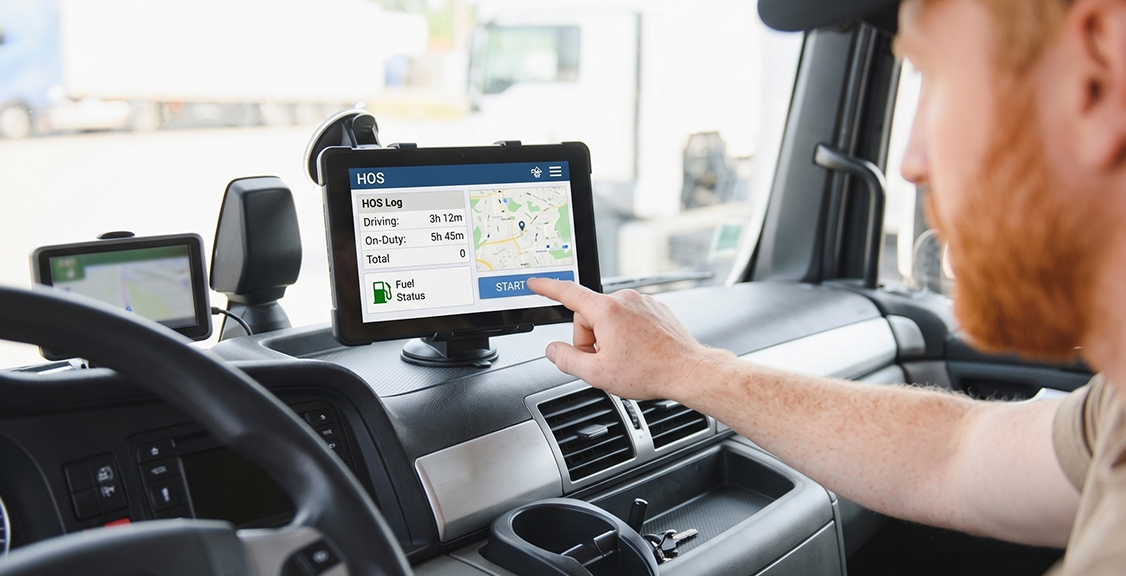
Whether the driver may use manual RODS depends on the rolling 30-day count. A driver already subject to the ELD rule should use the assigned registered ELD; the paper-log exception for occasional RODS use is not available after the driver exceeds its threshold.
How Does the Eight-Days-in-30 ELD Exception Work?
Under § 395.8(a)(1)(ii)(A)(1), a carrier may permit manual RODS when a driver’s operation requires RODS on no more than eight days within any 30-day period. The 30-day period is rolling and is not limited to a calendar month.
Count every day on which that driver is required to complete RODS. If a driver requires RODS on a ninth day within the rolling period, the driver is subject to the ELD rule on that day unless another ELD exception applies. A later qualifying short-haul day still does not require RODS merely because the driver used an ELD on another day.
A practical tracker should show:
- the date of each RODS-required day;
- why short-haul qualification did not apply;
- the rolling 30-day total before dispatch;
- whether manual RODS or a registered ELD was used; and
- who verified the count and record.
Drivers and carriers should retain evidence supporting the exception because authorized safety officials may inspect and copy relevant motor-carrier records.
Which HOS Requirements Still Apply?
For property-carrying drivers subject to § 395.3, short-haul status does not remove:
- the 11-hour driving limit after 10 consecutive hours off duty;
- the applicable driving-window restriction under (e)(1) or (e)(2);
- the 60-hour/7-day or 70-hour/8-day limit;
- the prohibition on operating while ill or fatigued; or
- vehicle inspection, maintenance, qualification, drug-and-alcohol, and other rules that apply independently.
A qualifying short-haul property driver is excepted from the 30-minute break requirement, but the carrier may still schedule breaks for safety, fatigue management, or employment-law reasons.
Does short-haul status change DVIR requirements?
No. ELD and RODS status does not determine whether a written DVIR is required. Under § 396.13, a driver must be satisfied that the vehicle is in safe operating condition before driving. Under § 396.11, a property-carrying driver generally prepares a written post-trip report when a defect or deficiency is discovered or reported. A no-defect written report is generally not required for property operations. Passenger, intermodal, driveaway-towaway, and one-vehicle operations require separate review.
What Records Must the Carrier Keep?
For § 395.1(e)(1), the carrier must retain accurate and true records for six months showing:
- the time the driver reports for duty each day;
- the total number of hours the driver is on duty each day;
- the time the driver is released from duty each day; and
- for a driver used for the first time or intermittently, the total time for the preceding seven days required by § 395.8(j)(2).
Section 395.1(e)(2) requires the same core time records for qualifying non-CDL property drivers. The prior-seven-day entry is not a daily field for every established driver; it applies to first-time or intermittent use as specified by the rule.
Records should identify the driver and normal work reporting location and be retrievable for inspection. A payroll record can support the requirement only if it contains the necessary accurate information. Do not rely on an ELD dashboard or time clock without confirming that its records cover every required field and retention period.
Do Federal Rules Apply to a Route That Stays in One State?
They can. Under § 390.5T, interstate commerce includes transportation between two points in one state when it is part of trade, traffic, or transportation originating or terminating outside the state or the United States.
A local delivery leg from an in-state warehouse may therefore be interstate commerce when the shipment is continuing an interstate movement. Examine shipping documents, customer arrangements, and the intended movement of the freight rather than using state-line crossing as the only test.
If the operation is truly intrastate, consult the responsible state agency. State HOS, short-haul, log, and ELD rules may incorporate federal language or use different standards.
What Other ELD Exceptions May Apply?
Pre-2000 vehicle or engine
Section 395.8(a)(1)(ii)(A)(4) permits manual records for a vehicle manufactured before model year 2000. Model year 2000 is not “before model year 2000.” FMCSA’s October 2, 2026 guidance also addresses vehicles with engines predating model year 2000 and advises carriers to retain documentation of motor and engine changes at the principal place of business.
Driveaway-towaway operations
Section 395.8(a)(1)(ii) permits manual RODS in specified driveaway-towaway operations, including when the vehicle being driven is part of the shipment delivered. Transporting ordinary cargo in a truck is not driveaway-towaway merely because the trip is local.
Agricultural and covered farm vehicle provisions
Section 395.1(k) addresses specified agricultural transportation within 150 air miles during planting and harvesting periods determined by each state. Section 395.1(s) separately covers qualifying covered farm vehicles. Verify the commodity, source, radius, season, vehicle status, and whether the operation is for hire.
Utility service vehicles
Section 395.1(n) removes Part 395 requirements for a driver of a vehicle that meets the regulatory definition of a utility service vehicle. Carrying tools for a utility customer does not automatically satisfy that definition.
How Should Local Fleets Manage ELD Readiness?
A local fleet does not need an ELD because of an unsupported claim that FMCSA is targeting its vehicle class. It needs an ELD when the driver’s actual operation and RODS frequency make the federal rule applicable.
Review these controls:
- map each normal work reporting location and its 150-air-mile radius;
- identify routes likely to exceed the radius or return-time conditions;
- track each driver’s RODS days in every rolling 30-day period;
- verify the exact ELD model and software version on the FMCSA registered ELD list before use;
- train drivers on roadside display or transfer, annotations, certifications, and malfunctions; and
- audit short-haul time records for completeness and six-month retention.
A carrier may choose to use an ELD for operational consistency even when a driver is not required to use one. If it does, the account and workflow should correctly identify exempt operation and should not create false duty-status records.
Local Driver ELD Requirements: Frequently Asked Questions
Can a driver be short haul one day and require RODS the next?
Yes. Short-haul qualification is evaluated from the actual operation for each day. The carrier should plan and document the recordkeeping method before dispatch whenever possible.
Does crossing a state line prevent short-haul qualification?
No. Section 395.1(e) is based on radius, reporting-location, duty-period, vehicle, and record conditions, not a ban on crossing state lines. The federal provisions apply within interstate commerce.
Does a qualifying short-haul driver need an ELD in the vehicle?
No federal ELD is required for a day when the driver validly uses the short-haul exception and does not need RODS. A carrier may still install or voluntarily use a device under an accurate exempt-driver process.
What happens on the ninth RODS day in 30?
The driver is subject to the ELD rule unless another exception applies. Count RODS-required days before dispatch rather than discovering the threshold after the trip begins.
Can manual logs be used for occasional non-short-haul days?
Yes, when the driver needs RODS on no more than eight days in any rolling 30-day period and no other fact changes the analysis. The manual RODS must still comply with § 395.8.
Does short haul eliminate the 30-minute break?
A property-carrying driver who qualifies under § 395.1(e)(1) or (e)(2) is excepted from the federal 30-minute break requirement. Other HOS limits and employer or state requirements may still apply.
Must every local property driver complete written pre- and post-trip DVIRs?
No. The driver must be satisfied that the vehicle is safe before driving. A written property-carrier post-trip DVIR is generally required when a defect or deficiency is discovered or reported, not as a universal no-defect report for every trip.
What proves short-haul compliance at an inspection?
The carrier’s accurate time records, normal work reporting location, route or location evidence, dispatch and shipping documents, and the driver’s actual operation should support the claimed paragraph. The exact records requested depend on the inspection or investigation.
Conclusion
Local drivers do not automatically need an ELD, and they are not automatically exempt. The answer depends on interstate-commerce status, CMV applicability, the correct short-haul paragraph, the day’s actual operation, carrier time records, and the driver’s rolling count of RODS-required days.
Build the decision into dispatch: verify the radius, return plan, available hours, vehicle class, and 30-day count before the driver leaves. Keep six months of complete short-haul records, and use a registered ELD when the driver crosses the regulatory threshold. That is more reliable than treating “local driver” as a permanent compliance category.