Key Takeaways
- FMCSA had removed 67 devices from its registered ELD list as of May 7, 2026. A further 12 devices were removed on May 20, 2026, bringing the reported total since January 2025 to 79.
- Carriers generally get 60 days from a removal announcement before enforcement applies. After that window, using a removed device can lead to a citation, and potentially an out-of-service order at roadside, under 49 CFR 395.8(a)(1).
- CVSA’s 2026 International Roadcheck named ELD tampering and log integrity a primary focus area. CVSA recorded 58,382 falsification violations in 2024.
- Civil penalties for HOS violations can reach up to $19,246 per violation for motor carriers, as a maximum adjusted annually for inflation under 49 CFR Appendix B to Part 386.
- HOS violations rose from 410,000 in 2023 to more than 500,000 in 2025, according to RigDig data cited by Overdrive.
- Devices are removed for specific technical reasons, including recording errors, transfer failures, and lapsed manufacturer support, not at random.
- FMCSA recommends carriers check the registered list on an ongoing basis rather than a single time, since removals have occurred more than once through 2025 and 2026.
Introduction
You bought a compliant ELD, installed it, and moved on with running your fleet. That’s the normal order of things. But the FMCSA registered ELD list isn’t a one-time checkbox. It changes throughout the year, and a device that passed inspection last spring can be pulled from the list months later, without always reaching the driver or fleet manager in time.
A removed device doesn’t necessarily stop working. But once the replacement window closes, a driver using it can be cited, and in some cases placed out of service, even if the device worked correctly the day before. For an owner-operator, that can mean a truck sitting at the scale instead of making miles. For a fleet manager, it can mean several trucks affected at once if the same device was purchased across the fleet.
This isn’t a rare edge case, since FMCSA has removed dozens of devices from the registered list since January 2025 alone, across a range of manufacturers and hardware types. Some of those removals made trucking news. Many did not get much attention outside FMCSA’s own postings, which is exactly why relying on trucking news alone to catch a removal is risky.
You’ll find out why FMCSA pulls devices from the list, how often a check actually needs to happen, and the right way to search so you don’t miss a removal that applies to you. You’ll also see what to do if your device shows up on a removal notice, what’s actually at stake if that check gets skipped, and the questions worth asking before you commit to any ELD provider.
If you want to check where your current setup stands right now, pull up your ELD platform and hardware and compare it against what FMCSA has on file. If anything looks uncertain along the way, our team is a call away at (800) 261-4361.
What Is the FMCSA Registered ELD List?
The FMCSA registered ELD list is the official record of electronic logging devices that manufacturers have certified as meeting the technical requirements under Appendix A to Subpart B of Part 395. FMCSA requires carriers to use a device that appears on this list. A device that has been removed no longer meets that requirement, regardless of how it performed in the past.
FMCSA does not lab-test devices before adding them to the list. Manufacturers self-certify that their device meets the technical standard, and FMCSA adds it to the registry on that basis. There’s no independent government inspection of the hardware or software before it goes live in trucks across the country.
This self-certification model is part of why the list changes over time. FMCSA can remove a device later if it finds the device no longer meets the standard, whether that’s a hardware issue, a software issue, or a manufacturer that stops supporting its own product. Sometimes this comes from a formal compliance review. Other times it follows complaints, audit findings, or the manufacturer itself going out of business or discontinuing the product line.
Based on FMCSA’s published removal notices, 67 devices had been removed as of May 7, 2026. A further 12 were removed on May 20, 2026, including 888 ELD, Dragon ELD, Action ELD, Mondo ELD HOS, First ELD, First ELD V2.0, MTL ELD, USPower ELD, Sam Freight ELD, DSGELOGS, Cobra ELD, and GT USA ELOGS. That brought the reported total since January 2025 to 79. Carriers running any of the 12 devices removed on May 20 reportedly have until July 20, 2026 to switch to a device that is still registered.
This isn’t a static list you check once at purchase. It’s closer to a rolling registry that shifts as FMCSA reviews devices already in use across thousands of fleets.
Why Do Devices Get Removed From the FMCSA List?
Devices get removed when FMCSA determines they no longer meet the technical requirements for accurate recording, data transfer, or tamper resistance. This can happen months or years after a device was first approved, which is part of why an older, familiar device isn’t automatically safer than a newer one.
FMCSA’s May 7, 2026 figure of 67 devices included Safe ELD and MyLogs ELD, removed that same date, with carriers given until July 7, 2026 to replace them. The 12 additional removals on May 20 brought the reported running total to 79. These are two points in the same ongoing count, not two separate totals, and both are part of a pattern that has continued through 2025 and into 2026.
A few common triggers show up repeatedly in FMCSA’s removal notices:
- Recording accuracy problems: The device fails to properly log engine hours, movement, or duty status changes, sometimes due to a firmware bug that surfaces only under specific conditions.
- Transfer failures: The device can’t produce a usable output for an inspector during a roadside data transfer, whether by Bluetooth, USB, or web services, even if it looks like it’s working on the driver’s end.
- Tamper resistance gaps: FMCSA finds the device can be edited or manipulated in ways the technical standard is meant to prevent.
- Manufacturer abandonment: The company that made the device stops supporting it, stops issuing software updates, or goes out of business entirely, leaving the device unmaintained even though it’s still installed in trucks.
As FMCSA notes in its ELD FAQ, the safest approach is to check the list on an ongoing basis rather than assume a device stays compliant once it passes certification. That’s worth taking seriously, since none of the reasons above are visible to a driver just by looking at the screen. The device can look and feel completely normal right up until the day it’s delisted.
How Often Should You Check the FMCSA Registered ELD List?
A monthly check is a reasonable habit for most fleets, with an added check whenever you hear about a removal in trucking news or from your own ELD provider. Waiting a full year between checks leaves room for a device to fall out of compliance without you knowing, especially given how many removals have already happened in 2025 and 2026 alone.
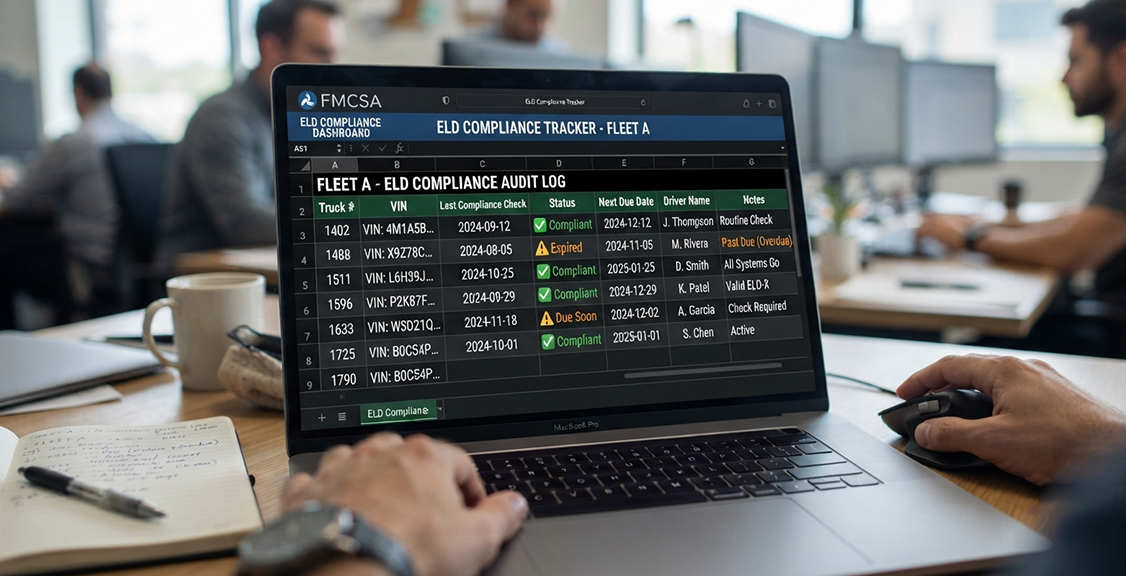
Owner-operators running one truck can usually manage a quick look at the start of each month, since it takes a minute to search your device name on the FMCSA registered ELD list. Fleet managers running multiple trucks, especially with different device models across the fleet, benefit from checking more often and keeping a simple log of when each device was last confirmed.
Treat the list the way you’d treat an insurance renewal or a CDL expiration date, something checked on a set schedule rather than only after something goes wrong. A recurring calendar reminder, tied to the first of each month, is usually all it takes to build the habit.
How Do You Search the FMCSA Registered ELD List Correctly?
Searching the list sounds simple, but a rushed search is one of the easiest ways to miss a removal. A few steps make the check more reliable.
Search by exact model, not brand: Devices are listed by specific model name and number, not by manufacturer alone. A search for a broad brand name can return other models from the same company that are still fine, while missing the one model that was actually pulled.
Check the manufacturer name too: Some model names are reused or are similar across different manufacturers. Confirming both the model and the manufacturer avoids matching the wrong listing.
Note the date of your search: The list changes over time, so a search from six months ago doesn’t confirm anything about today. Save the date alongside the result.
Keep a record: A screenshot or saved search result, dated and filed, turns a one-time check into a piece of documentation you can point to later if a question ever comes up about when compliance was last confirmed.
Repeat for every distinct device model in the fleet: If different trucks run different ELD models, each one needs its own search. Confirming one model doesn’t confirm the others.
What Happens If Your ELD Gets Removed From the List?
If your device gets removed, FMCSA generally gives 60 days from the removal announcement to switch to a registered device before enforcement applies. After that window closes, using the removed device can result in a citation under 49 CFR 395.8(a)(1) and, potentially, an out-of-service order at the next inspection.
During that window, drivers can typically keep using paper logs or the removed device’s basic functions while the fleet transitions. That gives some breathing room, but the clock still runs on a fixed schedule rather than pausing for a busy season or a slow procurement process.
A practical way to think about this timeline:
- Day 1, removal is announced. This is the moment the 60-day window starts.
- Days 1 through 60, the transition period. Drivers can continue operating, generally with paper logs as a fallback, while a replacement device is sourced and installed.
- Day 61 onward, the removed device is treated as noncompliant. A citation and an out-of-service order become possible at any inspection from this point.
Treat a removal notice the way you’d treat a recall notice on a truck part: something that needs a plan within days, not months. Waiting until week seven of a sixty-day window to start looking at replacement options leaves very little margin if there’s a shipping delay or an installation backlog.
If your current provider stops supporting your device or shows up on a removal list, our support team can walk through what a transition looks like, including how records move over and what your drivers need to know before their next trip.
How Can You Check If Your Device Is Still Registered?
You confirm registration status by searching your exact device model and manufacturer name on the FMCSA registered ELD list, since devices are listed by model number, not by brand alone. A general brand search can miss a specific model that was removed while other models from the same company stay listed.
Save the exact search result or a screenshot with the date, especially if you manage more than one truck. That gives you something concrete to reference if a question about compliance timing ever comes up during an audit or an inspection.
Local drivers should follow the same habit as long haul drivers, since local exemptions don’t remove the registration requirement for whatever device is actually installed, as the local drivers ELD guide explains in more detail. An exemption from needing an ELD at all is a different question from whether an installed device is still registered.
What Are the Risks of Ignoring List Changes?
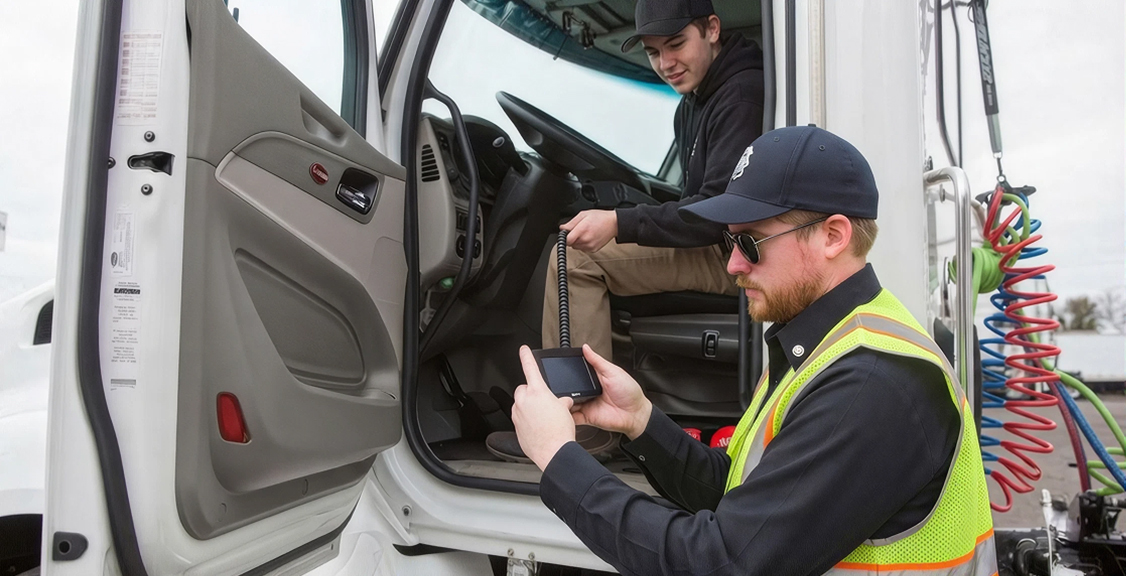
Ignoring list changes risks an out-of-service order, a citation, and a mark on your safety record that can follow the driver and the carrier through FMCSA’s Safety Measurement System. That risk exists regardless of whether the driver did anything wrong personally, since the citation is about the device, not driving behavior.
Civil penalties for HOS violations carry meaningful maximum fines for both motor carriers and drivers, adjusted annually for inflation under the FMCSA penalty schedule. Knowing falsification carries a separate, higher maximum penalty, though that category applies to intentional record manipulation rather than simply operating a device that has been delisted.
Beyond the direct penalty, there’s a downstream effect worth understanding. A citation tied to a delisted device can affect a carrier’s standing in FMCSA’s compliance scoring, which in turn can influence how often that carrier’s trucks get pulled for inspection going forward. One overlooked device, in other words, can have an effect that outlasts the single citation itself.
The stakes are higher this year, since CVSA’s 2026 Roadcheck announcement named ELD tampering and log integrity a primary inspection focus. An inspector already looking closely at log integrity during this kind of focused enforcement period is arguably more likely to catch a device compliance gap than one running a routine, general inspection.
Checking Frequency Compared
| Checking Habit | How It Works | Risk Level | Best Fit |
|---|---|---|---|
| Never checking | Assumes the device stays compliant forever | High | Not recommended for any fleet |
| Checking only after a violation | Reacts to a problem instead of preventing one | High | Fleets with no current process |
| Checking once a year | Catches major changes but misses mid-year removals | Medium-high | Very small, single-truck operations |
| Checking quarterly | Catches most removal announcements within a season | Medium | Small fleets with a few trucks |
| Checking monthly | Catches removals close to when they happen | Low | Most owner-operators and small fleets |
| Checking monthly plus alerts from your provider | Adds a second layer so nothing slips through | Lowest | Fleets wanting the most coverage with the least manual work |
Questions to Ask Before Choosing or Switching ELD Providers
A checking habit only helps if the underlying device and provider are actually reliable. These are worth asking before committing to any vendor.
Does the provider confirm their device is currently on the FMCSA registered ELD list?
A provider should be able to point to their exact listing without hesitation. If they can’t answer clearly, treat that as a warning sign.
What happens to your logs if the provider’s device gets removed from the list?
Ask specifically how records transfer if you ever need to switch devices, and whether historical logs remain accessible afterward.
How does the provider notify you of a removal or compliance issue?
Some providers send direct alerts by email or text. Others expect the carrier to check on their own. That difference changes how much you need to rely on your own monthly search habit.
What support is available if your device is flagged during a roadside inspection?
Inspections don’t wait for business hours, so ask whether support is available around the clock, and how quickly a driver could expect a callback in that situation.
Does the device work for both long haul and local routes your fleet runs?
Some devices are built with one type of route in mind. If you run a mix, as covered in the box truck ELD guide, confirm the device fits both.
How does the provider handle log editing and annotation requirements?
Ask how edits are recorded and whether the original data stays preserved, since 49 CFR 395.30(f) requires the original record to remain intact even after an edit.
What is the actual cost over time, not just the upfront price?
A cheap device that gets pulled from the list mid-contract can cost more in downtime than a higher upfront cost with a stable provider. The price calculator is a quick way to compare full costs.
Does the provider have a track record of staying on the registered list without gaps?
Ask how long the provider has held current registration without a removal, and whether that history is something they can actually point to.
Common Questions
About ELDs and Road Safety
Is a device that was compliant last year automatically still compliant this year?
No. FMCSA can remove a device from the registered list at any time if it no longer meets technical requirements, regardless of how long it was previously approved.
Can a driver be cited for using a device that was removed from the list without knowing?
Yes, generally. The citation applies to the device being unregistered, not to whether the driver was personally aware of the removal.
Does CVSA’s Roadcheck focus on ELD tampering affect regular inspections too?
Yes. Roadcheck is a specific multi-day event, but log integrity checks happen at inspections year-round, and the focus area for a given Roadcheck often reflects what inspectors are watching for more broadly that year.
Do local drivers need to worry about the registered list the same way long haul drivers do?
Yes. The registration requirement applies regardless of route type, covered in more detail in the local drivers log books guide.
Does a removed device stop working immediately?
Not usually. The device often keeps functioning mechanically, but its records are no longer considered valid for compliance once the replacement window closes.
Does a removed device affect logs that were already recorded before the removal?
Generally, records made while the device was still registered aren’t automatically invalidated. The concern is primarily forward-looking, about continuing to use the device after it’s been delisted.
About Choosing the Right ELD Provider
How do you know if your specific ELD model is affected by a recent removal?
Search your exact model and manufacturer name on the FMCSA registered ELD list rather than relying on the brand name alone.
Should you switch providers every time you hear about an unrelated removal in the news?
No, only if your specific device is affected. A removal news story about a different manufacturer’s device is a reminder to check your own listing, not a reason to switch on its own.
What should a fleet manager document when checking the list each month?
The date checked, the device model confirmed, and a screenshot or saved search result.
Is 24/7 support actually necessary for ELD compliance issues?
For most fleets, yes, since roadside inspections happen at all hours, not just during a standard business day.
Does switching ELD providers disrupt existing driver records?
It depends on the provider and how the transition is handled. Ask this directly before switching so you know what to expect for your specific drivers and routes.
What role does DVIR play alongside ELD compliance?
DVIR and ELD compliance work together to build a fuller compliance record. Our DVIR integration guide walks through it in more detail.
How long should a fleet keep records of past ELD list checks?
There’s no single fixed rule for this specific record, but keeping it as long as you retain other compliance documentation is a reasonable practice, since it can help demonstrate an ongoing, good-faith checking habit if that ever comes up.
Conclusion
The FMCSA registered ELD list isn’t something to check once and forget. Devices get removed throughout the year, and the window between a removal announcement and enforcement is generally 60 days. A monthly check, paired with attention to removal announcements as they happen, helps keep your fleet clear of a citation or out-of-service order that has nothing to do with your driving.
CVSA has named log integrity a focus for 2026, and HOS violations have climbed in recent years. None of that means every fleet is at risk, but it does mean the cost of skipping a routine check has gone up. Building the check into a fixed monthly habit is a small effort that can prevent a real disruption down the road.
If you want to talk through where your fleet stands right now, get in touch with us or call (800) 261-4361.