Key Takeaways
- 49 CFR 395.30(c)(3) permits a driving-time record assigned to the wrong co-driver to be reassigned between team drivers when both were listed in each other’s records for that period; each co-driver must confirm the change. Claiming time recorded under the Unidentified Driver profile is addressed separately by 49 CFR 395.32.
- Under 49 CFR 395.32, movement without a logged-in driver is recorded under the Unidentified Driver profile. The driver must review prompted unassigned time, and the carrier must review it and either assign it to the appropriate driver or annotate why it remains unassigned. The regulation does not set an eight-day reassignment deadline.
- Every reassignment requires a specific written annotation explaining why the segment was not initially recorded under the correct profile, as required by 49 CFR 395.30(c)(2) and confirmed through FMCSA guidance on ELD editing.
- Under 49 CFR 395.30(d), a carrier may propose an edit only after the driver submits the record. The driver must confirm or reject the proposal and recertify and resubmit the record for the change to take effect.
- The original record must be preserved exactly as captured, with both the pre-correction and post-correction versions retained, as required by 49 CFR 395.30(f).
- A correct reassignment keeps the original ELD event and the documented correction available for review; an unexplained or inaccurate assignment can undermine the reliability of a team’s hours-of-service records.
- An unresolved unidentified segment may prompt questions during an inspection, but the applicable finding depends on the complete record and circumstances. Review the segment promptly and document an accurate explanation rather than assuming every open segment is automatically a violation.
- Before dispatch, check the device against the current FMCSA registered ELD list and any device-specific removal notice. A removed device’s replacement instructions and deadline depend on the applicable FMCSA notice.
| Table of Contents |
|---|
| What Reassignment Means |
| Unidentified Driving Builds |
| What 395.30 Requires |
| Common Errors |
| Roadside Inspections |
| Single vs. Co-Driver |
| Before You Start |
| FAQs |
Introduction
When one truck carries two drivers, the ELD has to know which person is behind the wheel at every moment of the run. A missed login at a shift change, a sleeper berth status entered under the wrong profile, or a carrier-proposed edit that bypasses the driver’s confirmation can turn a clean trip into a compliance problem before the truck reaches its next stop.
Co-driver operations carry a level of recordkeeping complexity that catches a lot of fleets off guard, particularly smaller teams that treat the profile swap as something the back office will sort out later. That assumption does not hold at a roadside inspection. When a DOT officer requests the ELD data, unidentified driving is right there in the record. It does not disappear after the trip ends, and it does not resolve itself because the carrier intended to fix it.
We put this together to walk you through what the regulation actually requires under 49 CFR Part 395 HOS rules, where the most common errors occur in co-driver operations, and what your drivers need to know before they reach the roadside. We also cover what carriers can and cannot do when correcting records after the fact, because carrier-proposed edits, unidentified driving, and transfers between co-drivers follow different requirements.
If you are setting up co-driver operations for the first time or reviewing a process that keeps producing unidentified driving segments, our team is available at (800) 261-4361 to walk through how the Geosavi Compliance Now ELD handles the co-driver workflow.
What Is Co-Driver Log Reassignment and Why Does It Matter?
Co-driver log reassignment can mean two different corrections: a driver assumes time recorded under the Unidentified Driver profile under 49 CFR 395.32, or driving time assigned to the wrong team driver is transferred between co-drivers under 49 CFR 395.30(c)(3). Both require an accurate record, but the second is allowed only when both drivers were listed in each other’s records as co-drivers for that period and each confirms the change.
When a commercial motor vehicle moves and no driver is logged in as the active operator, the ELD captures that motion in a separate unidentified driver segment rather than leaving a gap in the data. That segment stays in the system and is visible to any officer who requests the ELD records at a roadside inspection or a compliance review. The driver who actually drove must assume the attributable time when prompted; the carrier must review unidentified records and either assign them appropriately or annotate why they remain unassigned. For more on that separate process, see our unidentified driving guide.
Editing a log addresses a different situation: correcting a record that was already assigned to a specific driver, such as changing an off-duty entry to on-duty not driving when a driver forgot to update their status at a fuel stop. Section 395.30 governs edits and team-driver transfers, while section 395.32 addresses records created without a logged-in driver. The ELD must retain the original event and document the correction in either case.
For a transfer of time recorded under the wrong team driver’s account, both drivers must have been recorded as each other’s co-driver during that period and each must confirm the change. For unidentified time, the driver reviews and assumes time that belongs to them; the carrier also has a duty to review and resolve or explain the unassigned record. A carrier may propose edits to submitted records, but a proposed change does not take effect without the driver’s confirmation and recertification. See our ELD annotation guide for the general edit process.
How Does Unidentified Driving Build Up During a Run?
Unidentified driving accumulates whenever a CMV moves above the ELD’s motion threshold and no driver profile is logged in as the active operator. The ELD records that motion automatically and stores it in an unidentified driver segment rather than assigning it to either co-driver.
The most common cause in team operations is a missed profile swap at a shift change. The outgoing driver logs out or switches to sleeper berth status, the incoming driver gets behind the wheel, and the truck moves before the login is complete. Movement without a logged-in driver can create an unidentified driving event; the ELD records it as soon as the vehicle is in motion under 49 CFR 395.32(a). The ELD does not pause for the driver to finish logging in before it starts recording.
Other patterns that generate unidentified driving include a driver who ends their shift without confirming the co-driver has logged in to take over, a device restart that clears the active session without either driver noticing, and pre-trip yard movements where drivers assume the ELD is not yet required to be tracking. Under 49 CFR Part 395 HOS rules, the ELD must record non-authenticated CMV operation under the Unidentified Driver profile when the vehicle is in motion.
Under 49 CFR 395.32(c), the carrier must review unidentified driving and either assign it to the appropriate driver or annotate why it remains unassigned. There is no eight-day resolution deadline in that section. Prompt review is still prudent because drivers and dispatchers can verify the circumstances more reliably while the trip is recent.
What Does 49 CFR 395.30 Actually Require for Co-Driver Records?
Section 395.30 sets the rules for ELD edits, team-driver transfers, carrier-proposed changes, and preservation of original data. Section 395.32 separately governs unidentified driving. Keeping those processes distinct makes corrections easier to document accurately.
The Driver Reassignment Rule
Under 49 CFR 395.30(c)(3) and FMCSA’s team-driver guidance, driving time assigned to the wrong co-driver may be transferred when both drivers were listed in each other’s records as co-drivers for that period. Each co-driver must confirm the correction for it to take effect. Time recorded under the Unidentified Driver profile follows 49 CFR 395.32 instead: the driver assumes time that belongs to them when prompted, while the carrier reviews the record and assigns it or explains why it remains unassigned.
The Carrier Edit Prohibition
Under 49 CFR 395.30(d), a carrier may request an edit only after the driver has submitted the record. The driver must confirm or reject the proposal, make the appropriate correction, and recertify and resubmit the record before a carrier-proposed change takes effect. This is not a blanket ban on carrier participation. Separately, 49 CFR 395.32(c) requires the carrier to review unidentified driving and either assign it to the appropriate driver or annotate why it remains unassigned.
The Original Record Preservation Rule
Under 49 CFR 395.30(f), the ELD system must retain the original record exactly as it was captured, alongside the corrected version. An officer can request both at a roadside inspection or during a compliance review. If the corrected record shows a segment that was reassigned, the original unidentified entry and the annotation explaining the change must both be present and accessible. A system that overwrites the original rather than preserving it alongside the correction does not meet the technical standard at 49 CFR Appendix A to Subpart B of Part 395.
What Are the Most Common Co-Driver ELD Errors?
Most co-driver ELD errors trace back to the same root cause: drivers treating the profile swap as a lower priority than the physical task of switching seats and getting the truck rolling. The errors that result are consistent and, with a clear written procedure, almost entirely preventable.
Missed profile swap at shift change
A missed handoff can create either unidentified time, when no driver is logged in, or time assigned to the outgoing driver, when that profile remains active. Those are different corrections under 49 CFR 395.32 and 395.30(c)(3), respectively. The practical safeguard is to confirm that the incoming driver is recognized as the operator before the vehicle moves.
Logging in under the wrong co-driver designation
An ELD may use primary-driver and co-driver roles to associate motion with the correct account. If the wrong driver remains designated as the operator, driving time may be recorded under that person’s account rather than as unidentified time. A transfer between team drivers is allowed only if both were listed as each other’s co-driver for that period, and each confirms the change under 49 CFR 395.30(c)(3).
Carrier editing records before driver certification
Back-office staff may review unidentified driving and propose or route a supported correction, but they should not treat a proposal as a completed change to a driver’s submitted log. Under 49 CFR 395.30(d), a carrier-proposed edit to a submitted record requires the driver’s confirmation or rejection and, when accepted, recertification and resubmission. Under 49 CFR 395.32(c), the carrier must also review unidentified driving and assign it appropriately or annotate why it remains unassigned.
Generic or missing annotations
Under 49 CFR 395.30(c)(2), every edit and every reassignment must include a written annotation explaining the reason for the change. A driver who leaves the annotation field blank, enters a single word, or uses a phrase that does not describe the specific situation is producing a deficient record. An unexplained correction may make the record difficult to verify during an inspection. Document the actual reason for the change and retain the original ELD event.
Assuming unidentified driving is hidden from inspectors
Unidentified driving records must be retained by the carrier for at least six months and made available during a safety inspection, audit, or investigation under 49 CFR 395.32(c). An ELD supports either the complete telematics transfer option (web services and email) or the complete local option (USB 2.0 and Bluetooth), as explained by FMCSA’s data-transfer guidance. It does not reset at the end of a trip, it does not resolve automatically when the carrier fails to act, and it does not disappear because time has passed. A driver who plans to fix unidentified segments after getting home may find those segments reviewed at the next inspection before they have the opportunity to correct them.
What Happens at a Roadside Inspection When Co-Driver Records Have Gaps?
At a roadside inspection, an unresolved unidentified driving segment is a documented gap in the ELD record, and an officer reviewing the data will see it and ask the driver to account for it on the spot.
A driver should review prompted unidentified time and assume only the events they actually drove. If a correction is made during an inspection, the officer evaluates the full record and circumstances; a last-minute edit does not guarantee that a citation will be avoided. Correcting errors promptly, with a truthful annotation where required, gives the team a clearer record to present.
An unidentified segment can affect the accuracy of each driver’s hours-of-service record, but it does not by itself establish which driver operated the vehicle or that an HOS limit was exceeded. The carrier and drivers should compare the event with dispatch, vehicle, and trip information, then resolve it under 49 CFR 395.32. Any enforcement finding depends on the facts and the applicable regulation; this article does not assign a fixed penalty to an open segment.
Regardless of an inspection campaign’s focus, a team should be able to show which driver operated during each period, how an error was corrected, and why any unidentified time remains unassigned. FMCSA’s rules for original-record preservation and unidentified-driving review apply throughout the year.
The preparation your drivers need is straightforward. Before any inspection, both drivers should be able to identify their own driving periods, review prompted unidentified time, and produce their records and supported correction history when requested. A driver who can explain accurate, annotated records is better prepared than one relying on an unverified future correction. For a broader look at how driver records connect to vehicle inspections, our article on ELD and DVIR integration covers how inspection findings flow into compliance records.
How Does Co-Driver Log Setup Differ From Single-Driver Operations?
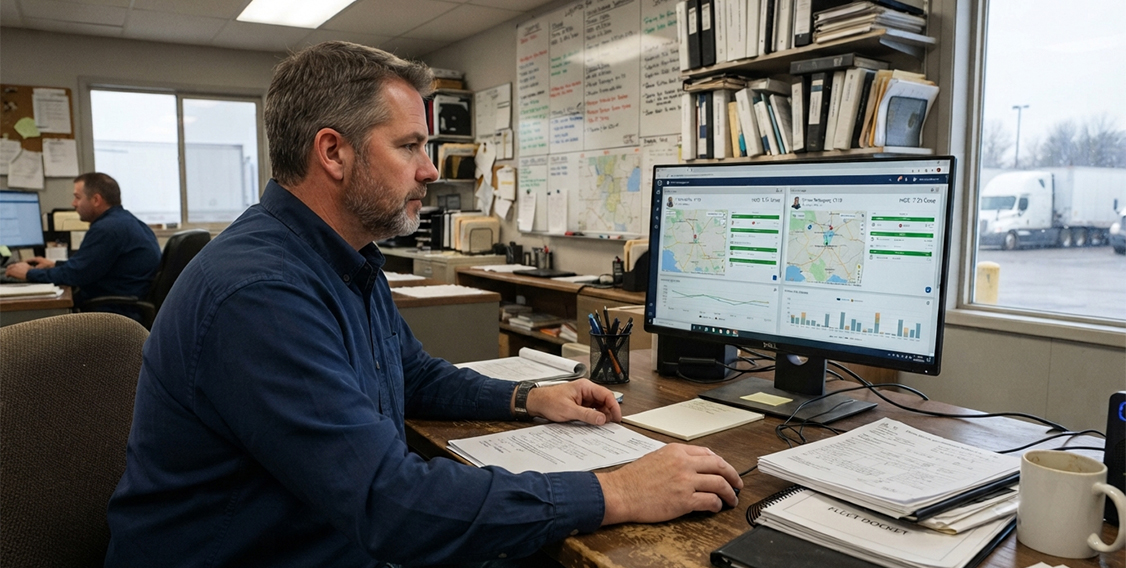
A co-driver operation is not two single-driver setups running on the same device. It introduces configuration steps, duty status interactions, and record management obligations that do not exist when one driver operates alone. The table below shows where the two setups diverge in ways that carry direct compliance consequences.
| Feature | Single-Driver Setup | Co-Driver Setup |
|---|---|---|
| Active profile requirement | One driver logged in whenever the vehicle moves | Each driver has an account; the actual operator must be identified for each driving period |
| Unidentified driving risk | Occurs when the driver forgets to log in | Higher risk at every shift change without a fixed written swap procedure |
| Log certification | Driver certifies their own records only | Each driver certifies their own record; both confirm a supported transfer between team drivers |
| Carrier edit rules | Carrier may propose edits after driver submission; driver confirmation and recertification are required | Same carrier-edit rule applies; transfers between co-drivers also require both drivers’ confirmation |
| Annotation requirement | Required for any edit under 49 CFR 395.30(c)(2) | Same requirement applies to every reassignment in addition to standard edits |
| Sleeper berth tracking | May apply when the vehicle has a qualifying sleeper berth | Sleeper berth hours must be assigned to the correct driver’s profile; errors affect both drivers’ HOS calculations |
| HOS clock tracking | 11/14-hour clock and 60/70-hour weekly limit for one driver | Same clocks tracked independently per driver; an error in one profile can corrupt the other’s available driving time |
| Roadside review scope | Officer reviews one driver’s duty status graph | Records for both logged-in co-drivers can be displayed; relevant unidentified events remain reviewable |
The sleeper berth row deserves a closer look. A non-driving team member must record their actual duty status; being a co-driver does not automatically mean sleeper-berth time. Property-carrier rest and sleeper-berth provisions are addressed in 49 CFR 395.3 and 395.1(g). If a status or driving event is assigned to the wrong account, correct it using the ELD’s supported process and document the change. A transfer of driving time between co-drivers has the additional mutual-confirmation conditions in 49 CFR 395.30(c)(3).
Understanding which vehicles in a mixed fleet are subject to these rules is also part of managing co-driver compliance correctly. Our box truck ELD guide covers the weight and configuration thresholds that determine which vehicles require an ELD in the first place.
Questions to Ask Before Setting Up Co-Driver Logs
Does our ELD support two simultaneous active driver profiles?
Confirm that each team driver can log in, view and certify their own records, and that the device identifies the operator correctly at each handoff. Ask the provider how it handles a transfer of mistakenly assigned driving time between listed co-drivers, including each driver’s required confirmation, and what happens after a device restart.
Do we have a written procedure for the profile swap at every shift change?
A verbal agreement between drivers is not a procedure. You need a written sequence that both drivers follow every time: the outgoing driver selects their actual non-driving duty status or logs out, the incoming driver completes their login and confirms the ELD recognizes them as the active operator, and neither driver moves the vehicle until that confirmation appears on screen. That sequence should be part of onboarding documentation for every co-driver team your fleet puts on the road, not something drivers work out informally on their first run together.
Does our fleet portal allow the back office to edit driver records before the driver certifies them?
Confirm how the portal handles two different workflows. The carrier must review unidentified driving under 49 CFR 395.32(c). For a carrier-proposed edit to a driver’s record, 49 CFR 395.30(d) requires the driver to submit the record first, then confirm or reject the proposal and recertify any accepted correction. Check that staff cannot finalize a proposed driver-log edit without that confirmation.
Do both drivers understand what a compliant annotation requires?
Drivers should understand the difference between assuming unidentified time and confirming a transfer between recorded co-drivers. Under 49 CFR 395.30(c)(2), changes or additions require an annotation explaining the reason. A useful note truthfully identifies the event and cause, such as a driver moving the vehicle at a fuel stop before logging in. The annotation should not guess at facts the team cannot verify.
Are we reviewing unidentified driving segments in real time or only after an inspection surfaces them?
Unidentified driving that is reviewed and resolved within 24 to 48 hours of a run is far easier to annotate accurately than a segment from three days ago that neither driver remembers clearly. If your current process only catches unidentified driving when a driver flags it or when an inspection surfaces it, you are correcting records reactively instead of while the annotation can be specific and credible. Reviewing unidentified driving segments daily through the fleet management portal keeps records clean and keeps both drivers annotations grounded in accurate recollection.
What happens to co-driver records if the ELD malfunctions mid-run?
Under 49 CFR 395.34, a driver must give the carrier written notice of an ELD malfunction within 24 hours. The carrier must correct it within eight days of discovery or notice, whichever comes first, unless FMCSA grants an extension. If the malfunction prevents accurate HOS recording, each affected driver must reconstruct the current 24 hours and previous seven days unless those records are already available, and continue compliant manual logs until the ELD is restored.
Is our ELD currently on the FMCSA registered list?
Check the FMCSA registered ELD list and any applicable removal notice when verifying a device. A device’s status and the transition instructions can change, so a fixed removal count or one past replacement deadline is not a reliable ongoing compliance guide. Confirm that your ELD supports co-driver records and the required data-transfer option before dispatch.
Does our ELD transfer both drivers records correctly during a roadside inspection?
An ELD must support at least one complete transfer option: telematics (web services and email) or local transfer (USB 2.0 and Bluetooth), not every method. FMCSA also says an ELD display must show both logged-in co-drivers’ data. Confirm with your provider how each driver produces their own records during an inspection and how the device handles a failed transfer; an officer can review the required display or printout when transfer is unavailable.
Frequently Asked Questions
Co-Driver Log Rules and 395.30 Requirements
Can a co-driver reassign unidentified driving to their own record?
Yes, a driver must assume unidentified driving that belongs to them when prompted under 49 CFR 395.32(b). Section 395.30(c)(3) covers a different case: driving time assigned to the wrong team driver may be transferred between co-drivers if both were listed in each other’s records for that period, and each confirms the change. Original ELD information must be retained under 49 CFR 395.30(f).
Can the carrier reassign co-driver records without the driver’s involvement?
A carrier cannot make a proposed edit to a driver’s submitted log take effect on its own. Under 49 CFR 395.30(d), it may request an edit after submission, but the driver must confirm or reject it and recertify and resubmit an accepted correction. Separately, 49 CFR 395.32(c) requires the carrier to review unidentified driving and either assign it to the appropriate driver or explain why it remains unassigned.
What does a compliant annotation for a reassignment look like?
Under 49 CFR 395.30(c)(2), an annotation must explain the reason for a change or addition. A truthful example is: Driver moved the truck at the fuel stop before logging in. Add only details the driver can verify. FMCSA’s ELD editing guidance explains how edits and annotations are retained.
Does unidentified driving appear when an officer requests a data transfer?
Unidentified driving records are retained by the carrier and must be available for the relevant period during an inspection, audit, or investigation under 49 CFR 395.32(c). The ELD’s transfer method depends on its supported complete option: web services and email, or USB 2.0 and Bluetooth. An officer may review the display or printout if transfer is unavailable.
How long does a carrier have to resolve unidentified driving?
49 CFR 395.32 does not set a specific eight-day deadline for resolving unidentified driving. The carrier must review it and either assign it to the appropriate driver or annotate why it remains unassigned; drivers must review prompted time and assume only what belongs to them. Reviewing events promptly is a sound practice because the details are easier to verify while the trip is recent.
Is log reassignment the same as log falsification?
No. A truthful correction made through the applicable ELD process is different from a false record under 49 CFR 395.8(e)(1). Time recorded under the Unidentified Driver profile follows 49 CFR 395.32; a transfer between two recorded co-drivers follows 49 CFR 395.30(c)(3). Claiming time someone else drove or changing a record to conceal an HOS violation can create a false record.
Enforcement, Inspections, and Practical Setup
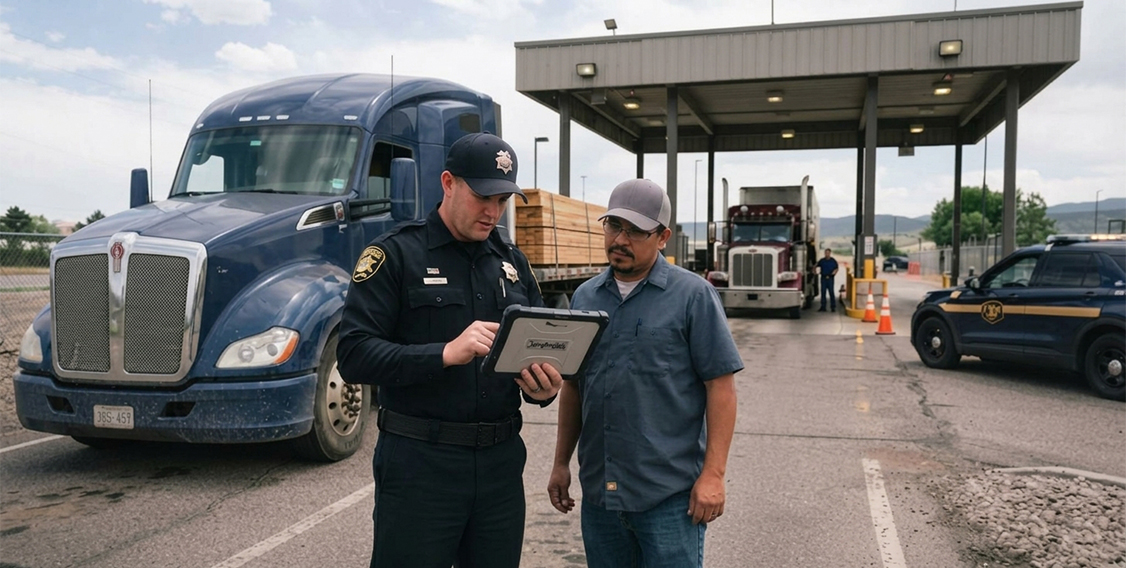
What do officers look for in co-driver records during an inspection?
An officer may compare each driver’s duty status record with ELD events, edit history, and any unidentified driving relevant to the inspection. The records should accurately identify the operator, preserve original information, and explain corrections. The non-driving co-driver’s status should reflect what that person actually did, not automatically be set to sleeper berth.
What happens if both drivers records contradict each other?
Conflicting records need a factual review of the vehicle’s motion, each driver’s account, and any unidentified events. A motion event assigned to the wrong logged-in co-driver is not necessarily shown in the Unidentified Driver report; that report applies when no driver was logged in. Correct the record through the applicable process and preserve the original event.
Can a driver correct a co-driver log error while on the road?
Yes. A driver can review their own records during a break or layover and make a supported correction without returning to a terminal. If driving time was wrongly assigned to a logged-in co-driver, both listed team drivers must confirm the transfer. Any required annotation should reflect facts they can verify, and an edited submitted record must be recertified.
What should co-driver teams prepare for an inspection?
Roadcheck is a time-limited inspection event; it does not change the underlying ELD rules. Co-driver teams should maintain accurate driver assignments, review unidentified time, and keep documented corrections ready for any inspection. Avoid treating a past campaign’s focus as a prediction of future enforcement.
What should a driver do if they do not recognize a segment in their unidentified driving report?
The driver should not claim a segment they did not drive. If the origin of a segment is unclear, the driver should flag it for the carrier, compare the time in question against the vehicle’s engine and GPS records, and discuss it with the co-driver to determine who was actually operating during that period. Assigning time without verifying who drove can make the record inaccurate.
Does using a currently registered ELD affect how co-driver reassignment works?
The ELD technical standard in Appendix A to Subpart B of Part 395 covers co-driver records, unidentified driving, edits, and annotations. A removed device requires attention to the applicable FMCSA notice and replacement instructions, but removal alone does not prove that its co-driver reassignment feature malfunctioned. For details on the Geosavi Compliance Now ELD and its current registration status, visit our ELD platform and hardware.
Conclusion
The regulation does not attempt to account for every sequence of events in a co-driver operation. Sections 395.30 and 395.32 establish complementary processes: drivers and carriers review unidentified time, supported team-driver transfers are confirmed by both co-drivers, carrier-proposed edits require driver confirmation and recertification, and original ELD information remains intact. When your team follows that process consistently after every shift change, the edit history in the ELD becomes evidence of a well-run operation rather than a record of problems that required fixing.
The administrative side of co-driver operations matters every day, regardless of a particular enforcement event or changing ELD-removal count. The fleets that hold up at the roadside are the ones that handle profile swaps, annotations, and unidentified driving with the same discipline they apply to pre-trip inspections and route planning.
If your co-driver setup needs a review, or if you are preparing a new team and want to confirm your ELD handles dual-profile operations correctly under current FMCSA requirements, schedule a call with our team or reach us at (800) 261-4361.