Key Takeaways
- HOS violations rose from 410,000 in 2023 to more than 500,000 in 2025, according to RigDig data cited by Overdrive in April 2026, making 2026 enforcement the most active period since the ELD mandate began
- Motor carriers face maximum civil penalties of up to $19,246 per HOS violation and drivers face up to $4,812, adjusted annually for inflation under the FMCSA civil penalty schedule
- FMCSA has removed 79 ELD devices from its registered list since January 2025, including 12 in a single day on May 20, 2026, confirmed by FMCSA Administrator Derek Barrs. Carriers using those 12 devices have until July 20, 2026 to replace them
- Vehicles over 10 years old account for 12.1% of miles but 33.5% of total service spend, with a service cost per mile of $1.10 compared to $0.20 for vehicles aged 0 to 5 years, according to the Fleetio 2026 Fleet Benchmark Report covering 1.2 million vehicles
- Unplanned downtime costs between $448 and $760 per vehicle per day, and 78% of breakdowns are preventable, according to fleet maintenance KPI research from 2026
- A 174,000-driver shortfall is projected by the end of 2026, with hiring costs up 22% year-over-year, according to Talent Traction’s April 2026 workforce report
- Large truckload carriers report 90 to 95% annual driver turnover, with 35% of new hires quitting within 90 days, according to PLS Logistics 2026
- Carriers with unsatisfactory safety ratings pay up to $18,500 per vehicle annually in insurance compared to $8,200 for satisfactory-rated carriers, according to 2026 fleet safety compliance research
Introduction
Running a fleet in 2026 means managing a set of pressures that did not exist five years ago in anything close to their current form. Fuel costs, driver shortages, compliance requirements, maintenance expenses, and enforcement intensity have all increased at the same time, and each one compounds the others. A fleet that cannot keep drivers stays short-staffed. A fleet that stays short-staffed pushes remaining drivers harder. A fleet that pushes drivers harder runs closer to HOS limits. A fleet running close to HOS limits is one inspection away from a serious citation.
The compliance picture alone has changed dramatically in a short period. HOS violations rose from 410,000 in 2023 to more than 500,000 in 2025, according to RigDig data cited by Overdrive in April 2026. FMCSA has removed 79 ELD devices from its registered list since January 2025. The CVSA 2026 International Roadcheck ran May 12 to 14, 2026 with a primary focus on ELD tampering, falsification, and manipulation. Officers are now cross-checking ELD records against fuel receipts, toll records, and dispatch data at every serious inspection, and the days when compliance was a paperwork exercise are gone.
At the same time, the cost of operating a truck has climbed in ways that hit small carriers and owner-operators hardest. Vehicles over 10 years old now cost $1.10 per mile in service expenses compared to $0.20 for newer vehicles, according to the Fleetio 2026 Fleet Benchmark Report covering 1.2 million vehicles and responses from more than 600 fleet professionals. Unplanned downtime costs between $448 and $760 per vehicle per day, according to fleet maintenance KPI research from 2026. These are not abstract figures. They are the difference between a profitable run and a day that costs more than it earns.
What follows works through the eight biggest fleet management challenges your operation faces in 2026, what the data says about each one, and what a practical response looks like at the fleet level.
What Are the Compounding Pressures Reshaping Fleet Management in 2026?
Fleet management challenges in 2026 do not arrive one at a time. They arrive together, and each one makes the others harder to manage. Understanding that compounding effect is the starting point for addressing any of them effectively.

A driver shortage means fewer people available to cover loads. Fewer drivers means remaining drivers work harder and run closer to their legal limits. Drivers running close to their limits are more likely to produce HOS violations. HOS violations affect your CSA score in the FMCSA Safety Measurement System. A deteriorating CSA score raises your insurance costs and triggers FMCSA attention. FMCSA attention means more inspections, more inspections means more opportunities for citations on maintenance, documentation, and equipment compliance issues that were never a priority before. Each pressure feeds the next one.
The enforcement environment in 2026 makes this compounding effect more consequential than it has been at any point since the ELD mandate began. FMCSA is not only enforcing HOS rules more aggressively. It is also actively auditing registered ELD devices and removing those that fail to meet the technical standard in 49 CFR Appendix A to Subpart B of Part 395. As of May 20, 2026, 79 devices have been removed since January 2025 at an average pace of nearly five per month. A carrier whose ELD gets revoked has 60 days to replace it before their drivers start being placed out of service under 49 CFR 395.8(a)(1). That 60-day window is tight once you account for ordering, delivery, installation, and retraining.
The only effective response to compounding pressures is a connected approach. Addressing fuel costs in isolation without fixing maintenance practices does not produce the savings the numbers suggest. Addressing compliance without addressing dispatch practices misses the fact that over 30% of HOS violations involve dispatchers failing to account for driving time when assigning loads, according to a Forward Thinking Systems CSA guide published in 2026. The challenges are connected and the solutions need to be too.
What Is Driving Rising Operating Costs and What Can Your Fleet Do About It?
Rising operating costs are the most visible challenge in fleet management right now, and they are driven by a combination of vehicle aging, maintenance practices, fuel prices, and insurance costs that interact with each other in ways that are not always obvious until the numbers are already worse than they needed to be.
Vehicle age is a larger cost driver than most fleets account for. Vehicles over 10 years old account for 12.1% of miles driven but 33.5% of total service spend, according to the Fleetio 2026 Fleet Benchmark Report covering 1.2 million vehicles and responses from more than 600 fleet professionals. The service cost per mile is $0.20 for vehicles aged 0 to 5 years and $1.10 for vehicles over 10 years. That is a 450% difference in per-mile maintenance cost between a newer vehicle and an older one. A fleet that is not tracking age-stratified cost data is almost certainly subsidizing its older units without knowing the extent of it.
Insurance costs add another layer. Carriers with unsatisfactory safety ratings pay up to $18,500 per vehicle annually in insurance compared to $8,200 for satisfactory-rated carriers, according to 2026 fleet safety compliance research. That $10,300 per-vehicle difference is not a compliance issue in isolation. It is an operating cost that compounds across every truck in your fleet. Improving your safety rating by addressing HOS compliance and maintenance recordkeeping is not just a regulatory exercise. It directly reduces what you pay to insure your operation.
Our electronic logging device platform connects to your engine control module and records mileage, engine hours, and fault codes in real time, giving your back office the data it needs to catch maintenance issues before they become roadside breakdowns and to document your compliance record accurately for insurance purposes.
How Is the Driver Shortage Affecting Fleets in 2026 and What Does the Data Show?
The driver shortage is not a new problem, but the 2026 data shows it has gotten significantly worse, and recent federal policy changes have removed a segment of the available workforce that previously helped offset some of the gap.

A 174,000-driver shortfall is projected by the end of 2026, with hiring costs up 22% year-over-year, according to Talent Traction’s April 2026 workforce report. Large truckload carriers report 90 to 95% annual driver turnover, and 35% of new hires quit within 90 days, according to PLS Logistics 2026. Those two figures together mean that a significant portion of your annual recruiting budget is replacing drivers who were never going to stay, which raises the actual cost per retained driver far above the headline hiring cost.
A March 2026 federal rule bars asylum seekers, refugees, and DACA recipients from renewing their CDL. Foreign-born drivers represent nearly one in six US truckers, according to PLS Logistics 2026, and 92% of carriers operate 10 or fewer trucks. For small carriers, the loss of even one or two drivers from this group can represent a significant percentage of total capacity. The policy change is not something individual carriers can influence, but the operational reality needs to be factored into workforce planning now rather than when the renewals start expiring.
Retention is a more cost-effective response than recruiting at current hiring cost levels. Drivers who know their hours are accurately tracked, who are not being pressured into compliance violations, and who receive detention pay supported by timestamped ELD records are more likely to stay. Your ELD data creates a verifiable record of the treatment your drivers receive from shippers, which supports both detention pay claims and the kind of driver experience that reduces the 35% early attrition rate.
What Are the Most Common HOS and Compliance Failures and How Do You Fix Them?
HOS compliance failures are the most consequential category of fleet management challenge in 2026 because they carry the highest direct financial exposure and the most immediate operational consequence. A driver placed out of service is not delivering freight, and the citation stays on your CSA record for 24 months.

HOS violations rose from 410,000 in 2023 to more than 500,000 in 2025, according to RigDig data cited by Overdrive in April 2026. That increase reflects higher inspection volume and more aggressive enforcement, not a deterioration in actual compliance rates per inspection. The rate per inspection has fallen since the ELD mandate. The total count has risen because more trucks are being inspected more carefully. A carrier whose compliance was adequate in a lower-intensity enforcement environment may find it is not adequate under 2026 inspection standards.
The most common failure points in HOS compliance are not the obvious ones. Most carriers know about the 11-hour driving limit and the 14-hour on-duty window under 49 CFR Part 395. The failures that actually appear at inspections in 2026 are gaps between ELD records and supporting documents, unidentified driving time left without annotation, edits that lack proper explanation, and short-haul drivers who lose their exemption mid-shift and do not start logging immediately. Under 49 CFR 395.8(k), your fuel receipts, toll records, dispatch records, and bills of lading must all align with your ELD logs. If they do not, the discrepancy is treated as a falsification finding regardless of what actually happened.
The 58,382 falsification violations recorded in 2024, according to CVSA annual data, were not all cases of deliberate fraud. Many were documentation failures that looked like falsification because the supporting records did not match the ELD. Getting your documentation practices right is as important as getting your driving hours right. For a detailed breakdown of how local drivers manage HOS requirements and exemptions day by day, our local trucking ELD guide covers every condition in detail.
How Can Your Fleet Manage Fuel Costs More Effectively in 2026?
Fuel management is one of the few fleet cost categories where operational decisions have a direct and measurable impact on the numbers, which makes it worth addressing systematically rather than treating it as a fixed expense.
The most controllable fuel cost variable for most fleets is idling. A diesel engine at idle burns approximately 0.8 gallons per hour, according to the US Department of Energy’s fuel economy guidance for commercial vehicles, and the cumulative cost across a fleet that idles heavily during loading and unloading windows, detention time, or rest periods adds up quickly over a quarter. ELD data gives you visibility into engine-on time that does not correspond to vehicle movement, which is the clearest indicator of idling behavior. Your back office can review that data by driver and by route to identify where the idling is happening and address it at the dispatch level.
Route planning relative to HOS availability is the second major fuel management lever. A driver who has 3 hours of legal driving time remaining and a delivery 4 hours away has two options: push past the limit or pull over and wait. Either option has a cost. The push creates a compliance exposure. The wait burns fuel and loses time. Your management portal shows every driver’s remaining hours before dispatch, which allows your team to assign loads based on available legal time rather than discovering the conflict 100 miles into the run.
Fuel tax reporting through IFTA is an administrative cost that compounds with every manual step it requires. Your ELD records mileage by jurisdiction automatically throughout every trip, which means your quarterly IFTA report is built from data the device has already captured rather than from a manual reconciliation of paper receipts and driver logs. For specific guidance on how ELD-integrated DVIR and compliance records reduce your administrative burden, see how ELD and DVIR work together in practice.
What Does Effective Fleet Maintenance Look Like and Why Does Most Fleet Maintenance Fall Short?
Maintenance is the fleet management challenge where the gap between what the data says is possible and what most fleets actually do is widest, and that gap has a specific and measurable cost.
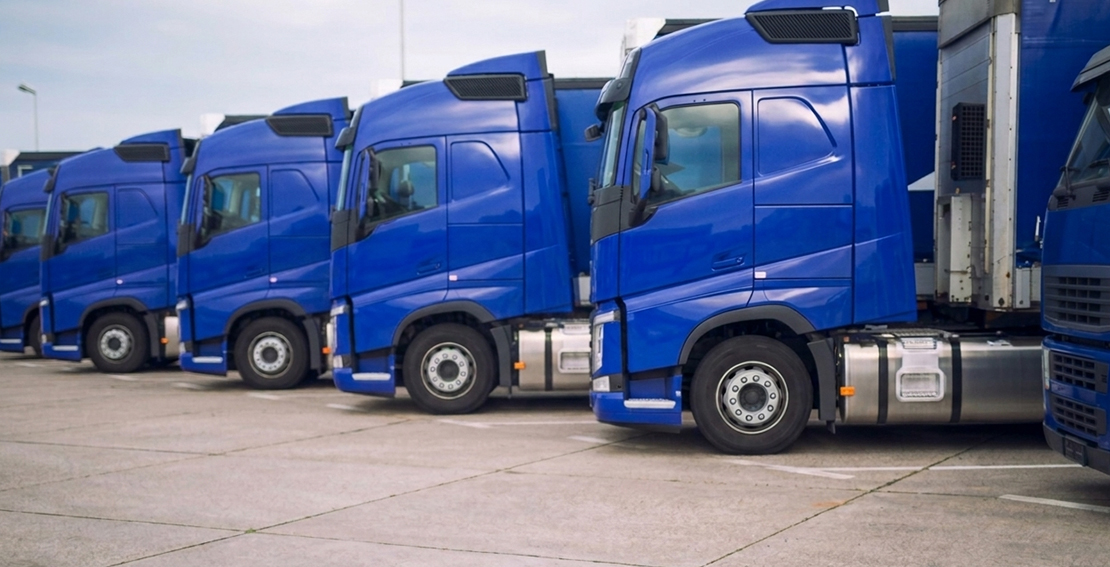
Unplanned downtime costs between $448 and $760 per vehicle per day, according to fleet maintenance KPI research from 2026. Seventy-eight percent of breakdowns are preventable with proper maintenance scheduling. Most fleets currently operate at roughly a 50/50 split between reactive and proactive maintenance, according to the same research. That means roughly half of the maintenance events your fleet experiences are costing you between $448 and $760 per day that a different scheduling approach could have avoided.
The DVIR process is the most direct tool available for catching vehicle defects before they become breakdowns. Under 49 CFR 396.11, your driver is required to complete a Driver Vehicle Inspection Report before and after every shift, noting defects in brakes, lights, tires, steering, coupling devices, and other safety-critical components. A DVIR completed on a rugged tablet, timestamped, and sent immediately to your management portal creates a documented maintenance trigger that your back office can act on before the truck goes back out. A defect noted in a DVIR and not addressed before dispatch is a documented liability. A defect caught and repaired is a prevented breakdown.
Approximately 75% of fleets use dedicated maintenance software, but many still rely on disconnected platforms that do not share data with their ELD system, according to industry fleet trends analysis from 2026. The practical consequence of that disconnection is that a fault code captured by the ELD and a repair record sitting in a separate maintenance system never get compared, which means the pattern that would have predicted a breakdown before it happened never gets identified.
How Should Your Fleet Handle the Growing Data and Technology Gap?
The data and technology challenge in fleet management is not a shortage of data. Most fleets running ELDs are generating more operational data than they have ever had access to. The challenge is using that data to make decisions before problems happen rather than reviewing it after they already have.
Forty-seven percent of fleets see positive ROI from telematics in under a year, with accident cost savings averaging over 20% and insurance premiums dropping around 13%, according to Intangles April 2026 research. Those returns are available to fleets that connect their operational data to their management decisions. Fleets that collect data without acting on it do not see those returns.
Your ELD management portal gives your back office visibility into every driver’s current duty status, remaining hours, vehicle location, and exception events in real time. The question is whether your dispatch team is using that data before a truck leaves the yard or only reviewing it after something goes wrong. Real-time HOS visibility changes dispatch from a reactive function into a preventive one. You know before you assign a load whether the driver you are assigning it to has enough legal hours to complete it, and that single change eliminates the dispatch-driven compliance pressure that accounts for a significant portion of HOS violations.
The technology gap also shows up at the point of purchase. With 79 ELD devices removed from the FMCSA registered ELD list since January 2025, choosing a device based on price alone without verifying its current registration status is a significant risk. Check that list before purchase and every month after. Registration is a self-certification by the manufacturer, not a quality endorsement from FMCSA, which is why devices continue to get removed after they are added.
What Are the Biggest Driver Safety Challenges Your Fleet Faces in 2026?
Driver safety challenges in 2026 span both the physical safety of your drivers on the road and the regulatory safety of their HOS records at a roadside inspection. Both matter, and the connection between them is closer than it might appear.

Driver fatigue is a factor in approximately 13% of all large truck crashes in the United States, according to FMCSA research. That figure is almost certainly conservative, because fatigue is far harder to confirm at a crash scene than alcohol or speed. What ELDs do is remove the ability to falsify hours and keep a fatigued driver moving when they should have stopped. During the 2025 CVSA International Roadcheck, 1,076 drivers were placed out of service for HOS violations in just 72 hours of enforcement. That is the scale of the problem that accurate hour tracking is designed to prevent. To understand how this works across your fleet in practice, see our article on how ELDs reduce driver fatigue and HOS violations.
The safety picture is more complex than the mandate alone can address. An ELD tracks hours, not physical condition. A driver who slept poorly, is dealing with a health issue, or started the shift already tired can be within legal HOS limits and still be a safety risk. Knowing your driver’s hours is one tool. Knowing your driver is another. Dispatch teams that build relationships with drivers and understand their individual patterns catch fatigue problems that the hours data alone does not reveal.
English language proficiency enforcement under 49 CFR 391.11(b)(2) has been active since June 25, 2025. A driver who cannot read and communicate in English well enough to understand traffic signs, respond to officers, and complete required paperwork is a safety risk that the ELD cannot address. Carriers who have not reviewed their driver qualification files for English proficiency compliance since that enforcement date should do so before the next compliance review. Our Geosavi support team can help you understand what compliance documentation your fleet needs to have in order before your next audit.
How Do Common Fleet Challenges Compare to the Correct Response?
| Challenge | Common Inadequate Response | Correct Approach |
|---|---|---|
| HOS violations rising | Wait for citation then address | Pre-dispatch HOS check for every driver before assignment |
| ELD revocation risk | Assume device is still registered because it was when purchased | Check FMCSA registered list monthly and set calendar reminders |
| Driver turnover at 90%+ | Raise pay and hope for improvement | Track detention time with ELD timestamps and support driver pay claims |
| Unplanned downtime at $448 to $760 per day | Reactive repair after breakdown | DVIR-triggered maintenance before the truck goes back out |
| Older vehicles costing $1.10 per mile | Keep running aging units without cost visibility | Track per-unit cost by vehicle age and make replacement decisions on data |
| Documentation mismatches triggering falsification findings | Address after citation | Align ELD records with fuel receipts, tolls, and dispatch records before inspection |
| Insurance costs $10,300 higher for unsatisfactory rated carriers | Accept cost as fixed | Improve CSA score through HOS accuracy and maintenance records |
| Dispatcher-driven HOS violations over 30% of total | Blame drivers | Give dispatch real-time HOS visibility before every load assignment |
What Should You Ask Before Addressing Fleet Management Challenges in Your Operation?
Before spending money or changing processes, there are specific questions worth asking about your own operation. The answers determine where to focus first and what order the changes should happen in.
Where do your current HOS violations actually originate?
Before assuming the problem is driver behavior, pull your inspection data and sort violations by type. If the majority are documentation mismatches rather than actual driving time violations, the fix is in your supporting document process, not your drivers. If the violations cluster around specific routes or dispatch windows, the problem is in load planning. Knowing the source before acting on it saves time and prevents solving the wrong problem.
When did you last verify your ELD is still on the FMCSA registered list?
With 79 devices removed since January 2025, the answer to this question matters more in 2026 than it ever has before. If your answer is when you bought the device, check today. A revoked device is treated as no ELD at all after the 60-day grace period expires, and the citation under 49 CFR 395.8(a)(1) carries the same weight regardless of whether your logs were otherwise accurate.
What percentage of your maintenance is reactive versus scheduled?
If you do not know this number, your maintenance costs are almost certainly higher than they need to be. The 78% preventable breakdown figure from 2026 fleet maintenance research means that most unplanned downtime in your fleet could have been predicted and avoided. Start tracking planned versus unplanned events separately for 90 days and the pattern will tell you exactly where the preventable costs are.
How does your vehicle age distribution compare to the cost data?
The Fleetio 2026 Fleet Benchmark Report found that vehicles over 10 years old cost 5.5 times more per mile to maintain than vehicles aged 0 to 5 years. Before you can act on that, you need to know how many of your vehicles fall into that high-cost band and what they are each costing per mile. If you have not built a per-unit cost model, start there.
What does your actual driver retention rate look like over a rolling 12 months?
A 90 to 95% annual turnover figure is the industry average for large truckload carriers, according to PLS Logistics 2026, but your own fleet’s number may be better or worse. Calculating it accurately requires tracking hires and separations by month across a full year. If your retention rate is significantly worse than the industry average, the cause is usually identifiable in the exit patterns and worth addressing directly before paying to recruit more drivers into the same situation.
Are your dispatchers making load assignments based on real-time HOS data?
Over 30% of HOS violations involve dispatchers who either pressured drivers to exceed legal limits or failed to account for available driving time when assigning loads, according to a Forward Thinking Systems CSA guide published in 2026. If your dispatch team is not checking remaining hours before every assignment, you are accepting a preventable compliance risk on every load. The fix is visibility, not policy. Real-time HOS data available at the point of dispatch changes the decision before it becomes a violation.
What would it cost your fleet to run a revoked ELD for one week after the grace period expired?
Work through the number. One out-of-service citation per driver per day at maximum penalties of $19,246 per carrier violation, plus lost revenue from trucks that cannot move, plus CSA score impact that compounds over 24 months. The calculation makes the cost of monthly ELD list verification look very small by comparison. Visit our price calculator to see what a compliant Geosavi platform costs for your fleet size.
Are you treating compliance as a cost center or as an insurance policy against larger costs?
Carriers who view compliance as a cost to minimize tend to underinvest in the processes and tools that prevent violations. Carriers who view it as protection against the much larger cost of citations, insurance surcharges, and audit exposure tend to make better decisions about where to spend. The data on insurance cost differences between satisfactory and unsatisfactory-rated carriers makes the financial case clearly. A $10,300 per-vehicle per-year insurance difference is a compelling number when you calculate it across your entire fleet.
Your Fleet Management Questions Answered
About Fleet Management Challenges
What is the single biggest fleet management challenge in 2026?
The single biggest challenge is the combination of rising enforcement intensity and the accelerating ELD revocation rate happening at the same time. HOS violations exceeded 500,000 nationally in 2025, according to RigDig data cited by Overdrive in April 2026, and 79 ELD devices have been removed from the FMCSA registered list since January 2025. A carrier facing both a compliance violation and a revoked device simultaneously is looking at an out-of-service order, a CSA score impact, and a 60-day window to replace hardware that they may not have budgeted for.
How does the driver shortage directly increase compliance risk?
When you have fewer drivers covering the same number of loads, remaining drivers run closer to their HOS limits. Drivers operating near legal limits have less margin for unexpected delays, longer loading times, or route changes. When something unexpected happens and the hours run out, the pressure to keep moving does not disappear just because the legal limit has been reached. That pressure is where HOS violations originate. Adequate driver coverage is a compliance issue as much as an operational one.
How do fleet maintenance failures connect to compliance risk?
A vehicle with a known defect that is dispatched anyway creates a documented compliance exposure the moment the DVIR is completed and the defect is not addressed. Under 49 CFR 396.11, a defect noted in a DVIR and not repaired before dispatch is a recordable failure during any subsequent compliance review. Beyond the documentation issue, a vehicle breakdown on the road creates pressure on the driver to resolve the situation quickly, which often leads to HOS decisions that would not have been made otherwise.
Why do insurance costs vary so much between satisfactory and unsatisfactory-rated carriers?
Insurance carriers price risk based on the probability of a claim. A motor carrier with an unsatisfactory safety rating from FMCSA has a documented record of compliance failures, which insurers treat as a predictor of future claims. The $10,300 per-vehicle annual difference between satisfactory and unsatisfactory-rated carriers, according to 2026 fleet safety compliance research, reflects that risk assessment directly. Improving your CSA score through accurate HOS records and documented maintenance compliance is one of the most financially significant steps a small carrier can take.
What should a small carrier with 10 or fewer trucks prioritize first?
ELD compliance and registration verification should be the first priority because the consequences of getting it wrong are immediate and operationally disruptive. After that, DVIR completion rates and maintenance documentation are the highest-value improvements because they address both the preventable downtime cost and the insurance cost differential. Driver retention through accurate records and detention pay support comes third because recruiting at 22% higher costs than a year ago makes retention far more cost-effective than replacement.
How does the 2026 enforcement wave affect carriers who were already compliant?
Even carriers with strong compliance records are affected by increased inspection intensity because every inspection is an opportunity to find documentation issues that were previously overlooked. Cross-checking ELD records against supporting documents, fuel receipts, and toll data is now standard practice at serious roadside inspections. A carrier whose records were adequate under lower scrutiny may find that some documentation gaps become visible under the more thorough review that 2026 enforcement standards apply.
What does the foreign-born driver policy change mean for fleet planning in 2026?
The March 2026 federal rule barring asylum seekers, refugees, and DACA recipients from CDL renewal affects a segment of the trucking workforce that represents nearly one in six US truckers, according to PLS Logistics 2026. For small carriers where a single driver represents 10 to 20% of total capacity, a CDL renewal denial can be an immediate operational problem. Fleet managers should review the CDL renewal dates for all drivers in their fleet now and identify which drivers may be affected so they have time to plan before renewals expire rather than responding to unexpected capacity loss.
About Managing Compliance and Costs
How do I know if my ELD is still on the FMCSA registered list?
Go to the FMCSA registered ELD list and search for your device by name or identifier. The list is updated when devices are added or removed. With 79 devices removed since January 2025, checking at purchase is not sufficient. Set a monthly calendar reminder and check the list on the same date each month. Your ELD vendor may or may not notify you if their device is revoked, so do not rely on vendor communication as your only verification method.
What happens operationally if my ELD gets revoked and I miss the replacement deadline?
After the 60-day grace period expires, any officer who encounters a driver using the revoked device must cite the driver under 49 CFR 395.8(a)(1) for no record of duty status and issue an immediate out-of-service order. The truck does not move until the violation is addressed. The citation carries a maximum civil penalty of $19,246 for the carrier and $4,812 for the driver under 49 CFR Appendix B to Part 386, and the violation affects your CSA score for 24 months. If you believe a violation was issued in error, you can challenge it through the FMCSA DataQs system.
How does real-time HOS visibility in the management portal actually reduce violations?
The majority of HOS violations that originate at the dispatch level happen because the dispatcher does not know the driver’s available hours at the time the load is assigned. Real-time visibility changes the decision point from after dispatch to before it. When your dispatcher can see that a driver has 3 hours of legal driving time remaining before assigning a 4-hour run, they can assign a different driver or plan a split. That one change prevents the violation before it happens rather than addressing it after an officer finds it.
What is the most cost-effective way to improve a CSA score that has been damaged by HOS violations?
Consistent, accurate HOS compliance over the 24 months following the violations is the only reliable way to improve a CSA score. There is no shortcut. The most effective actions are ensuring every driver’s ELD records are accurate and annotated correctly, aligning all supporting documents with ELD data before inspections, and contesting any violations that were issued in error through the FMCSA DataQs system. Violations age off the scoring window after 24 months, so the faster you establish a clean record, the faster the damaged score recovers.
How do I calculate whether replacing an older truck is financially justified?
Start with the actual per-mile maintenance cost for the specific vehicle you are evaluating over the past 12 months. Compare it to the $0.20 per mile benchmark for vehicles aged 0 to 5 years from the Fleetio 2026 Fleet Benchmark Report. Multiply the difference by the annual miles that vehicle runs. Add the cost of any unplanned downtime events that vehicle has caused at $448 to $760 per day. Compare that total to the annualized cost of financing a replacement. For most vehicles running above $0.60 per mile in maintenance cost, the replacement calculation favors action sooner rather than later.
Can improving ELD compliance accuracy actually reduce what I pay for insurance?
Yes, and the data makes the case clearly. Carriers with satisfactory safety ratings pay approximately $8,200 per vehicle annually in insurance compared to $18,500 for unsatisfactory-rated carriers, according to 2026 fleet safety compliance research. The path from unsatisfactory to satisfactory runs through accurate HOS records, complete DVIR documentation, and a CSA score that stays below intervention thresholds. Every accurate ELD record your fleet produces is contributing to the safety rating that determines your insurance cost.
What is the best way to verify that my supporting documents match my ELD records before an inspection?
Build a weekly internal check into your back office process. Pull the ELD records for each driver for the previous week and compare the timestamps and locations to your fuel receipts, toll records, and dispatch records for the same period. Any gap or discrepancy should be annotated and explained before an inspection finds it. A gap that you have already identified and annotated with a legitimate explanation is far less likely to become a falsification finding than a gap an officer discovers without any annotation.
How do I get started with a Geosavi ELD platform for my fleet?
Call us at (800) 261-4361 or get in touch directly and we will get back to you the same day. You can also browse ELD hardware options in our Geosavi store or use our price calculator to see exactly what the platform costs for your fleet size. We back every account with a 30-day money-back guarantee and 24-hour, 7-day technical support.
Conclusion
Fleet management in 2026 is harder than it was two years ago, and the data makes that clear. HOS violations exceeded 500,000 nationally in 2025. Seventy-nine ELD devices have been removed from the FMCSA registered list since January 2025. The driver shortage is projected to reach 174,000 by year end. Vehicles over a decade old cost five times more per mile to maintain than newer units. Each of these challenges is real, and each one interacts with the others in ways that make the whole harder to manage than any single part.
The carriers who manage these pressures best in 2026 are the ones who connect their compliance data to their operational decisions. Real-time HOS visibility at the point of dispatch prevents violations before they happen. Accurate DVIR records prevent breakdowns before they strand a truck. Monthly ELD registration checks prevent out-of-service orders before they interrupt a load. These are not complicated changes. They are consistent habits built around the data your ELD already generates.
We built the Geosavi platform for fleets that want to run clean without the overhead of an enterprise compliance department. Call us at (800) 261-4361 or reach our team directly and we will get back to you the same day.