Key Takeaways
- Not every box truck requires an ELD. Whether you need one depends on your vehicle’s GVWR, the type of cargo you carry, and how you operate.
- The FMCSA ELD mandate under 49 CFR Part 395 applies to commercial motor vehicles where the driver is required to keep records of duty status (RODS).
- Box trucks with a GVWR above 10,001 pounds used in interstate commerce are generally subject to HOS rules and the ELD mandate.
- Several exemptions exist, including the short-haul exemption, the 8-day paper log provision, and exemptions for certain agricultural operations.
- Driving without a required ELD can result in federal civil penalties up to $19,246 per violation for motor carriers and up to $4,812 for individual drivers under the FMCSA penalty schedule.
- Geosavi’s FMCSA-registered ELD platform works across vehicle types, including box trucks, straight trucks, and combination vehicles.
- If you are not sure whether your box truck needs an ELD, this guide gives you a clear, regulation-based answer.
Introduction
If you drive or manage a box truck, you have probably asked this at some point: do I actually need an ELD? The short answer is it depends on your GVWR, the type of freight you haul, and whether you cross state lines. Getting it wrong costs money, and in some cases it stops your truck at the side of the road.
The FMCSA ELD mandate has been fully enforced since December 2019. It applies to commercial motor vehicles operating in interstate commerce where the driver is required to keep records of duty status under 49 CFR Part 395. That definition pulls in a large number of box trucks that operators assume are exempt.
This guide covers every factor that determines whether your box truck needs an ELD. We go through GVWR thresholds, CDL requirements, HOS applicability, short-haul exemptions, and the specific exemptions that legitimately remove the ELD requirement for certain operations. We also cover what happens if you get this wrong at a roadside inspection.
We are Geosavi. We have helped hundreds of small fleets and owner-operators figure out exactly where they stand on ELD compliance. Everything in this article is based on current FMCSA regulations. Read it from start to finish and you will know exactly where your box truck falls.
What Does the ELD Mandate Actually Cover?
The ELD mandate applies to any commercial motor vehicle where the driver is required to prepare a record of duty status under 49 CFR Part 395.8. If a driver does not need to keep RODS, the ELD mandate does not apply to that driver or vehicle.
The key question is whether your box truck operation requires RODS in the first place. Under 49 CFR Part 390.5, a commercial motor vehicle is defined as any vehicle used in interstate commerce that has a GVWR or gross combination weight rating of 10,001 pounds or more, is designed to transport 9 or more passengers including the driver for compensation, or transports hazardous materials in a placarded quantity.
Box trucks fall inside this definition in most cases. A standard 16-foot or 26-foot box truck typically has a GVWR between 12,500 and 26,000 pounds, which puts it above the 10,001-pound threshold. If you have questions about whether your specific operation qualifies, our FAQ page covers the most common compliance questions we hear from drivers and fleet managers.
Does the Mandate Apply to Both Interstate and Intrastate Operations?
The federal ELD mandate applies to interstate commerce. If your box truck never crosses a state line, federal HOS rules do not automatically apply. However, many states have adopted federal HOS rules for intrastate commerce as well. Operating entirely within one state does not automatically exempt you. Check your state’s Department of Transportation rules before assuming you are free of the requirement.
According to FMCSA data, more than 40 states have adopted federal HOS rules for intrastate operations in some form.
What Is a Record of Duty Status and Why Does It Matter?
A record of duty status is the official log of a driver’s on-duty, off-duty, sleeper berth, and driving time. Under 49 CFR Part 395.8, any driver subject to HOS rules must prepare a RODS for each 24-hour period. The ELD mandate requires that RODS be kept electronically rather than on paper, with limited exceptions.
If you are required to keep RODS and you keep them more than 8 days in any 30-day rolling period, you need a registered ELD. No exceptions outside the ones listed in 49 CFR Part 395.1.
Does GVWR Determine Whether a Box Truck Needs an ELD?
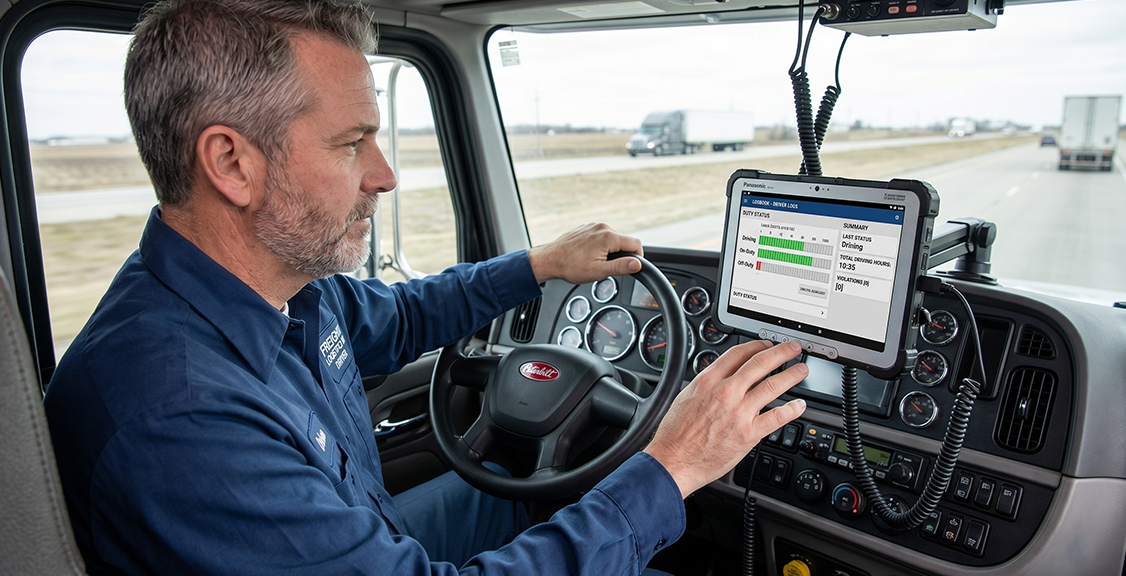
Yes. GVWR is one of the primary triggers for CMV status and HOS applicability. A box truck with a GVWR above 10,001 pounds operating in interstate commerce is a CMV under federal law. Once a vehicle qualifies as a CMV and the driver is required to keep RODS, the ELD mandate applies.
The GVWR is set by the manufacturer, not by what the truck is actually carrying. A 26,000-pound GVWR box truck triggers CMV rules even if it is running empty. Many owner-operators get this wrong. They assume that a light load means CMV rules do not apply. The rating on the door sticker is what matters, not the actual payload.
What Is the GVWR Threshold for ELD Requirements?
The threshold is 10,001 pounds GVWR for CMV classification under 49 CFR Part 390.5. HOS rules apply to CMVs as defined in Part 390.5. The 10,001-pound GVWR gets you into CMV territory, and from there HOS rules determine whether RODS are required.
For box trucks used in for-hire or private interstate commerce above 10,001 pounds GVWR, RODS are generally required unless a specific exemption applies.
Does a 10,000-Pound Box Truck Need an ELD?
No. A box truck with a GVWR at or below 10,000 pounds does not meet the federal CMV definition for HOS purposes under 49 CFR Part 390.5. If your truck’s door sticker shows 10,000 pounds or less, you are not subject to federal HOS rules or the ELD mandate based on weight alone.
One exception applies: if your 10,000-pound box truck hauls placarded hazardous materials, CMV rules apply regardless of weight under 49 CFR Part 390.5(b)(3).
| GVWR Range | CMV Classification | HOS Rules Apply | ELD Required |
|---|---|---|---|
| 10,000 lbs or below | No (general rule) | No | No |
| 10,001 to 26,000 lbs | Yes | Yes (interstate) | Yes (unless exempt) |
| Above 26,000 lbs | Yes | Yes | Yes (unless exempt) |
| Any weight with placarded hazmat | Yes | Yes | Yes (unless exempt) |
Does a Box Truck Require a CDL, and Does That Change ELD Requirements?
CDL requirements and ELD requirements are related but not the same thing. A vehicle can require an ELD without requiring a CDL.
A CDL is required under 49 CFR Part 383 for any vehicle with a GVWR above 26,000 pounds, any combination vehicle where the towed unit has a GVWR above 10,000 pounds and the combined GVWR exceeds 26,000 pounds, any vehicle designed to carry 16 or more passengers including the driver, or any vehicle hauling placarded hazmat.
Most box trucks fall in the 12,500 to 26,000-pound GVWR range. That means they do not require a CDL but they do qualify as CMVs for HOS and ELD purposes. Many drivers assume that because they do not need a CDL, no federal safety rules apply. That is incorrect.
Can You Drive a 24,000 GVWR Box Truck Without a CDL?
Yes, a 24,000-pound GVWR box truck does not require a CDL under federal rules. But it qualifies as a CMV for HOS and ELD purposes. If you are operating that truck in interstate commerce and keeping RODS more than 8 days in a 30-day rolling period, you need a registered ELD.
FMCSA enforcement data shows that non-CDL CMV operators are increasingly targeted in roadside inspections. Officers inspect based on CMV status, not CDL status.
Does Driving a CDL Vehicle Automatically Mean You Need an ELD?
Not automatically. The ELD requirement is tied to RODS obligations under 49 CFR Part 395, not CDL status. A CDL driver who qualifies for a short-haul exemption may not be required to keep RODS and therefore does not need an ELD on that day. The analysis always starts with whether RODS are required, not what license the driver holds.
What HOS Rules Apply to Box Truck Drivers?
Hours of service rules under 49 CFR Part 395 apply to CMV drivers in interstate commerce. For property-carrying CMV drivers, the current rules following the 2020 HOS reform include:
- 11-hour driving limit: You may drive a maximum of 11 hours after 10 consecutive hours off duty.
- 14-hour on-duty window: You may not drive beyond the 14th consecutive hour after coming on duty, following 10 consecutive hours off duty.
- 30-minute break requirement: If you have driven 8 cumulative hours without at least a 30-minute break, you must take that break before continuing. The 2020 reform allows this break to be taken as on-duty not driving time.
- 60/70-hour limit: You may not drive after 60 hours on duty in 7 consecutive days or 70 hours in 8 consecutive days. A 34-hour restart is available.
- Sleeper berth provision: Drivers using a sleeper berth may split their required off-duty time under specific conditions defined in 49 CFR Part 395.1(g).
Did the 2020 HOS Reform Change Anything for Box Truck Drivers?
Yes. The 2020 HOS reform, effective September 29, 2020, made four key changes relevant to box truck operators:
- The short-haul exemption radius was extended from 100 air miles to 150 air miles.
- The short-haul on-duty limit was extended from 12 hours to 14 hours.
- The 30-minute break requirement was changed to allow on-duty not driving time to count.
- The adverse driving conditions extension was increased by 2 hours.
If you were borderline on the short-haul exemption before September 2020, check again. You may now qualify under the updated thresholds.
Are There Different HOS Rules for Passenger-Carrying Box Trucks?
Yes. Box trucks used to transport passengers have different HOS rules under 49 CFR Part 395.5. Most box trucks are freight vehicles, so the property-carrying rules in 49 CFR Part 395.3 apply. If your box truck carries paying passengers, confirm which rule set applies to your specific operation before assuming the property-carrying rules cover you.
Which ELD Exemptions Apply to Box Truck Operations?
The FMCSA lists exemptions to the ELD mandate in 49 CFR Part 395.1. Several apply directly to box truck operations. Understanding which exemption covers your operation, and what conditions must be met every single day, is where most operators make mistakes.
Does the Short-Haul Exemption Remove the ELD Requirement?
Yes, if you qualify. Under 49 CFR Part 395.1(e)(1), a driver is exempt from keeping RODS if all of the following conditions are met on every day the exemption is claimed:
- The driver operates within a 150 air-mile radius of the normal work reporting location.
- The driver starts and ends the duty period at the same normal work reporting location.
- The driver returns to that location and is released from duty within 14 consecutive hours of coming on duty.
- The driver does not drive more than 11 hours.
- The driver takes 10 consecutive hours off duty before the next on-duty period.
All five conditions must be met every single day you claim the exemption. Miss one on any given day and RODS are required for that entire day. When no RODS are required, no ELD is required. For a deeper look at how this exemption works for local operations, read our guide on ELD requirements for local trucking.
CVSA inspection data from 2022 shows that short-haul exemption misuse is among the most cited HOS violations during roadside inspections.
Does the 8-Day Rule Affect ELD Requirements?
Under 49 CFR Part 395.1(e)(1), a driver who keeps RODS for 8 or fewer days in any 30-day rolling period may use paper logs rather than an ELD. This does not exempt the driver from HOS rules. It only means an ELD is not required when that threshold is not exceeded.
If your box truck operation involves occasional interstate runs but mostly local work, track your RODS days carefully. Going past 8 days in any 30-day rolling period means an ELD is required for all remaining days in that period.
Do Agricultural Exemptions Apply to Box Trucks?
Sometimes. Under 49 CFR Part 395.1(k), drivers transporting agricultural commodities within a 150 air-mile radius of the source of those commodities during planting and harvesting seasons are exempt from HOS rules entirely, which removes the ELD requirement as well. If your box truck hauls farm products directly from a farm, check whether this exemption applies in your state and during your specific operating period.
| Exemption | Citation | Key Condition | ELD Required? |
|---|---|---|---|
| Short-haul (150 air miles) | 49 CFR 395.1(e) | Within 150 miles, same start/end location, released within 14 hrs | No |
| 8-day paper log rule | 49 CFR 395.1(e)(1) | RODS kept 8 or fewer days in any 30-day period | No (paper logs allowed) |
| Agricultural commodity | 49 CFR 395.1(k) | Within 150 miles of source, during planting/harvest season | No |
| Driveaway-towaway | 49 CFR 395.1(b) | Vehicle being delivered is the commodity | No |
| Pre-2000 engine vehicle | 49 CFR 395.2 | Vehicle engine model year 2000 or older | No |
What Happens If You Drive a Box Truck Without an ELD When One Is Required?
Getting caught without a required ELD at a roadside inspection is expensive and operationally disruptive.
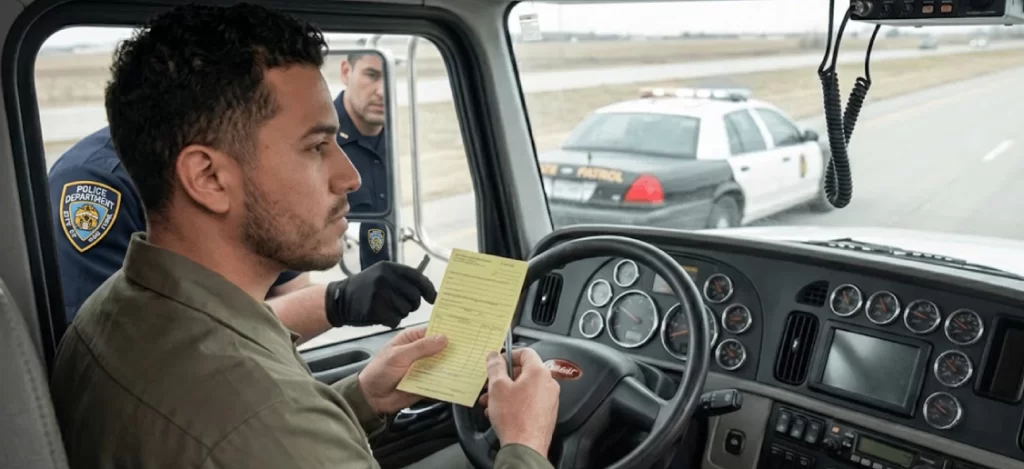
Under 49 CFR Part 395.13, a driver found operating without a required ELD is placed out of service immediately. The truck does not move until the violation is corrected. For a solo owner-operator, that means a missed delivery, an unhappy customer, and a lost day of income.
Under the FMCSA penalty schedule, the civil penalty is up to $19,246 per violation for motor carriers and up to $4,812 for individual drivers. These amounts are adjusted annually for inflation. For fleet operators with a pattern of violations, penalties compound and can trigger a compliance review or safety audit by the FMCSA.
How Does an ELD Violation Affect Your CSA Score?
ELD violations are recorded in the FMCSA’s Safety Measurement System under the Hours of Service Compliance BASIC. A missing ELD or no record of duty status violation carries a severity weight of 5 to 7 points depending on the specific violation cited, on a scale where 10 is the most severe.
High CSA scores affect your ability to get freight, raise your insurance rates, and increase your chances of being targeted for future inspections. Carriers above the FMCSA’s intervention threshold of 65 percent for the HOS BASIC face compliance reviews and potentially a Notice to Appear.
Can You Challenge an ELD Violation After the Fact?
Yes. You can challenge an incorrect violation through the FMCSA DataQs system. If the violation was issued in error, submit a request for data review with your supporting documentation. Having work reporting location records, trip records, and exemption qualification records ready is the only way to win that challenge.
Geosavi builds exemption documentation tools directly into our platform so your records are ready at the roadside, not something you are scrambling for after the fact.
Do Owner-Operators Driving Box Trucks Need an ELD?
Yes, if they meet the CMV and RODS thresholds. Owner-operators are not exempt from the ELD mandate because they own their truck. The mandate applies based on vehicle weight, cargo type, and operation type, not ownership structure.
An owner-operator running a 26-foot box truck in interstate commerce, hauling general freight, and keeping RODS more than 8 days in a 30-day period needs a registered ELD. There is no ownership exemption in 49 CFR Part 395.
Are Owner-Operators Who Lease to a Carrier Treated Differently?
No. Whether you operate under your own authority or are leased to a carrier, HOS rules and the ELD mandate apply to the driver and the vehicle equally. The carrier may require you to use a specific ELD system. Under a lease agreement, the carrier typically carries compliance responsibility, but that does not remove your personal obligation as the driver.
According to ATRI research, owner-operators represent a notable share of ELD compliance violations, partly because they lack the compliance support systems that larger fleets have built internally. Geosavi is built specifically for owner-operators and small fleets, giving you the same compliance tools without the overhead of a large carrier operation.
What ELD Does an Owner-Operator Actually Need?
You need an ELD that is on the FMCSA registered ELD list. The device must meet the technical specifications in 49 CFR Part 395, Subpart B, including automatic engine synchronization, tamper detection, and the ability to transfer data to an officer during inspection.
Geosavi is confirmed on the FMCSA registered list and meets all technical requirements under 49 CFR Part 395, Subpart B. You can see full hardware and platform details on our electronic logging device page.
How Does the Short-Haul Exemption Work for Box Truck Drivers?
The short-haul exemption is the most widely used exemption for box truck drivers and also the most frequently misapplied. Under 49 CFR Part 395.1(e)(1), a CMV driver is exempt from keeping RODS if all of the following are true on every day the exemption is claimed:
- The driver operates within a 150 air-mile radius of the normal work reporting location.
- The driver starts and ends the duty period at the same normal work reporting location.
- The driver is released from duty within 14 consecutive hours of coming on duty.
- The driver does not drive more than 11 hours.
- The driver takes 10 consecutive hours off duty before the next on-duty period.
Miss any one of these on a given day and RODS are required for that entire day.
What Is a Normal Work Reporting Location?
Your normal work reporting location is the place where you regularly report to start your shift. For a local delivery driver, that is typically a warehouse or terminal. For an owner-operator, it may be your home or your business address.
The 150 air-mile radius is measured from that fixed location. Air miles are straight-line distance, not road miles. A 150 air-mile radius works out to roughly 172 road miles. If you start a shift from a different location on a given day, confirm the radius still applies correctly from that new starting point before claiming the exemption.
What Records Do You Keep When Using the Short-Haul Exemption?
You do not need to keep RODS, but record-keeping is still required. Under 49 CFR Part 395.1(e)(1), your employer must keep time records showing when you report for duty, your total hours on duty each day, and when you are released from duty. Those records must be kept for 6 months.
If you are an owner-operator, you keep these records yourself. Geosavi logs this data automatically even when full ELD logging is not required, so your documentation is ready for any inspection or audit. If you also want to understand how these rules apply to purely local runs, our article on ELD requirements for local trucking covers the conditions in detail.
What Should You Look for in an ELD for a Box Truck?
Not all ELDs are built the same way. For box truck operations, especially smaller fleets and owner-operators, certain features matter more than others.
Does the ELD Connect Automatically to the Engine?
Under 49 CFR Part 395, Subpart B, a compliant ELD must be integrally synchronized with the vehicle’s engine. It must automatically record engine power status, vehicle motion, miles driven, and engine hours. Any ELD that requires manual input for driving time is not compliant.
For box trucks, confirm that the ELD you are considering is compatible with your specific make, model, and engine year. Most modern box trucks use a standard OBD-II or 9-pin J1939 diagnostic port. Geosavi’s ELD connects through the standard diagnostic port and is compatible with major box truck manufacturers including Isuzu, Mitsubishi Fuso, Ford, GMC, and Freightliner.
Can the ELD Transfer Data During a Roadside Inspection?
Yes, and this is a requirement. Under 49 CFR Part 395.22, a driver must be able to transfer ELD data to an officer through either a telematics transfer (wireless) or a local transfer (USB or Bluetooth). An ELD that cannot transfer data during a roadside inspection does not meet the technical standard.
Ask any ELD vendor specifically how data transfer works before you buy. Some older or cheaper devices only support one transfer method. Geosavi supports both wireless and local transfer, so you are covered regardless of how an officer requests the data. If you want to browse our ELD hardware options and pricing, visit our online store.
Is 24/7 Support Available If Something Goes Wrong?
An ELD malfunction during a run creates a compliance problem immediately. Under 49 CFR Part 395.34, a driver must note the malfunction, notify the carrier within 24 hours, and keep paper logs for no more than 8 days while waiting for the device to be repaired or replaced.
Having support available at any hour is a practical compliance need. Geosavi offers 24/7 support and you can reach our team any time through our support page or by calling (800) 261-4361 directly.
How Do You Get Your Box Truck ELD Registered and Ready for Inspection?
Getting your ELD set up correctly before your first inspection is far easier than fixing a problem during one. Here is the process from start to finish.
Step 1: Verify the ELD is on the FMCSA registered list
Go to the FMCSA registered ELD list and confirm your device is listed. A vendor saying their device is FMCSA compliant is not the same as being on the registered list. Check the list directly.
Step 2: Install the device and confirm engine synchronization
The ELD must connect to your engine’s diagnostic port and automatically detect engine power and vehicle motion. After installation, run the truck and confirm the ELD records driving time without any manual input from the driver.
Step 3: Set up your driver profile and carrier information
Your ELD must display your name, CDL number if applicable, carrier name, and USDOT number. Under 49 CFR Part 395.22(b), this information must be configured before you operate.
Step 4: Test the data transfer function
Before your first run, practice transferring your logs using both wireless and local transfer methods. Know how to do this before an officer asks for it at the roadside.
Step 5: Keep the required documents in the cab
Under 49 CFR Part 395.22(h), the driver must have an ELD information packet in the vehicle including an instruction sheet for data transfer, a malfunction reporting procedure, and blank paper log forms sufficient for at least 8 days. Note: as of May 2025, FMCSA proposed removing the physical ELD user manual requirement under 49 CFR 395.22(h)(1). That rule had not been finalized as of the date of this article. The full in-cab packet requirement remains in effect until finalized. Check the FMCSA website for the latest status on this proposed change.
What Are the Most Common ELD Mistakes Box Truck Drivers Make?
After working with small fleets and owner-operators for years, we see the same mistakes show up at inspections and audits. Here are the ones that cause the most problems.
Do Drivers Forget to Switch Duty Status Correctly?
Yes. This is the single most common ELD violation we see. Under 49 CFR Part 395.8, a driver must change duty status at the exact time of the change. Changing it after the fact, or not changing it at all, creates a false RODS entry. Even when the mistake is unintentional, it appears as a violation during an inspection or audit.
Box truck drivers doing multiple stops on a local route often forget to switch from driving to on-duty, not driving when they arrive at a stop. Every minute spent unloading while the ELD still shows driving is a logged violation.
Do Drivers Claim the Short-Haul Exemption Without Meeting All Conditions?
Frequently. The most common error is exceeding the 150 air-mile radius on a day the driver intended to claim the exemption. GPS data on a compliant ELD shows exactly where the truck went. If the radius was exceeded, the officer sees it immediately.
The second most common error is returning to the work reporting location after the 14-hour on-duty window has closed. A third error is starting a shift from a different location without confirming the exemption still applies from that new starting point.
Do Fleet Managers Miss ELD Firmware and Software Updates?
Yes, more often than you would expect. The FMCSA does not require annual ELD recertification, but device firmware and software must stay current. An ELD running outdated firmware may lose compliance status when a vendor issues a required update.
FMCSA removed 79 devices from the FMCSA registered ELD list between January and May 2025 alone for failure to meet minimum technical standards. If your device gets revoked and you keep using it, it is treated as having no ELD at all. For fleet safety beyond ELD compliance, many of our customers also add vehicle video telematics to their box trucks for incident documentation and roadside protection.
According to the CVSA’s 2022 International Roadcheck report, HOS violations remain among the top five out-of-service violations for CMV drivers. A properly configured, up-to-date ELD is your first line of defense.
Your Box Truck ELD Questions Answered
Does a box truck under 10,001 pounds GVWR need an ELD?
No. A box truck with a GVWR at or below 10,000 pounds does not meet the federal CMV definition under 49 CFR Part 390.5 for HOS purposes, so the ELD mandate does not apply based on weight alone. The exception is a vehicle hauling placarded hazardous materials, in which case CMV rules apply regardless of weight. Always confirm your GVWR using the manufacturer’s door sticker, not the actual load weight on any given day.
If I only drive locally within one state, do I still need an ELD for my box truck?
Federal ELD rules apply to interstate commerce. If you operate entirely within one state, the federal mandate does not apply directly. However, many states have adopted federal HOS rules for intrastate operations. Assuming you are exempt simply because you stay within state lines is a common and costly mistake. Check your state’s Department of Transportation rules before relying on that assumption.
Can I use paper logs instead of an ELD for my box truck?
Yes, in limited situations. If you keep RODS for 8 or fewer days in any 30-day rolling period, you may use paper logs under 49 CFR Part 395.1(e)(1). If your operation qualifies for the short-haul exemption, no RODS are required at all. Outside those situations, a registered ELD is required. Paper logs are also required as a backup during a confirmed ELD malfunction for up to 8 days under 49 CFR Part 395.34.
What is the fine for not having an ELD in a box truck that requires one?
Under the FMCSA penalty schedule, the civil penalty is up to $19,246 per violation for motor carriers and up to $4,812 for individual drivers. These amounts are adjusted annually for inflation. The driver is also placed out of service immediately, meaning the truck does not move until the issue is resolved. Repeat violations can trigger a full FMCSA compliance review.
Does the exemption for vehicles with pre-2000 engines apply to box trucks?
Yes. Under 49 CFR Part 395.2, the ELD mandate does not apply to vehicles with engines manufactured before model year 2000. If your box truck has a pre-2000 engine, you are not required to use an ELD, though HOS rules may still apply and paper logs would be required. Verify the engine model year using the vehicle’s VIN or manufacturer documentation, not the cab year, since some trucks have had engine replacements over the years.
Conclusion
Whether your box truck needs an ELD comes down to three things: your GVWR, your operation type, and whether you are required to keep records of duty status. Most box trucks used in interstate commerce above 10,001 pounds GVWR require an ELD unless a specific exemption applies. The short-haul exemption, the 8-day paper log provision, and the pre-2000 engine exemption are the three most relevant to box truck operators, and each one has conditions that must be met on every single day you claim it.
Getting this wrong is not just a fine. It is an out-of-service order at the roadside, a CSA score impact that follows your operation for up to two years, and the possibility of a full compliance review. Getting it right means knowing exactly where your truck falls, having a registered ELD installed and configured correctly, and keeping documentation ready for every exemption you claim.
We work with box truck operators, owner-operators, and small fleets every day. Our FMCSA-registered ELD platform handles the full range of CMV operations from single box trucks to mixed fleets. To get a quote based on your fleet size and vehicle type, fill out our price calculator. To reach us directly, visit our contact page or call (800) 261-4361. We back every account with a 30-day money-back guarantee and 24/7 support.