Key Takeaways
- The average cost to operate a truck was $2.26 per mile in 2024, according to ATRI’s 2025 Analysis of the Operational Costs of Trucking, with fuel per mile at 48 cents and repair and maintenance just under 20 cents per mile.
- Non-fuel operating costs rose 3.6 percent to $1.779 per mile in 2024, the highest ATRI has ever recorded for that category, driven by truck and trailer payments, driver benefits, and insurance.
- Motor carriers face maximum civil penalties of up to $19,246 per HOS violation under the FMCSA penalty schedule, adjusted annually for inflation. One citation can cost more than a full year of ELD service for several trucks.
- 67 ELD devices have been removed from the FMCSA-registered ELD list since January 2025, and FMCSA Administrator Derek Barrs has stated the agency will continue to identify and remove any device that falls short of federal standards, according to FreightWaves reporting on May 7, 2026.
- HOS violations rose from 410,000 in 2023 to more than 500,000 in 2025, according to RigDig data cited by Overdrive in April 2026, meaning unmanaged compliance is a growing financial risk for every fleet.
- According to ATA American Trucking Trends 2025, 91.5 percent of carriers operate 10 or fewer trucks and 99.3 percent operate fewer than 100 power units, meaning the vast majority of fleets are small operations where a single bad inspection day hits hard.
- ELD mandate adoption is projected to prevent 1,844 crashes, reduce injuries by 562, and save 26 lives per year, according to the FMCSA-registered ELD list page, reducing liability exposure for fleets running compliant, registered devices.
- The CVSA Roadcheck 2026 focus areas covered ELD tampering and log integrity during the May 12-14 inspection blitz, and 58,382 falsification violations were recorded in 2024 according to CVSA annual data.
Introduction
Every fleet owner eventually runs the same mental calculation. You see a monthly ELD and fleet management subscription fee and you weigh it against what you are already spending to keep trucks moving. The number looks manageable in isolation, but only if you are counting what the platform actually prevents, not just what it costs.
The problem with most ROI conversations about fleet management is that they only count the easy returns. Fuel savings get a lot of attention because fuel is visible. A line item on a fuel card statement is easy to track. What does not show up as a line item is the load you did not lose because your driver passed inspection, the audit that did not escalate because your records were clean, or the insurance renewal that held because your SMS profile showed no violations in the prior twelve months. Those returns exist. They are just harder to measure until the day you experience them.
This article goes through the full picture. Operating costs, compliance exposure, record-keeping obligations, the risk of running a device that FMCSA has removed from its registered list, what a DOT audit looks like when records are missing, and how the math changes depending on how many trucks you run. The goal is to give you enough information to run the calculation yourself, against your own operation, before you make a decision either way.
The trucking industry is under more regulatory pressure in 2026 than it has been in recent years. 67 ELD devices have been pulled from the FMCSA-registered ELD list since January 2025, and FMCSA Administrator Derek Barrs said the agency will keep going, according to FreightWaves reporting on May 7, 2026. The CVSA Roadcheck 2026 focus areas covered ELD tampering and log integrity this spring. Level VIII electronic inspections are expanding nationwide. The compliance risk of running without a registered, functioning ELD platform is real, and the cost of getting it wrong is much higher than the cost of getting it right.
What Does Fleet Management Actually Cost?
Fleet management costs fall into three categories, and most fleets undercount at least one of them before they start.
The first is hardware ELD device needs to be purchased before it can be used. The upfront hardware cost is a one-time expense for each truck. The Geosavi tablet is SAE J1455 certified, which means it is built to handle the temperature swings, vibration, and dust that cab environments produce. That certification matters because a tablet that fails during a weigh station inspection does not help you. You can see current hardware options through the ELD products store and get a full cost picture for your truck count using the price calculator.
The second category is the ongoing subscription. This is the number most fleets focus on because it shows up every month. It is also the number that needs to be compared to what it returns, not just what it costs. Monthly subscription costs for ELD and fleet management platforms vary by provider and by how many trucks you run. The price calculator gives you a Geosavi-specific breakdown.
The third category is time, this one is invisible on a budget spreadsheet, but it is real money. If you or your back office staff are spending hours each week chasing down paper logs, correcting driver entries manually, building IFTA reports by hand, or pulling records together before an audit, those hours have a dollar value. For a back-office employee billing at $20 to $25 an hour, six hours a week on compliance paperwork is $500 to $650 a month in labor alone. Digital records stored through a functioning ELD platform cut that time down. It depends on where you are starting from, but fleets moving from paper logs to a registered ELD consistently report that administrative time drops once drivers and staff are comfortable with the system.
What Do Trucking Operating Costs Look Like in 2026?
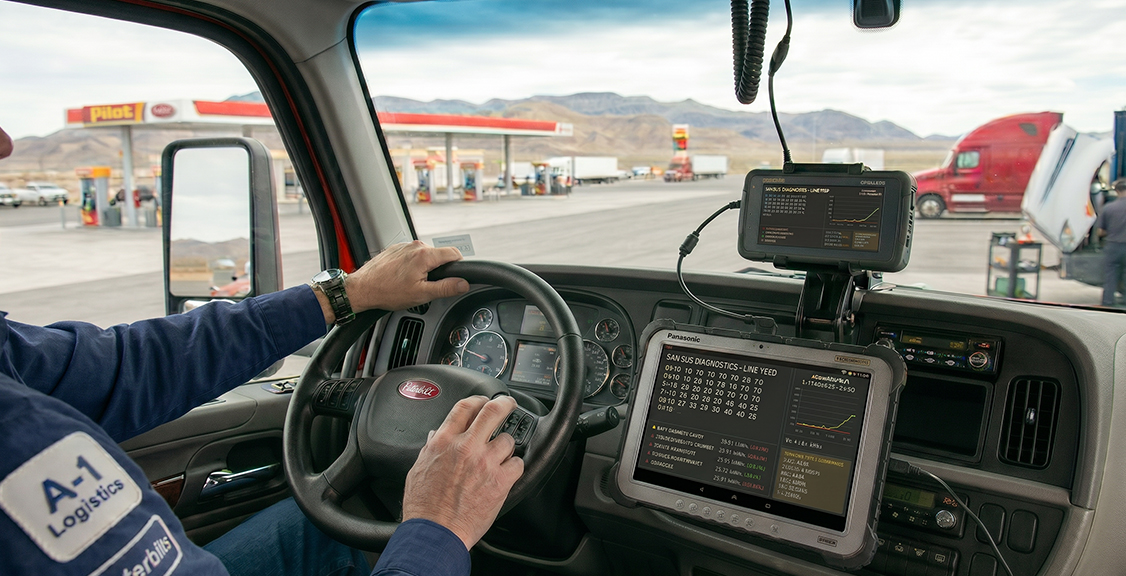
Before you can evaluate what fleet management returns, you need a baseline for what running a truck actually costs right now. ATRI provides the most detailed annual breakdown available from a primary research source.
The average cost to operate a truck was $2.26 per mile in 2024, according to ATRI’s analysis of 178,091 combination truck-tractors that ran 14.08 billion miles. Fuel came in at 48 cents per mile, down from 55 cents in 2023 but still 10 cents higher than in 2019. Repair and maintenance costs dropped slightly to just under 20 cents per mile, and truck and trailer payments rose to 39 cents per mile, up 8.3 percent from 2023.
When fuel costs are excluded, marginal costs climbed to $1.779 per mile, the highest non-fuel operating costs ATRI has ever recorded. Driver wages rose 2.4 percent, driver benefits rose 4.8 percent, and insurance premiums added another 10 cents per mile to the total. Average operating margins in 2024 were below 2 percent in every sector except LTL, and the truckload sector ran an average operating deficit of negative 2.3 percent, according to Commercial Carrier Journal’s reporting on the ATRI data.
Those numbers describe the industry average. Your actual cost per mile will vary based on your equipment age, routes, load type, and whether your drivers run regional or long-haul. What they tell you is that margins are thin and every cost category that can be reduced matters. Fuel and maintenance are the two areas where better data most directly reduces spending, and both depend on having accurate trip and engine records, which a functioning ELD platform provides as part of its normal operation.
What Does Compliance Risk Cost a Fleet in 2026?
Compliance costs are not the same as subscription costs. Subscription costs are predictable and fixed. Compliance costs are variable and can be severe.
Motor carriers face maximum civil penalties of up to $19,246 per HOS violation under the FMCSA penalty schedule, adjusted annually for inflation. Drivers face a maximum of $4,812 per violation. Knowingly falsifying records under 49 CFR 395.8(e)(1) carries a maximum civil penalty of up to $15,846. These are maximum amounts. Actual assessed penalties depend on the specific violation, the severity, and whether it is a first or repeated offense. But even a fraction of the maximum for a motor carrier exceeds what most small fleets will spend on ELD service in a year.
HOS violations rose from 410,000 in 2023 to more than 500,000 in 2025, according to RigDig data cited by Overdrive in April 2026. That is not a one-year anomaly. It reflects more inspections, more electronic checking capacity, and more fleets running with records that do not hold up under scrutiny. Fleets with accurate, real-time ELD records from a registered device sit outside most of that risk. Their drivers have logs that match engine data, their records are available in seconds during a roadside inspection, and their back office can pull any record going back six months under the retention requirement at 49 CFR 395.8(k)(1) without searching through filing cabinets.
The CVSA Roadcheck 2026 focus areas covered ELD tampering and log integrity during the May 12–14 blitz. 58,382 falsification violations were recorded in 2024 according to CVSA annual data. Inspectors are trained to identify manipulated logs, and a falsification finding is a worse compliance outcome than a standard HOS violation. The fine exposure is higher, the SMS impact is worse, and the record follows the carrier. Running clean records on a registered device is the only way to remove that exposure entirely.
What Happens When Your ELD Gets Removed from the Registered List?
This is the compliance risk most fleets did not see coming three years ago, and it is now one of the most financially damaging traps in the industry.
FMCSA has removed 67 ELD devices from the FMCSA-registered ELD list since January 2025, in roughly 16 months. FMCSA Administrator Derek Barrs put that number on record on May 7, 2026, and stated the agency will continue to identify and remove any device that falls short of federal standards, as reported by FreightWaves. The removals happen when a provider’s device fails to meet the technical requirements under Appendix A to Subpart B of Part 395. The certification model in the United States allows manufacturers to self-certify their devices, meaning no third-party testing is required before a device goes on the registered list. A device can be sold, installed, and in service for months or years before FMCSA discovers it does not meet the standard and removes it.
When a device is removed, FMCSA gives carriers 60 days to replace it with a device from the current registered list. After the grace period, carriers who continue using the revoked device are cited under 49 CFR 395.8(a)(1) for no record of duty status and drivers are placed out of service, as confirmed on the FMCSA-registered ELD list page. Safe ELD and MYLOGS ELD were removed on May 7, 2026. Carriers using those devices must replace them before July 7, 2026, or face out-of-service orders.
The financial impact of running a removed device goes beyond the citation. An out-of-service order means the truck stops and the load does not move. If the driver was loaded and mid-route, you lose the fuel already burned, the revenue from the load, and potentially the lane if the broker or shipper marks the carrier. That exposure is entirely preventable by checking the FMCSA-registered ELD list and running a device that has not been pulled. The Geosavi ELD is on the current registered list. You can verify the active ELD platform and hardware options before purchasing.
How Does Fleet Management Reduce Fuel and Maintenance Costs?
Fuel and maintenance together represent the two largest variable cost categories for most trucking fleets. In 2024, fuel cost 48 cents per mile and repair and maintenance came in at just under 20 cents per mile, according to ATRI’s 2025 operational cost report. On a truck running 100,000 miles a year, that is $48,000 in fuel and roughly $20,000 in maintenance. Small reductions in either category add up quickly.
The Geosavi ELD connects via J1939, J1708, or OBD-II, pulling engine data directly from the vehicle. That means idle time, engine hours, and trip data are recorded without the driver manually entering anything. Idle time is one of the most overlooked fuel costs in trucking. A diesel engine idling burns roughly 0.8 gallons of fuel per hour. A driver idling two hours a day at a truck stop, loading dock, or layover point is burning more than $3 per day at current diesel prices, per truck, before the truck moves an inch. On a five-truck fleet running 250 days a year, that is over $3,700 in preventable fuel cost annually based on those figures. Visibility into idle patterns lets you act on the problem. Without data, you are estimating.
On the maintenance side, the ATRI data points to a consistent pattern. Fleets running their own maintenance programs had lower per-mile repair costs than those relying on outside shops, and less-than-truckload carriers that did the most in-house maintenance at 78 percent of that sector had the most favorable repair cost profiles. Engine data from an ELD that reads J1939 or J1708 gives your maintenance team actual hours and conditions data to work from rather than mileage estimates. ATRI also found that the average number of miles between breakdowns or unscheduled repairs improved from 37,700 to 38,249 miles in 2024, and fleets with better maintenance tracking drove that improvement. Scheduled maintenance based on actual engine data costs less than emergency repairs on a truck that breaks down loaded.
How Does Accurate Record Keeping Protect a Fleet’s Hours?
HOS compliance is not just a citation-avoidance exercise. It is how drivers protect their available hours and how carriers protect their capacity.
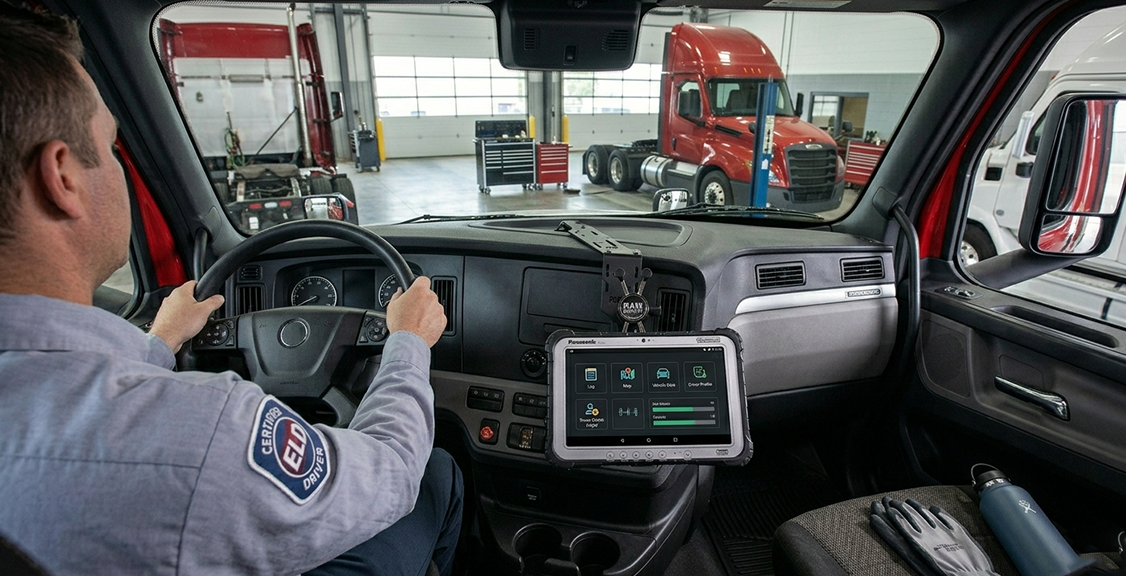
Under 49 CFR Part 395, drivers operating commercial motor vehicles as defined under 49 CFR 390.5 must record hours of service. The 11-hour driving limit, the 14-hour on-duty window, the mandatory 30-minute break, and the weekly limit under 49 CFR 395.3(b) all require accurate time tracking. An ELD that is functioning correctly records all of that automatically from the engine connection. A driver does not need to remember when they crossed a state line or manually calculate remaining drive time. The device does it. That accuracy protects the driver from violations they did not intentionally commit and protects the carrier from liability when records are reviewed.
The driver harassment protection under 49 CFR 390.36 is also worth understanding in this context. Carriers cannot coerce drivers to exceed legal HOS limits. When a driver’s ELD records show available hours accurately in real time, dispatchers and back-office staff are working from the same data the driver has. There is no ambiguity about whether a driver can make one more run before a required rest period. That clarity protects both the driver and the carrier from a harassment allegation that can carry its own compliance consequences.
The 6-month record retention requirement under 49 CFR 395.8(k)(1) is automatic when records are stored digitally through a compliant ELD. Paper logs require physical storage, a filing system, and someone to maintain them. Digital records are retrievable in seconds. When an inspector asks for a specific date’s logs during a roadside check, a driver using a registered ELD can transfer that data without leaving the cab. An inspection that resolves quickly keeps the driver moving. One that drags on because records are missing or incomplete costs hours on the road.
What Does Fleet Management Return on Back-Office Time?
Back-office time is the return that shows up last on most ROI calculations, but for smaller fleets where the owner is also the dispatcher, the bookkeeper, and sometimes the driver, it is where the real financial impact lives.
IFTA reporting requires accurate fuel purchase records, miles by state, and calculations for each quarter. For a fleet running multiple states, building that report manually from fuel card statements and paper logs takes hours. A functioning ELD platform that records mileage by state automatically reduces that calculation to a data export and a review. The first time your quarterly IFTA filing takes 45 minutes instead of half a day, the value of that time becomes concrete.
Supporting documents under 49 CFR 395.8(k) must be retained alongside HOS records. Bills of lading, fuel receipts, toll records, and dispatch records all need to be available for audit. Paper-based fleets store these in folders, binders, or boxes. Digital platforms that capture supporting documents alongside HOS records create a searchable archive. When FMCSA or a state auditor requests records, retrieval takes minutes rather than the hours spent searching physical files. For a fleet that has not been through a compliance review before, that difference is not theoretical. It is the difference between a routine audit and one that escalates because records cannot be produced.
Pre-trip and post-trip inspection records under 49 CFR 396.11 need to be stored and accessible for review. When DVIR records are completed digitally and stored in the same platform as HOS records, the inspection history for every truck in your fleet is available in one place. A roadside inspector can verify that the driver completed their pre-trip on the day of the inspection, and a maintenance team can pull the DVIR history for a specific truck when diagnosing a recurring issue. That visibility has a dollar value in both avoided violations and faster maintenance decisions.
How Does Fleet Management ROI Work for a Small Fleet?
According to ATA American Trucking Trends 2025, 91.5 percent of carriers operate 10 or fewer trucks and 99.3 percent operate fewer than 100 power units. The ROI conversation for fleet management is most relevant for this group, because the math works differently at small scale than it does for a hundred-truck operation.
For a one- to five-truck fleet, the calculation is almost entirely about compliance risk rather than operational efficiency. The subscription cost for one to five ELD devices is a known, fixed monthly number. The risk of a single HOS citation, a single out-of-service order, or a single failed audit is not fixed and is not small. At maximum civil penalty exposure for a motor carrier under the FMCSA penalty schedule, one citation wipes out months of savings in a single enforcement interaction. The 30-day money-back guarantee on the Geosavi platform means the risk of getting started is limited. If the device does not work with your trucks, you are not locked in.
For a fleet of six to fifteen trucks, both the compliance protection and the operational returns matter. Fuel visibility across six or more trucks compounds quickly. Maintenance tracking across a mixed fleet saves real money when it catches a wear pattern before a breakdown. Administrative time savings across IFTA reporting, DVIR records, and HOS log retrieval become a meaningful reduction in back-office hours per week. The price calculator lets you build the cost side of the equation. The operational returns depend on your specific routes, equipment age, and current compliance history.
For owner-operators running a single truck, the ROI case is the simplest. A single out-of-service order on a loaded truck does not just cost the citation fee. It costs the load, the fuel already burned, and the relationship with whoever was waiting for the delivery. For an owner-operator whose entire revenue depends on that one truck moving, the platform pays for itself the first time it keeps a driver rolling through an inspection that would otherwise have resulted in a violation.
How Does Fleet Management Affect Insurance Costs?
Insurance is now one of the fastest-growing cost categories in trucking. Marginal insurance costs increased to 9.9 cents per mile in 2023, up 12.5 percent over the prior year, according to ATRI’s 2025 operational cost analysis, which references Council of Insurance Agents and Brokers data showing a 9.8 percent increase in commercial auto rates in the first quarter of 2024.
Insurance underwriters look at a carrier’s safety record when setting premiums. A clean Safety Measurement System profile with no HOS violations, no out-of-service orders, and no falsification findings on record is a better insurance profile than one with repeated citations. The direct financial benefit from insurance pricing does not show up in the first month of running a compliant ELD. It builds over time as your compliance history develops. Carriers that have maintained clean records for two or three years with a registered device consistently present a lower risk profile at renewal than carriers with a history of violations, regardless of fleet size.
Nuclear verdicts in trucking litigation have grown as a financial concern in recent years. When a serious accident occurs, opposing counsel will pull a carrier’s compliance history as part of the discovery process. A carrier with complete ELD records, consistent DVIR completion, and no falsification history has documentation that supports their case. A carrier with gaps, missing logs, or records stored on a removed device has a much harder position to defend. Compliance records are not just a regulatory obligation. They are a legal protection.
What Does a DOT Audit Look Like Without Clean Records?
A compliance review triggered through FMCSA’s Safety Measurement System is not something most small fleet owners plan for. It is something that finds them when their violation history accumulates in the SMS data. Keeping your violation count low through accurate ELD records from a registered device is the most direct way to reduce that risk.
When a compliance review does happen, the auditor will request records going back at least six months under 49 CFR 395.8(k)(1). HOS records, DVIR records, supporting documents, and driver qualification files are all subject to review. If those records are complete, retrievable, and consistent with each other, the review is a documentation exercise. It takes time, but it resolves. If records are missing, inconsistent, or stored on a removed ELD that can no longer produce a valid data transfer, the review becomes something different.
An auditor finding systematic record gaps can expand the scope of review. What starts as a request for HOS logs can turn into a broader look at driver qualification files under 49 CFR Part 391, vehicle inspection records under 49 CFR 396.11, and drug and alcohol testing records. Each gap creates more questions. The time cost of a compliance review that runs several weeks, the legal cost if you need representation, and the potential civil penalties for what is found all come out of operating revenue. None of those costs appear on a subscription comparison spreadsheet, but they are real and they are avoidable.
The FMCSA Motus system replaced the legacy URS portal as of April 29, 2026, according to the Federal Register. All carrier registration and compliance records now flow through that system. Keeping your carrier profile current and your records clean in that environment is more important than it was before the transition.
Running With vs. Without a Fleet Management Platform
| Cost or Risk Factor | Without a Registered ELD Platform | With a Registered ELD Platform |
|---|---|---|
| HOS violation exposure | High. Missing or inconsistent records under paper or manual logging. | Reduced. Registered ELD records automatically in real time. |
| Maximum civil penalty per HOS violation, motor carrier | Up to $19,246 under the FMCSA penalty schedule. | Reduced through continuous, accurate logging. |
| Risk from a removed ELD device | Present if the device has been pulled from the FMCSA list. | Eliminated by staying current on the FMCSA-registered ELD list. |
| Out-of-service order risk | High. No record of duty status triggers immediate OOS. | Reduced. Clean records and a registered device remove the OOS trigger. |
| DVIR compliance under 49 CFR 396.11 | Dependent on driver discipline with paper forms. | Stored digitally, retrievable during inspection in seconds. |
| IFTA reporting time | Several hours per quarter building from paper and fuel receipts. | Reduced. Mileage by state recorded automatically. |
| Supporting document retention under 49 CFR 395.8(k) | Manual storage, filing, and physical retrieval. | Digital, searchable, and accessible for audit without manual search. |
| Insurance profile at renewal | Vulnerable to violations showing in carrier history. | Cleaner SMS record builds over time with consistent compliance. |
| SMS compliance review risk | Accumulates with repeated HOS citations. | Reduced through clean record history and low violation count. |
| Cost of platform vs. single citation | One maximum motor carrier citation exceeds a year of ELD service for multiple trucks. | Monthly subscription is a known, fixed, predictable cost. |
| Maintenance data availability | Based on mileage estimates and driver-reported issues. | Engine data via J1939, J1708, or OBD-II on every trip. |
| Back-office record retrieval time | Hours per request, physical search through logs and files. | Minutes through digital record access. |
Questions to Ask Before You Buy a Fleet Management Platform
Is this device currently on the FMCSA-registered list?
Check the FMCSA-registered ELD list before purchasing any device. 67 devices have been removed since January 2025 and the pace has not slowed. A device that appears legitimate in a search result may already be revoked. Verify the specific model and ELD identifier against the current registered list before you order. You can also verify current ELD platform and hardware options before committing.
What engine connection types does the hardware support?
Not every truck communicates the same way. Older engines often use J1708 and newer trucks use J1939 or OBD-II. A device that supports only one connection type will not work reliably across a mixed fleet. Confirm the device supports the ports on your actual trucks, not just those on the provider’s compatibility list. The Geosavi ELD connects via J1939, J1708, or OBD-II.
What does 24-hour support actually mean for a driver at 2 a.m.?
Support hours listed in a brochure are not the same as a live technician available when a driver is stuck at a weigh station with a log error. Ask specifically how long response times run after business hours, whether drivers can contact support directly without going through the dispatcher first, and whether phone support is available or only ticket-based. Geosavi offers 24-hour, 7-day technical support.
Is there a trial period with a real money-back guarantee?
A 30-day money-back guarantee lets you confirm the device works with your specific trucks and workflow before the cost becomes permanent. Ask whether the guarantee covers both hardware and the subscription, or only one of the two. The Geosavi platform includes a 30-day money-back guarantee.
How does the platform document driver harassment protection under 49 CFR 390.36?
Under 49 CFR 390.36, carriers cannot coerce drivers to violate HOS rules. Ask how the platform handles communications between dispatchers and drivers when a driver is approaching their legal limit, and whether any record is kept of dispatch instructions relative to a driver’s available hours. That documentation protects the carrier as much as the driver if a harassment allegation is ever raised.
What does the onboarding and transition period look like in real terms?
Moving from paper logs or a different ELD to a new system takes time. Drivers need to be trained and back-office staff need to know how to pull records, correct entries, and access the data an auditor would request. Ask the provider what the first 30 days look like in practice, what training materials are provided, and whether historical records from a previous system can be retained separately for the six-month window required under 49 CFR 395.8(k)(1). The Geosavi support page and FAQ section both provide direct access to transition guidance.
How is DVIR handled and stored within the platform?
Pre-trip and post-trip inspection records under 49 CFR 396.11 need to be stored and accessible during both roadside inspections and compliance reviews. Ask whether DVIR records are stored in the same system as HOS logs, how long they are retained, and whether a driver or dispatcher can pull a specific truck’s inspection history during a roadside check without requesting a separate data transfer.
What is the full first-year cost, including hardware, activation, and data plans?
Monthly subscription comparisons miss the total picture. Hardware purchase, any activation fee, the data plan required for connectivity, and replacement hardware costs all add to the first-year total. Use the price calculator to build a complete picture for your truck count, and then reach out through the contact page if the calculator does not cover your specific configuration.
Your Fleet Management Investment Questions Answered
General Questions
Is fleet management software required by law?
The ELD component is required by law for most carriers operating commercial motor vehicles as defined under 49 CFR 390.5. Broader fleet management features such as maintenance scheduling, DVIR logging, and IFTA reporting are not individually mandated by regulation, but each connects to a compliance obligation that carries civil penalty exposure if handled incorrectly. Running a registered ELD is a legal requirement. Using the platform’s additional features is a financial decision.
How quickly does a fleet management platform pay for itself?
It depends on your starting point. A fleet currently running on paper logs with inconsistent records can offset the cost within the first few months if even one inspection goes better because records were available and correct. A fleet already running a compliant ELD platform may see the return primarily through back-office time savings, fuel visibility, and maintenance data over a full operating year. The compliance protection is present from the first day of use regardless of the starting point.
Does the ROI calculation apply to a single-truck owner-operator?
Yes. A single out-of-service order or HOS citation at the maximum civil penalty level for a motor carrier costs more than most owner-operators will spend on ELD service in a full year. For a one-truck operation where every dollar of revenue depends on that truck moving, the compliance protection alone makes the math work. The Geosavi ELD is built to work at a single-truck scale.
What does fleet management have to do with my insurance premium?
Insurance underwriters use carrier compliance history as a factor in pricing commercial auto and cargo liability premiums. Marginal insurance costs rose to 9.9 cents per mile in 2023, up 12.5 percent over the prior year, according to ATRI data. A clean Safety Measurement System record built through consistent HOS compliance on a registered ELD reduces the violation history that underwriters review at renewal. That benefit accumulates over time rather than showing up in the first month of service.
How does the FMCSA Safety Measurement System affect small fleets?
FMCSA’s Safety Measurement System tracks HOS violations as part of every fleet’s compliance record. Repeated citations can trigger a compliance review regardless of fleet size. For a small fleet, a compliance review that finds systematic record problems is a serious financial event. Keeping your violation count low through accurate ELD records from a registered device is the most direct way to keep your SMS profile from attracting that kind of attention.
How long does it take a driver to learn a new ELD system?
Driver training for an ELD platform typically takes a few hours. The main learning curve is understanding duty status changes, how to handle malfunctions, and how to transfer data to an inspector. The Geosavi support page and FAQ cover driver-facing questions. For most drivers, the first week of use is the adjustment period, and the transition from paper to digital makes subsequent inspections faster rather than slower.
Can I see what the platform costs before committing?
Yes. The price calculator gives you a breakdown based on your truck count. The ELD products store shows current hardware options. If you have questions the calculator does not cover, the contact page connects you directly to the team.
Compliance and Penalty Questions
What are the maximum civil penalties for HOS violations in 2026?
Under the FMCSA penalty schedule, the maximum civil penalty for motor carriers is $19,246 per HOS violation, adjusted annually for inflation. For drivers, the maximum is $4,812 per violation. Knowing falsification of records under 49 CFR 395.8(e)(1) carries a maximum civil penalty of $15,846. These are maximum figures. Actual penalties depend on the specifics of the violation and the carrier’s prior compliance history.
What happens immediately when an ELD is removed from the FMCSA list?
FMCSA gives carriers 60 days from the removal announcement to replace the revoked device with a compliant ELD from the registered list. After the grace period, carriers continuing to use the revoked device are cited under 49 CFR 395.8(a)(1) for no record of duty status and drivers are placed out of service under CVSA criteria, as confirmed on the FMCSA-registered ELD list page. The truck stops moving until the driver has a compliant device or switches to paper logs.
Can inspectors check ELD status at roadside in 2026?
Yes. Level VIII electronic inspections, expanding nationwide in 2026, allow inspectors to check ELD data remotely without requiring the driver to pull over. Inspectors at fixed weigh stations can verify device registration and log integrity during a standard inspection. A driver running a removed device or a tampered log faces an out-of-service order regardless of whether the physical inspection is Level I or Level VIII.
What is the difference between a citation for 395.8(a)(1) and 395.8(e)(1)?
A citation under 49 CFR 395.8(a)(1) is for no record of duty status, meaning the log is missing or the device is not producing a valid record. A citation under 49 CFR 395.8(e)(1) is for knowingly falsifying of records, meaning the driver or carrier altered records to misrepresent hours driven. The falsification citation carries a higher maximum civil penalty and a more serious consequence in the SMS record. Running a removed ELD that can no longer produce a valid record creates a 395.8(a)(1) exposure. Manually editing logs to cover missing hours creates 395.8(e)(1) exposure.
How does the CVSA Roadcheck inspection focus affect my fleet’s risk?
The CVSA Roadcheck 2026 focus areas covered ELD tampering and log integrity during the May 12–14 blitz. 58,382 falsification violations were recorded in 2024 according to CVSA annual data, and inspectors are experienced at identifying manipulated records. A fleet running a registered ELD with clean records faces no additional risk from a Roadcheck-style focused inspection. A fleet running a removed device or inconsistent records faces the highest risk precisely during these focused enforcement periods.
How long must HOS records and supporting documents be retained?
Under 49 CFR 395.8(k)(1), records of duty status must be retained for at least six months. Supporting documents under 49 CFR 395.8(k) must be retained for the same period. A registered ELD platform stores these records digitally and makes them retrievable without manual filing or searching. If your current system requires you to physically produce paper logs going back six months during a compliance review, digital storage removes that risk entirely.
Where can I verify my current ELD is still on the registered list?
The current registered device list is maintained at the FMCSA-registered ELD list. Search by device name, provider name, or ELD identifier. If your device has been removed, you are in the 60-day grace period or past it depending on when the removal was announced. Current Geosavi ELD device options are available as a direct replacement for a removed device.
What is the FMCSA Motus system and does it affect my compliance records?
The Motus system replaced the legacy URS portal for FMCSA carrier registration and related compliance records, as announced in the Federal Register on April 29, 2026. If your carrier registration information is outdated or your USDOT profile has not been verified in the new system, address that before your next compliance review. Your compliance records and inspection history flow through the same federal data systems regardless of which portal interface FMCSA uses.
What regulation covers ELD technical standards, and why does it matter when buying a device?
ELD technical standards are set out in Appendix A to Subpart B of Part 395. Every device on the FMCSA-registered ELD list must meet those standards. The problem is that manufacturers self-certify their devices rather than submitting to third-party testing. That is why 67 devices have been removed since January 2025: FMCSA discovered post-certification that those devices did not actually meet the standard. Buying from the current registered list reduces your risk, but checking that list regularly is the only way to stay ahead of a removal that affects your trucks.
Does a compliance review affect my operating authority?
A compliance review that finds serious or repeated violations can result in a conditional or unsatisfactory safety rating. An unsatisfactory rating puts your operating authority at risk. FMCSA notifies the carrier of the proposed rating and provides an opportunity to respond, but the process is time-consuming and the outcome depends entirely on what the auditor finds in your records. Complete, consistent, digitally stored records from a registered ELD give you the strongest possible position going into any review.
Conclusion
The honest answer to whether fleet management is worth the investment is that it depends on how you count the cost of not having it. Monthly subscription costs are visible. Citation exposure, out-of-service orders, audit escalation, insurance premium increases, and the time cost of manual record-keeping are not line items most fleet owners track until they become expensive problems.
67 ELD devices have been removed from the FMCSA-registered ELD list since January 2025, with FMCSA Administrator Derek Barrs stating publicly the agency will keep going, as reported by FreightWaves. Level VIII electronic inspections are expanding nationwide, the CVSA Roadcheck 2026 focus areas confirmed inspectors targeted log integrity, and HOS violations rose from 410,000 in 2023 to more than 500,000 in 2025, according to RigDig data cited by Overdrive in April 2026. Fleets running clean records on registered devices are in a defensible position. Fleets that are not are absorbing a risk that grows with every mile driven.
If you want to see what the numbers look like for your truck count, start with the price calculator. If you have questions that go beyond what the calculator covers, reach out through the contact page and talk through what a transition would actually look like for your operation.