Key Takeaways
- FMCSA has removed 79 ELD devices from its registered list since January 2025, most recently a batch of 12 devices on May 20, 2026, with a replacement deadline of July 20, 2026, according to the FMCSA ELD program.
- Hours of Service violations rose from about 410,000 in 2023 to more than 500,000 in 2025, according to RigDig data cited by Overdrive, April 2026.
- Motor carriers face civil penalties up to $19,246 per HOS violation, and drivers up to $4,812, as maximum amounts adjusted annually for inflation under 49 CFR Appendix B to Part 386.
- The CVSA’s 2026 International Roadcheck ran May 12 to 14 with a primary focus on ELD tampering and log integrity, following 58,382 falsification violations recorded in 2024, according to CVSA annual data.
- Once a revoked ELD’s grace period expires, FMCSA directs safety officials to cite the driver under 49 CFR 395.8(a)(1) and place them out of service, even if the truck is otherwise safe to drive.
- The FMCSA Safety Measurement System tracks HOS violations as part of a fleet’s ongoing compliance record, and repeated citations can trigger a compliance review regardless of fleet size.
- Carriers can challenge a violation they believe is inaccurate through the FMCSA DataQs system rather than letting it sit permanently on their safety record.
- DVIR requirements under 49 CFR 396.11 require drivers to report vehicle defects at the end of each day, which means a fleet’s maintenance tool and its compliance tool need to talk to each other, not work in isolation.
Introduction
Keeping a fleet compliant in 2026 is not a one-tool job anymore. Between Hours of Service rules, DVIR reporting, IFTA filings, driver qualification files, and an FMCSA that is actively pulling non-compliant ELDs off its registered list, a fleet manager who tries to track all of this in spreadsheets and sticky notes is going to fall behind fast.
That gap matters because the cost of missing something is not just an inspection headache. HOS violations climbed from around 410,000 in 2023 to more than 500,000 in 2025, and the maximum civil penalty per HOS violation now sits at $19,246 for the carrier and $4,812 for the driver, adjusted annually for inflation under the FMCSA civil penalty schedule. A fleet running without the right tools in place is exposed to that risk every single day your truck is on the road.
Below, you will find a breakdown of the tools and resources that actually matter for a fleet manager: what they do, why FMCSA cares about them, and how to tell a tool that will hold up at a roadside inspection from one that will not. We cover the registered ELD, DVIR software, IFTA reporting, driver qualification tracking, and the government resources worth bookmarking, along with a buyer’s guide and a comparison table you can use to evaluate what your fleet already has.
If you want to talk through what your fleet currently uses and where the gaps are, our team is available at (800) 261-4361 or through our contact form, and there is no pressure to switch anything on the first call.
What Tools Do Fleet Managers Need?
A compliant fleet needs six categories of tools working together: a registered ELD, DVIR and maintenance tracking, IFTA and fuel reporting, driver qualification file management, safety score monitoring, and a way to dispute inaccurate violations.
Each of these covers a different regulatory requirement, and none of them fully replaces another. An ELD alone will keep your Hours of Service records accurate, but it will not track a cracked windshield reported on a DVIR or flag that a driver’s medical certificate expired last month. Fleet managers who treat compliance as a single software purchase usually discover the gap during an audit, which is the worst possible time to find out. The sections below walk through each category, what it does for your fleet, your drivers, and your back office, and where to find it.
Why Is an ELD the Foundation of Fleet Compliance?
An ELD is the foundation because every other compliance record in your fleet, from HOS logs to inspection reports, depends on accurate driving time data being captured correctly in the first place.
Since January 2025, FMCSA has removed 79 devices from its registered ELD list for failing to meet the technical standards in Appendix A to Subpart B of Part 395. The most recent batch, 12 devices removed on May 20, 2026, gives carriers until July 20, 2026 to replace them. FMCSA gives carriers 60 days from each removal announcement to swap out a revoked device. After that window closes, using the device is treated the same as running with no ELD at all, meaning a citation under 49 CFR 395.8(a)(1) and an immediate out-of-service order, regardless of how well maintained your truck is otherwise.
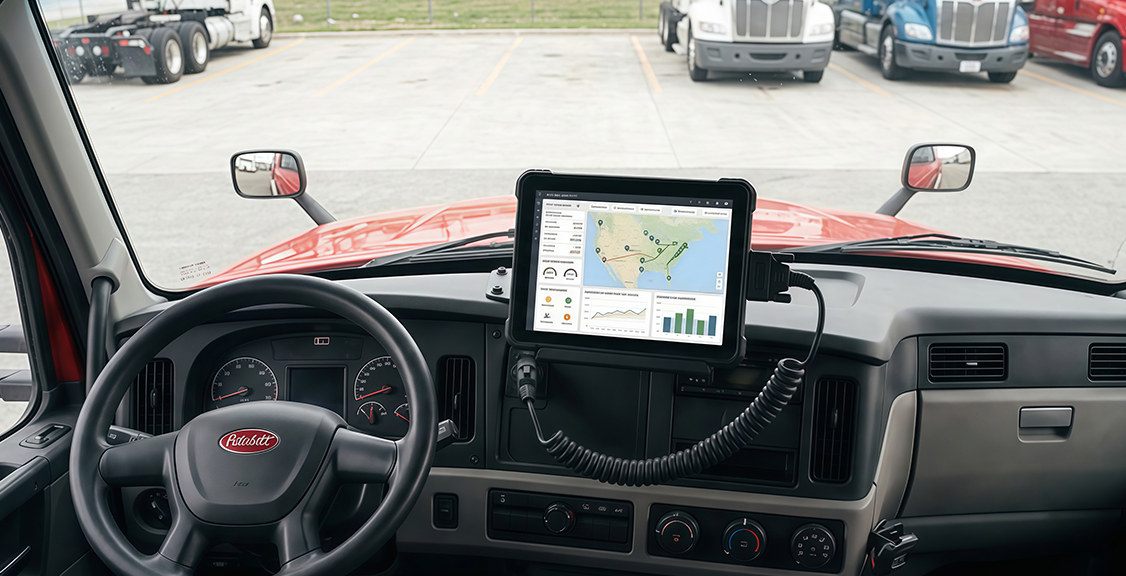
That is why checking the FMCSA-registered ELD list before buying, and periodically after, is not optional. Your fleet’s ELD should be listed there right now, not just at the time you bought it. Our platform connects to your truck through J1939, J1708, or OBD-II depending on your engine, and runs on an Android tablet built to SAE J1455 standards for vehicle conditions. You can review the full setup on our ELD platform and browse mounts and accessories in our shop.
What Compliance Resources Help Track Violations and Safety Scores?
The FMCSA Safety Measurement System is the resource that tracks how your HOS violations and inspection history add up over time, and repeated citations there can trigger a compliance review even for a small fleet.
FMCSA does not publish a specific violation percentage that guarantees a review, so treat any number you see online with caution unless it comes directly from FMCSA. What matters practically is that violations accumulate and stay visible for a rolling period, which means a single bad month from one driver can affect how your whole fleet looks to enforcement and to shippers checking your record.
If a violation shows up that you believe is wrong, whether it is a data entry error from an inspection or a citation tied to a device issue rather than driver behavior, the FMCSA DataQs system is the formal channel to challenge it. FMCSA also publishes the scoring methodology behind these records, which is worth a read if you want to understand exactly which violation types carry the most weight, and you can find it in FMCSA’s CSA methodology.
How Do Digital DVIR Tools Improve Maintenance Records?
Digital DVIR tools improve maintenance records by capturing defect reports the moment a driver notices them, with a timestamp and often a photo, instead of relying on a paper form that might get lost in a glovebox.
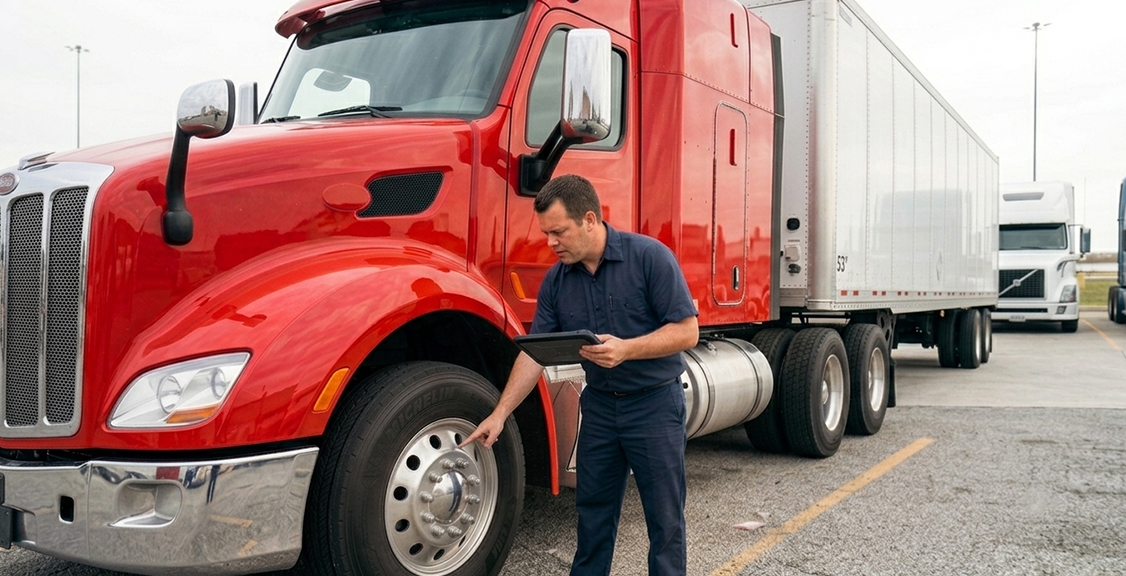
The DVIR requirement itself comes from 49 CFR 396.11, which requires drivers to report vehicle defects that could affect safety at the end of each day. On paper, this rule sounds simple, but the compliance risk shows up when a defect gets reported and then nobody follows up on the repair before your truck goes back out. A digital DVIR tool that is connected to your ELD closes that loop, because the defect report, the repair confirmation, and your driver’s daily log all live in the same system instead of three separate places.
We build DVIR reporting directly into our platform, with photo capability so your drivers can document a defect clearly, and our ELD and DVIR integration guide walks through how the two records connect for maintenance and safety purposes.
What IFTA and Fuel Reporting Tools Should a Fleet Use?
An IFTA reporting tool should pull mileage and fuel data automatically from the ELD rather than asking a fleet manager to reconstruct trip records by hand every quarter.
IFTA reporting is one of the more tedious parts of running a multi-state fleet, and it is also one of the easiest places for small errors to compound into a real headache during an audit. If your ELD already tracks vehicle location and engine data for HOS purposes, that same data can generate the mileage by jurisdiction breakdown IFTA requires, cutting a lot of manual entry out of your back office and reducing the errors that come with it. A fleet manager juggling this by hand for more than a handful of trucks is spending hours every quarter on work a connected system can handle in the background.
How Can Driver Qualification Files Be Managed More Easily?
Driver qualification files are easier to manage with a digital system that flags expiring documents automatically, rather than a manager trying to remember every driver’s medical certificate and license renewal date from memory.
CDL requirements fall under 49 CFR Part 383, and a driver qualification file needs to stay current for your drivers to legally operate under that classification. A single expired medical card or license that goes unnoticed can put a driver, and by extension your fleet, out of compliance without anyone realizing it until a roadside inspection catches it. A tool that sends reminders ahead of expiration dates turns this from a monthly manual check into something that mostly manages itself, which matters a lot once you are tracking more than two or three drivers.
What Government Resources Should Every Fleet Manager Bookmark?
Every fleet manager should bookmark the FMCSA-registered ELD list, the FMCSA HOS regulations, and the CVSA Roadcheck focus area, since these three change often enough that relying on memory alone creates risk.
The FMCSA-registered ELD list is worth checking periodically, not just at purchase time, since devices can be added or removed at any point. The FMCSA HOS regulations cover the current driving limits under 49 CFR Part 395 HOS rules, and they are the source to check before assuming an exemption applies to your operation. Finally, CVSA’s 2026 International Roadcheck, linked earlier, shows what inspectors are focusing on that year, which in 2026 was ELD tampering and log integrity following the 58,382 falsification violations CVSA recorded in 2024. Our article on how ELDs improve driver fatigue and compliance covers how these enforcement trends tie back to daily driving safety, if you want to go deeper on that connection.
How Do You Choose the Right ELD and Fleet Software Provider?
Choosing the right provider comes down to three things: is the device actually on the FMCSA-registered list, does support answer the phone when something breaks on the road, and does the platform cover DVIR, IFTA, and driver files instead of just HOS logging.
A lot of vendors look similar on a sales page, but the difference shows up at 2 a.m. when a device malfunctions on a run and a driver needs a real person on the line, not a support ticket that gets answered in the morning. We run 24-hour, 7-day support along with a 30-day money-back guarantee, so a fleet can try the system on real routes before committing long term. Our support team can walk you through what that looks like once you are set up, and if you want a straight answer on pricing before you talk to anyone, our price calculator gives you a number based on your fleet size.
Fleet Management Tool Categories
| Tool Category | What It Tracks | Governing Regulation | Risk If Missing |
|---|---|---|---|
| Registered ELD | Hours of Service, driving time | 49 CFR Part 395 | Citation under 395.8(a)(1), out of service order |
| Digital DVIR | Vehicle defects, repair status | 49 CFR 396.11 | Undetected mechanical issues, roadside violations |
| IFTA reporting | Mileage and fuel by jurisdiction | State IFTA agreements | Manual errors, audit exposure |
| Driver qualification files | License, medical cert, CDL status | 49 CFR Part 383 | Driver operating without valid credentials |
| Safety score monitoring | HOS violations, inspection history | FMCSA Safety Measurement System | Compliance review triggered without warning |
| Violation dispute tool | Inaccurate citations or data | FMCSA DataQs system | Wrong data staying on record permanently |
Questions to Ask Before Choosing a Fleet Management Tool
Is the ELD currently listed on the FMCSA-registered devices list?
Check the list yourself rather than taking a vendor’s word for it, since devices get added and removed throughout the year. A device that was compliant last year is not guaranteed to still be on the list today.
Does the platform support your specific vehicle and exemption type?
Short-haul, agricultural, and other exemptions each have different rules, and a system that cannot account for those correctly will generate inaccurate logs. Confirm this before signing anything, not after your first roadside inspection.
How does the system handle DVIR and defect reporting?
Ask whether defect reports connect to your maintenance records automatically or require a separate manual step. A disconnected process is where compliance gaps usually start.
What does support actually look like at 2 a.m.?
Ask if a real person answers, not just a ticketing system. A driver stuck on the shoulder with a malfunctioning ELD needs an answer immediately, not by morning.
Can the platform generate IFTA reports without manual data entry?
If mileage and fuel data already exist in the ELD, your fleet should not need a separate spreadsheet to file quarterly. Ask to see a sample report before committing.
How are software updates handled when FMCSA rules change?
Regulations shift, and your platform needs to update without you having to buy new hardware every time. Ask specifically how the last rule change was handled for existing customers.
What is included in the contract for hardware replacement?
Confirm whether a broken tablet or cable is replaced under warranty or becomes an out-of-pocket cost. This detail is often buried in fine print.
Can the platform grow with your fleet as you add trucks?
A system built for five trucks should not fall apart at twenty. Ask what the onboarding process looks like when you add a new vehicle or driver mid-contract.
About ELDs and Road Safety
What tools does a fleet manager need to stay FMCSA-compliant?
At minimum, a registered ELD, a DVIR process, an IFTA reporting method, and a system for tracking driver qualification files. Larger fleets typically add safety score monitoring and a violation dispute process on top of that.
Why do ELDs get removed from the FMCSA-registered list?
FMCSA removes devices that fail to meet the technical requirements in Appendix A to Subpart B of Part 395. Since January 2025, 79 devices have been removed for this reason, most recently a batch of 12 on May 20, 2026.
What happens if a driver keeps using a revoked ELD after the deadline?
Once the 60-day grace period ends, safety officials are directed to cite the driver under 49 CFR 395.8(a)(1) for no record of duty status and place them out of service. This applies even if the vehicle itself passes inspection.
How does the FMCSA Safety Measurement System affect a fleet’s compliance record?
The FMCSA Safety Measurement System tracks HOS violations and inspection history over time, and a pattern of repeated citations can trigger a compliance review. FMCSA has not published a specific violation percentage that guarantees a review, so treat any number outside official FMCSA guidance with caution.
Can a carrier dispute an inaccurate violation?
Yes. The FMCSA DataQs system exists specifically for challenging violations a carrier believes were recorded incorrectly. It is worth using rather than letting a bad data point sit on your record indefinitely.
What is the DVIR requirement and why does it matter?
DVIR requirements under 49 CFR 396.11 require drivers to report vehicle defects that could affect safety. Skipping or delaying this creates both a compliance gap and a real mechanical risk on the road.
How often should a fleet review driver qualification files?
At minimum, whenever a license, medical certificate, or other credential is set to expire. Many fleets review the full file quarterly to catch anything a single expiration reminder might miss.
About Choosing the Right ELD Provider
What should I look for in an ELD and fleet management vendor?
Confirm the device is currently on the FMCSA-registered list, ask about support availability, and check whether the platform covers DVIR and IFTA reporting in addition to HOS logging. A vendor that only handles one of these will leave gaps.
Is 24/7 support really necessary for a small fleet?
Yes, because equipment does not fail on a schedule. A three-truck fleet with a malfunctioning ELD at midnight has the same urgent problem as a fifty-truck fleet.
Should I choose an Android or iOS-compatible ELD?
This depends on what your drivers already use and what your dispatch team needs to access remotely. Ask the vendor directly rather than assuming one option covers every driver’s device.
How much does an ELD and fleet management system typically cost?
Pricing varies by fleet size, hardware needs, and support level, so a direct quote is more useful than a general number. You can get a fleet-specific estimate through the price calculator linked earlier.
Do I need a separate IFTA reporting tool or can my ELD handle it?
Many modern ELDs can generate IFTA reports directly from mileage data already being tracked for HOS purposes. Confirm this specifically before buying a separate tool you may not need.
What if my current ELD gets removed from the FMCSA list?
You have 60 days from the removal announcement to replace it before the device is treated as no ELD at all. Check the FMCSA-registered ELD list periodically so you are not caught off guard.
How do I switch fleet management providers without losing historical logs?
Ask any new provider how they handle data migration and how long historical HOS records need to be retained. Under 49 CFR 395.8(k)(1), carriers generally need to keep supporting documents for six months, so confirm your old records remain accessible through that window.
Conclusion
Fleet compliance in 2026 is not about buying one piece of software and calling it done. It takes a registered ELD, a working DVIR process, IFTA reporting that does not eat your afternoons, and a system for keeping driver files current, all working together instead of living in separate spreadsheets.
The enforcement reality backs this up, with HOS violations climbing past 500,000 in 2025, civil penalties reaching into the tens of thousands per violation, and FMCSA actively pulling non-compliant devices off its registered list throughout 2026. A fleet running on outdated tools or guesswork is carrying more risk than most managers realize until an inspection makes it obvious.
If you’re reviewing your fleet’s current setup, or replacing a device that was recently removed from the FMCSA-registered list, we’re happy to walk you through your options and show you where our platform fits. Get a fleet-specific quote from the price calculator mentioned above, or browse our FAQ for quick answers, and if you’d rather just talk it through, call us at (800) 261-4361.