Key Takeaways
- Owner-operators who are required to prepare records of duty status generally must use a compliant, registered ELD unless an applicable ELD exception applies. Operating one truck, being self-employed, or doing business as a sole proprietor does not by itself create an exemption from the ELD requirements.
- An owner-operator leased to a motor carrier generally operates under that carrier’s authority, and the carrier remains responsible for complying with applicable ELD requirements. If a driver who is required to use an ELD is stopped without a compliant ELD installed and in use, the driver may be cited and placed out of service under applicable enforcement criteria.
- Owner-operators operating under their own authority are both the driver and the motor carrier. Roadside inspection violations associated with their USDOT number can affect the carrier’s Safety Measurement System (SMS) results, while the driver’s roadside inspection history can also appear in the driver’s FMCSA Pre-Employment Screening Program (PSP) record.
- The short-haul exception under 49 CFR 395.1(e)(1) applies to qualifying owner-operators the same way it applies to other drivers. A qualifying driver generally must operate within a 150 air-mile radius of the normal work reporting location, return to that location, and be released from work within 14 consecutive hours while the motor carrier maintains the required time records. When those requirements are met, the driver may use the time records instead of preparing a RODS and generally does not need an ELD for that qualifying operation.
- FMCSA can remove ELDs from its Registered ELDs list when a device no longer meets applicable requirements, so owner-operators should periodically verify that the exact ELD model they use remains currently registered.
- Hours-of-service and recordkeeping violations can result in civil penalties under 49 CFR Part 386 and its applicable penalty schedule. Maximum penalty amounts vary depending on the violation and may be adjusted for inflation, so owner-operators should rely on current FMCSA enforcement information rather than older published dollar amounts.
- HOS violations nationally rose from 410,000 in 2023 to more than 500,000 in 2025, according to RigDig data cited by Overdrive in April 2026.
- The Geosavi ELD connects via J1939, J1708, or OBD-II, is FMCSA-registered, and is backed by a 30-day money-back guarantee and 24-hour, 7-day technical support.
Do ELD Rules Apply to Owner-Operators the Same Way They Apply to Large Carriers?
Yes, and the regulation makes no distinction based on fleet size. The ELD mandate under 49 CFR Part 395 HOS rules applies to any commercial motor vehicle driver who is required to keep Records of Duty Status, regardless of whether that driver runs one truck or one hundred. FMCSA has confirmed this directly and has denied multiple petitions from individual owner-operators seeking an exemption based on financial hardship or small fleet size. The agency’s position has not changed: the obligation is tied to the vehicle and the operation, not to the size of the business behind it.
What this means in practice is that an owner-operator driving a CMV with a gross vehicle weight rating above 10,001 pounds in interstate commerce, who is required to keep RODS for more than 8 days in any rolling 30-day period, must run a registered ELD unless a specific exemption applies to their operation on that day. If you want to check whether your specific vehicle and route require RODS before making any decisions, the answers to the most common compliance questions are on the Geosavi FAQ.
What Is the Difference Between Running Under Your Own Authority and Running Leased to a Carrier?
Both arrangements carry the same ELD compliance requirement. What differs is who holds the primary legal responsibility and what the consequences look like when a violation occurs.

Running Under Your Own Authority
When you hold your own USDOT number and motor carrier operating authority, you are both the driver and the motor carrier. Roadside inspection violations associated with your USDOT number can affect the carrier’s Safety Measurement System (SMS) results, while the driver’s roadside inspection history can also appear in the driver’s FMCSA Pre-Employment Screening Program (PSP) record. A pattern of violations can increase compliance risk and may contribute to additional FMCSA scrutiny or intervention.
You are also solely responsible for selecting a registered ELD, maintaining it, retaining 6 months of records under 49 CFR 395.8(k)(1), and responding promptly if FMCSA removes the device from its Registered ELDs list and following the applicable removal notice and replacement deadline. There is no carrier compliance team handling any of this in the background.
Running Leased to a Carrier
When your truck operates under a carrier’s DOT authority, the carrier is the motor carrier of record and is responsible for complying with applicable ELD requirements. If a driver who is required to use an ELD is stopped without a compliant ELD installed and in use, the driver may be cited and placed out of service under applicable enforcement criteria. If the carrier’s ELD has been removed from FMCSA’s Registered ELDs list, the carrier and driver should follow the specific FMCSA removal notice and applicable replacement deadline rather than assuming that every revoked-device situation produces the same immediate enforcement result.
Who Pays for the ELD When You Are an Owner-Operator?
There is no single FMCSA rule that determines cost responsibility between an owner-operator and a carrier. It depends entirely on your operating arrangement and what your lease agreement says.
When you run under your own authority, the ELD is your cost to manage. You buy the hardware, pay the subscription, and cover any replacement if the device gets revoked. Treat it as a fixed compliance operating expense, planned for before you take your first load rather than discovered after a citation.
When you are leased to a carrier, some carriers absorb the full ELD cost as part of the arrangement. Others deduct hardware and monthly subscription fees from your settlements, which is only legally permitted if those deductions are named explicitly in the written lease. Before signing anything, confirm what device the carrier requires, who is sourcing it, and how the cost will appear in your settlements. Use the Geosavi price calculator to get a clear number for a single-truck setup before you compare it against whatever a carrier is proposing to charge back.
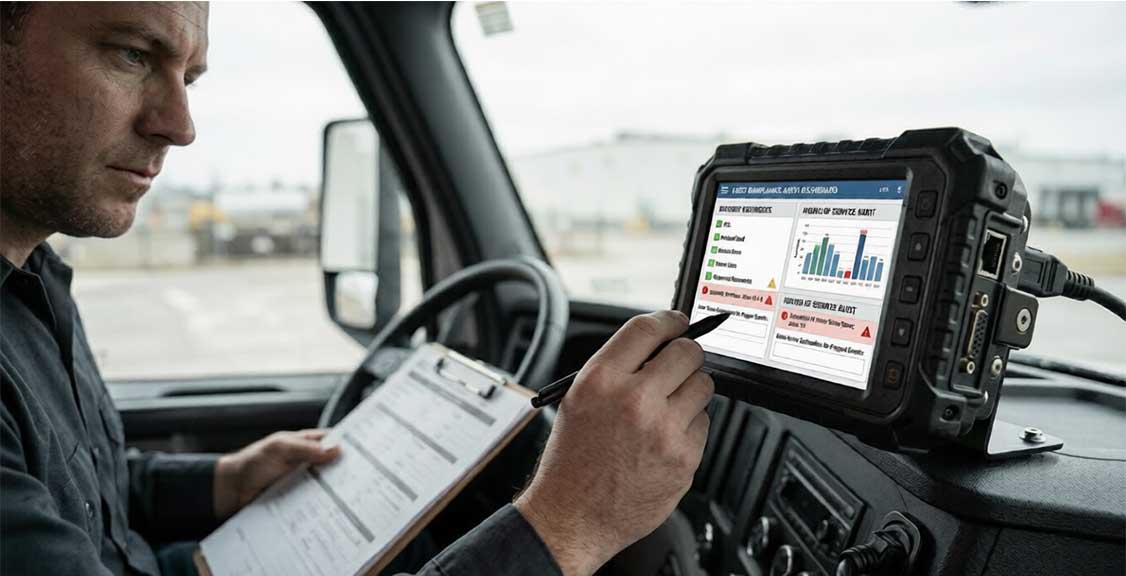
What ELD Exemptions Actually Apply to Owner-Operators?
Owner-operators qualify for the same exemptions as company drivers. None of them are permanent, and each one has conditions that must be met on every single day the exemption is claimed. Failing one condition on any given day voids the exemption for that entire day, not just for the portion of the shift where the condition was missed.
The short-haul exemption under 49 CFR 395.1(e)(1) is the most relevant for owner-operators doing local or regional work. If you stay within 150 air miles of your home terminal, return there each day, and are released within 14 consecutive hours, no RODS are required and no ELD is needed on qualifying days.
Drivers who occasionally need to prepare records of duty status may qualify for the limited 8-day ELD exception under 49 CFR 395.8(a)(1)(iii). If a driver is required to prepare RODS on no more than eight days within any rolling 30-day period, the driver may use paper logs on those RODS-required days instead of an ELD. If the driver is required to prepare RODS on more than eight days within a rolling 30-day period, this limited exception no longer applies, and the driver generally must use a compliant ELD unless another ELD exception applies. The 30-day period is rolling and does not reset at the beginning of a calendar month.
Drivers operating vehicles with a model year before 2000 may qualify for an exception from the ELD requirement. FMCSA generally determines the vehicle model year from the VIN and vehicle registration. FMCSA also recognizes vehicles with engines predating model year 2000 as exempt in situations where the vehicle and engine model years differ, such as certain engine swaps or glider-kit vehicles. When RODS are otherwise required, the driver must still maintain the required hours-of-service records using an allowable method. Motor carriers should maintain applicable documentation of motor and engine changes at their principal place of business.
The driveaway-towaway exemption applies only when the vehicle being driven is the commodity being delivered and does not cover general freight operations.
Being a one-truck operation is not an exemption. FMCSA has declined every petition seeking relief on that basis, and its position has not shifted.

How Does the Short-Haul Exemption Work for an Owner-Operator?
The short-haul exemption works exactly the same for an independent owner-operator as it does for a company driver. It is tied to what you actually do on a given day, not to your employment relationship or business structure.
To qualify under 49 CFR 395.1(e)(1) on any given day, all four of the following conditions must be true: you operate within a 150 air-mile radius of your normal work reporting location, you return to that same location at the end of the duty period, you are released from duty within 14 consecutive hours of coming on, and you have at least 10 consecutive hours off duty before the next shift begins. If all four conditions are met, no RODS are required and no ELD is needed. If any single condition fails, even by a mile or a minute, the full logging requirement applies for that entire day.
For most owner-operators, the home terminal is a home address or a business yard. The 150 air-mile radius runs in a straight line from that point, not road miles. The 150-air-mile radius is measured in a straight-line radius from the normal work reporting location, not by road mileage. Officers verify this using GPS coordinates, not odometer readings, so a driver who relies on trip mileage to judge the limit can be cited even when they believe they were compliant.
The most common challenge for owner-operators is mixed-duty weeks. A driver may qualify for the short-haul exception on some days but be required to prepare RODS on other days when the short-haul conditions are not met. Those RODS-required days count toward the limited 8-day ELD exception under 49 CFR 395.8(a)(1)(iii). If the driver is required to prepare RODS on more than eight days within any rolling 30-day period, that limited exception no longer applies, and the driver generally must use a compliant ELD unless another ELD exception applies. Owner-operators who regularly mix local and longer-distance operations should track RODS-required days carefully across the rolling 30-day period. You can review the full condition breakdown in our ELD requirements for local trucking guide.

What Is the Risk of Running a Revoked ELD as an Owner-Operator?
If FMCSA removes an ELD from its Registered ELDs list, an owner-operator should review the specific removal notice for that device and follow the instructions and replacement deadline provided. During an FMCSA-established replacement period, the notice may provide temporary instructions for maintaining required hours-of-service records while the driver transitions to a compliant ELD.
After the applicable replacement deadline, continued use of the removed device does not satisfy the ELD requirement for a driver who is required to use an ELD. The driver may then be cited for failing to use a compliant ELD and may be placed out of service under applicable enforcement criteria. Because removal instructions and deadlines can vary by device, owner-operators should rely on the current FMCSA removal notice rather than assuming every revoked ELD receives the same transition period.
For a one-truck owner-operator, an ELD removal can create an immediate operational problem because replacing the device may involve ordering hardware, installation, activation, and driver setup. Checking the FMCSA Registered ELDs list periodically can help identify a status change before it becomes a roadside issue. Owner-operators should also keep their provider contact information current and respond promptly to any FMCSA or provider notice affecting the device they use.
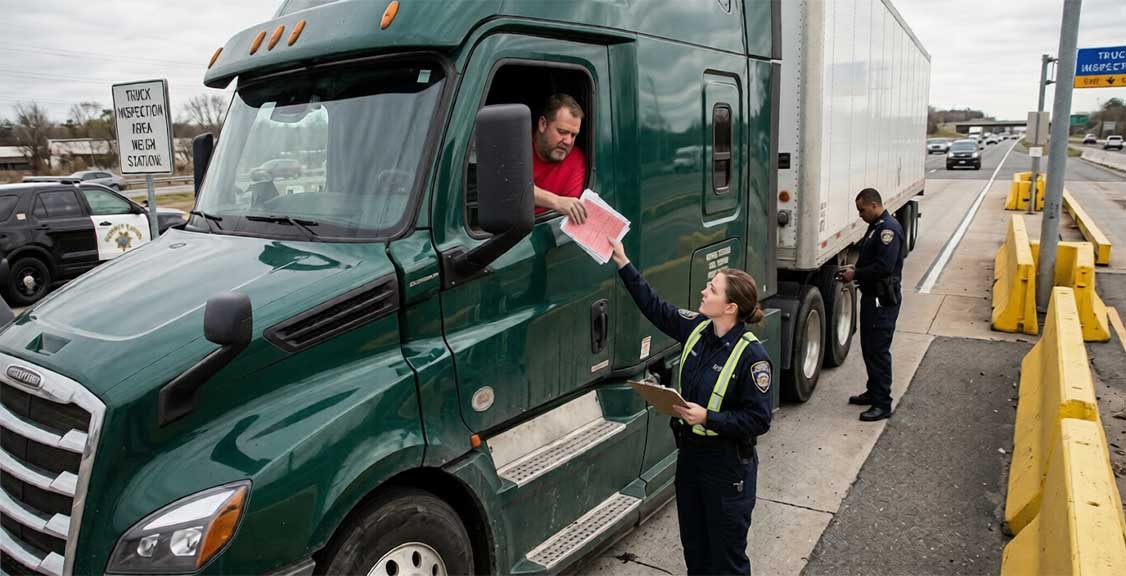
What Does a Roadside Inspection Look Like for an Owner-Operator in 2026?
A roadside inspection for an owner-operator generally involves the same hours-of-service and ELD requirements that apply to other drivers subject to the Federal Motor Carrier Safety Regulations. An owner-operator operating under their own authority may also be responsible for the motor carrier’s compliance obligations, so accurate records and a compliant ELD are especially important.
During an inspection, a driver who is required to use an ELD must be able to display the required hours-of-service records and transfer or present them using the methods supported by the ELD and required under FMCSA specifications. The vehicle must also have the required ELD information under 49 CFR 395.22(h), including instructions for data transfer, malfunction reporting and recordkeeping procedures, and enough blank RODS graph-grids to record at least eight days. If an ELD has been removed from FMCSA’s Registered ELDs list, the driver and motor carrier should follow the specific FMCSA removal notice and applicable replacement deadline.
Roadside inspectors may also review supporting information that can be used to verify the accuracy of a driver’s RODS. Under 49 CFR 395.11, supporting documents can include bills of lading or equivalent trip documents, dispatch or trip records, certain expense receipts, electronic mobile communications, and payroll or settlement records. Fleets should keep these records consistently and make sure the driver’s duty-status entries accurately reflect the work performed. CVSA’s 2026 International Roadcheck included ELD tampering, falsification, and manipulation as a driver focus area, reinforcing the importance of accurate records and proper ELD use.
If an ELD malfunctions, the driver must note the malfunction and notify the motor carrier in writing within 24 hours. If the malfunction prevents the ELD from accurately recording the driver’s hours-of-service data, the driver must reconstruct the required RODS and continue recording them using paper logs or another allowable method until the ELD is back in service. Under 49 CFR 395.34, the motor carrier generally has eight days from discovery of the malfunction or the driver’s notification, whichever occurs first, to correct, repair, replace, or service the ELD unless FMCSA grants an extension.
What Record-Keeping Requirements Apply to an Owner-Operator?
Owner-operators under their own authority carry the full record retention obligation that applies to motor carriers. Records of Duty Status and supporting documents must be kept for 6 months under 49 CFR 395.8(k)(1), and that obligation extends beyond what your ELD stores on the device.
Supporting documents under 49 CFR 395.8(k) include fuel receipts, toll records, dispatch records, and bills of lading. Every one of these must align with your ELD logs. If your records show any inconsistency between where your logs say the truck was and where a supporting document places it, that inconsistency becomes a compliance issue during an inspection or a formal review. Building a simple monthly filing system for these documents means your 6 months of records are always accessible without having to reconstruct anything under pressure. Accurate records also do more than keep you out of trouble at inspections, and you can see the broader safety case explained in our article on how ELDs promote safer roads and reduce driver fatigue.
How Does Being an Owner-Operator Affect Your FMCSA Safety Record?
When you operate under your own authority, roadside inspection violations and crash data associated with your USDOT number can affect your motor carrier’s results in FMCSA’s Safety Measurement System (SMS). SMS evaluates motor carriers across several Behavior Analysis and Safety Improvement Categories (BASICs), including Hours-of-Service Compliance, using 24 months of safety data. More recent violations are weighted more heavily than older ones.
For a one-truck owner-operator, the same person may be responsible both as the driver and as the motor carrier, so maintaining accurate hours-of-service records and avoiding preventable roadside violations is especially important. FMCSA uses SMS data to help prioritize carriers for monitoring and potential intervention, but SMS information should not be treated as a federal safety rating or as a single overall “CSA score.”
ELD and HOS accuracy remain important enforcement issues. CVSA reported that falsification of records of duty status was the second most-cited driver violation in 2025, with 58,382 violations, and ELD tampering, falsification, and manipulation became the driver focus for the 2026 International Roadcheck. Owner-operators should periodically review their FMCSA safety data and address inaccurate or incomplete information through the appropriate FMCSA process when necessary.
ELD Requirements: Owner-Operator Operating Scenarios at a Glance
| Condition: | ELD Required? | What towner-operator should do: | Rule: |
|---|---|---|---|
| Own authority, interstate, GVWR above 10,001 lbs | Yes | Owner-operator as both driver and carrier | 49 CFR Part 395 |
| Leased to carrier, under carrier DOT authority | Yes | Carrier is primary, driver cited at roadside | 49 CFR Part 395 |
| Own authority, short-haul qualifying day | No, on qualifying days only | Owner-operator tracks daily conditions | 49 CFR 395.1(e)(1) |
| Qualifying pre-2000 vehicle or engine exception | No ELD when the exception applies; required HOS records must still be maintained using an allowable method | Verify the vehicle/engine qualifies and maintain applicable documentation of motor or engine changes | FMCSA pre-2000 ELD exception |
| Required to prepare RODS on no more than 8 days in any rolling 30-day period | No ELD required under this limited exception; paper RODS may be used | Owner-operator tracks rolling count | 49 CFR 395.8(a)(1)(iii) |
| Required to prepare RODS on more than 8 days in any rolling 30-day period | Generally yes, unless another ELD exception applies | Track RODS-required days across the rolling 30-day period | 49 CFR 395.8(a)(1)(iii) |
| Using an ELD after the applicable FMCSA removal deadline | Removed device no longer satisfies the ELD requirement | Follow the specific FMCSA removal notice and replace the device by the applicable deadline | 49 CFR 395.8(a)(1), as applicable |
| ELD malfunction, paper logs kept correctly | No OOS if correct procedure followed | Motor carrier generally must correct, repair, replace, or service the ELD within 8 days of discovery or driver notification, whichever occurs first, unless FMCSA grants an extension | 49 CFR 395.34 |
Questions Every Owner-Operator Should Ask Before Buying an ELD
Is this device currently on the FMCSA registered ELD list and not on the revoked list?
Do not take the provider’s word for it. Search for the exact device name yourself on the FMCSA registered ELD list. A device that was registered when you bought it may not be registered today. Check the list every month and set a calendar reminder so it becomes a routine.
Does this device connect to my truck’s ECM via J1939, J1708, or OBD-II?
A compliant ELD must connect directly to the engine control module and record driving time automatically without any input from the driver. A device that relies on GPS alone or requires manual start and stop does not meet the ELD technical standard Appendix A. Ask the vendor which specific connection type the device uses for your truck before committing.
Does the device support both telematics and local data transfer?
FMCSA requires compliant ELDs to support telematics transfer via web services and email, and local transfer via Bluetooth and USB 2.0. Both must work independently. If one method fails during an inspection, the officer has the right to request the other, and a device that cannot deliver is a compliance problem on an otherwise clean day.
What happens if this device gets revoked while I am leased to a carrier?
If the carrier’s chosen ELD is removed from FMCSA’s Registered ELDs list, ask the carrier how it plans to meet the replacement deadline and transition drivers to a compliant device. The applicable FMCSA removal notice may provide temporary instructions and a specific replacement period, so do not assume every removal follows the same timeline. If you operate under your own authority, review the FMCSA removal notice directly and confirm with your ELD provider how it will notify customers and provide replacement hardware or service.
Is the hardware built for conditions inside a working truck cab?
Truck-cab environments can expose electronic equipment to temperature changes, vibration, dust, and other demanding conditions. When evaluating ELD hardware, ask the provider for the specific environmental and durability specifications for the device being installed, including operating-temperature range, vibration and shock ratings, ingress protection, mounting requirements, and any applicable test standards. Fleets should rely on documented hardware specifications rather than broad ruggedness or certification claims.
What does technical support look like at 2 a.m. on a Tuesday?
Device malfunctions do not happen during business hours. A malfunction on an overnight run needs a person on the phone immediately, not a ticket number and a next-day callback. Confirm the provider offers 24-hour, 7-day live support before you buy. Our team is available at (800) 261-4361 at any hour.
Is there a money-back guarantee?
You need to test a device across your actual routes before you are committed to it. A 30-day money-back guarantee is a reasonable standard, and we back every Geosavi platform with one. Ask any provider you are evaluating whether they offer the same, and read the terms before assuming anything.
What is the total cost per month for one truck?
Add up the hardware, the monthly subscription, and any features billed separately. Get the full number before signing anything, and confirm there are no long-term contract terms that lock you in before you have tested the device on real routes. Our Geosavi price calculator gives you a clear, complete cost for a single-truck setup with no hidden charges.
Your ELD Questions Answered
About ELD Rules for Independent Drivers
Does the ELD mandate apply to owner-operators?
Yes. The mandate applies to any commercial motor vehicle driver required to keep Records of Duty Status, and fleet size is not a factor. FMCSA has declined multiple petitions from owner-operators seeking exemptions based on financial hardship or the size of their operation, confirming that the obligation under 49 CFR Part 395 HOS rules applies regardless of how many trucks you run.
If I am leased to a carrier, does the carrier’s ELD cover me?
In most lease arrangements the carrier provides or specifies the ELD and holds primary compliance responsibility under their DOT authority. However, if the device is missing, malfunctioning, or revoked when an officer stops you, the citation goes against you as the driver. Before leaving the yard on any load, confirm the device in your cab is on the current FMCSA registered ELD list and is working correctly.
Can an owner-operator use the short-haul exemption to avoid the ELD?
Yes, on days when all conditions are met. The short-haul exemption under 49 CFR 395.1(e)(1) removes the RODS obligation entirely on days when you operate within 150 air miles of your home terminal, return there, and are released within 14 hours. No RODS means no ELD for that day. The exemption is evaluated day by day, and one missed condition voids it for the entire day.
How can a roadside inspection violation affect my FMCSA safety record?
Roadside inspection violations associated with your USDOT number can affect your motor carrier’s Safety Measurement System (SMS) results. If you operate under your own authority, you are both the driver and the motor carrier, so the inspection can affect the carrier’s SMS data while the driver’s inspection history may also appear in the driver’s FMCSA Pre-Employment Screening Program (PSP) record. Hours-of-service violations are evaluated within the Hours-of-Service Compliance BASIC. SMS uses inspection and crash data to help FMCSA prioritize carriers for monitoring and potential intervention; it should not be described as a single overall “CSA score.”
I just got my own authority. Do I need an ELD immediately?
If you are operating a commercial motor vehicle in interstate commerce and are required to prepare records of duty status, you generally must use a compliant ELD unless an applicable ELD exception applies. There is no separate startup exemption from the ELD rule simply because you recently obtained your own operating authority. Whether an ELD is required depends on your actual operation, RODS requirements, and any applicable exception—not merely on the date your authority became active. You can review available hardware in the Geosavi shop or call (800) 261-4361 to talk through your setup.
What fines can an owner-operator face for running without a compliant ELD?
Failing to use a compliant ELD when one is required can result in hours-of-service and recordkeeping violations, civil penalties under 49 CFR Part 386 and its applicable penalty schedule, and potential out-of-service enforcement under applicable criteria. Maximum penalty amounts vary depending on the violation and may be adjusted over time. Owner-operators operating under their own authority should remember that they are responsible both for their own compliance as drivers and for the motor carrier’s compliance obligations. Knowingly falsifying records can also lead to separate enforcement consequences.
What should I do if my ELD malfunctions on the road?
Under 49 CFR 395.34, you must note the malfunction and notify your motor carrier in writing within 24 hours. If the malfunction prevents the ELD from accurately recording your hours-of-service data, you must reconstruct the required RODS and continue recording them using paper logs or another allowable method until the ELD is back in service. If you operate under your own authority, the written notification still needs to be documented. The motor carrier generally has eight days from discovery of the malfunction or the driver’s notification, whichever occurs first, to correct, repair, replace, or service the ELD unless FMCSA grants an extension. Reach out to our Geosavi support team immediately if your device develops a problem on the road.
About Choosing the Right ELD as an Owner-Operator
What should a one-truck operator prioritize when choosing an ELD?
Current FMCSA registration status, vehicle compatibility, reliable hardware, and responsive technical support are important considerations for a one-truck operation. Without a separate compliance staff or spare equipment, a device removal, hardware failure, or support problem can disrupt operations quickly. Confirm that the ELD hardware and vehicle cable are compatible with your truck and ask the provider about replacement procedures, malfunction support, and hardware specifications before purchasing. Geosavi offers ELD hardware options for J1939, J1708, and OBD-II applications, along with 24-hour support and a 30-day money-back guarantee.
Is the Geosavi ELD suitable for a single owner-operator?
Yes. There is no minimum fleet size requirement. You purchase the hardware, set up your driver profile, and the device connects to your truck’s ECM and records automatically from the first move. The online management portal lets you review your own logs, run IFTA reports, and access records for any compliance review without anyone else involved. Full hardware and platform details are on the Geosavi electronic logging device.
How do I verify my current ELD is still registered?
Search for your device by name on the FMCSA registered ELD list and confirm it appears on the active list, not the revoked list. Do this every month, a monthly calendar reminder costs nothing and protects you from finding out about a revocation the wrong way.
Can I use the Geosavi ELD if I am leased to a carrier?
That depends on the carrier. Carriers have the right to specify which ELD system their drivers use while operating under their authority. If you are running under your own authority between leases or handling independent loads, you can use the Geosavi ELD without restriction. Call us at (800) 261-4361 and we can walk through how your specific arrangement works before you make any decisions.
Conclusion
The ELD mandate applies to owner-operators based on the same federal requirements that apply to other commercial motor vehicle operations. Operating a single truck does not create an exemption. In 2026, ELD compliance remains an important enforcement issue, and CVSA’s International Roadcheck included ELD tampering, falsification, and manipulation as a driver focus area. Owner-operators should make sure they understand when an ELD is required, use a compliant device when applicable, and keep accurate hours-of-service records.
For owner-operators, consistent compliance matters because the same person may be responsible both as the driver and as the motor carrier. Periodically verifying that the ELD model remains on FMCSA’s current Registered ELDs list, maintaining accurate logs, and following applicable malfunction and removal procedures can help reduce the risk of preventable roadside violations and out-of-service disruptions.
If you want to confirm your setup is correct, check your device’s registration status, or find an ELD built for a single-truck operation, call our team at Geosavi at (800) 261-4361 or reach out through the Geosavi contact form. We back every device with a 30-day money-back guarantee and 24-hour technical support.