Key Takeaways
- FMCSA can remove ELDs from its Registered ELDs list when devices fail to meet applicable requirements. Fleets should verify the current status of the exact ELD model they are considering and review any prior FMCSA removal notices tied to that device or provider.
- If FMCSA removes an ELD from its Registered ELDs list, fleets should review the specific removal notice for that device and follow the replacement deadline and temporary recordkeeping instructions provided. Transition periods can vary, so carriers should not assume every removal follows the same 60-day timeline.
- The FMCSA penalty schedule sets maximum civil penalties for hours-of-service recordkeeping violations, and those figures are republished periodically to adjust for inflation, so the current amount should always be checked against the FMCSA penalty schedule directly rather than a fixed number.
- CVSA’s 2026 International Roadcheck, held May 12–14, included ELD tampering, falsification, and manipulation as a driver focus area. CVSA reported 58,382 falsification-of-record-of-duty-status violations in 2025, reinforcing the importance of accurate logs and proper ELD use.
- Before signing with an ELD provider, verify that the exact ELD model you plan to use appears on FMCSA’s current Registered ELDs list. A provider may offer more than one device or software version, and the registration status of individual models can change over time.
- Under 49 CFR 395.34, a driver must note an ELD malfunction and notify the motor carrier in writing within 24 hours. The motor carrier generally has eight days from discovery of the malfunction or the driver’s notification, whichever occurs first, to correct, repair, replace, or service the ELD unless FMCSA grants an extension. A provider’s support and replacement process is therefore an important consideration when choosing an ELD system.
- A provider should make it easy for fleets to review HOS records, identify approaching limits, resolve unidentified driving events, and retrieve required records before a roadside inspection or audit exposes a problem.
| Table of Contents |
|---|
| Provider Vs Device |
| Support After Purchase |
| Compliance Track Record |
| Registered Devices List |
| Data Transfer Support |
| Pricing And Contracts |
| Provider Comparison |
| Buyer Questions To Ask |
| FAQs |
Introduction
Most fleets shop for an ELD the way they shop for a phone: screen, price, whether the mount fits the cab. That skips the part of the decision that plays out over the life of the contract: who is behind the device once it’s installed.
FMCSA determines whether an ELD remains on the Registered ELDs list. If the agency removes a device, fleets should review the specific removal notice and follow the replacement deadline and temporary recordkeeping instructions provided for that device. Recent removal notices have often allowed up to 60 days for replacement, but fleets should rely on the notice that applies to the exact ELD they use.
The solution is to evaluate the provider itself before you sign, not just the hardware. Here is what it covers: support structure, compliance history, data transfer handling, and contract terms. It closes with buyer questions you can use directly in vendor conversations.
Before you compare quotes line by line, it helps to know what you should be paying in the first place. Our price calculator breaks down cost by fleet size, so run your numbers there first and keep that figure in mind as you read the sections below. If questions come up along the way, you can schedule a call or reach our team at (800) 261-4361.
What Makes an ELD Provider Different From an ELD Device?
Self-Certification Puts the Responsibility on the Provider
The device is the hardware and software your driver uses, but the provider is responsible for testing the ELD, self-certifying that it meets FMCSA’s technical specifications, and registering the device with FMCSA. A device’s appearance on the Registered ELDs list means the provider has self-certified it as compliant; it does not mean FMCSA independently tested or endorsed the device before listing.
What to Watch For Once a Device Is Listed
That makes the provider’s ongoing compliance process important. Fleet managers should evaluate not only whether an ELD is currently registered, but also how the provider handles software updates, technical deficiencies, support, and communication if a device’s registration status changes.
What Support Should You Expect After You Buy?
Why Support Hours Matter More Than a Sales Pitch
A sales team answers quickly before you sign. Whether that responsiveness continues afterward is a separate question, and it matters most for fleets running nights, weekends, or long-haul routes. A support queue that takes a couple of business days is fine for account questions. It’s a problem if a driver is mid-inspection and needs help right then.
What to Ask About Coverage and Response Time
Ask a potential provider their actual support hours, and how a driver reaches a live person outside business hours. Our support team runs around the clock; ask any provider you’re evaluating for that same level of detail, rather than accepting a general 24/7 support claim at face value.
Support responsiveness also matters during an ELD malfunction. Under 49 CFR 395.34, the driver must note the malfunction and notify the motor carrier in writing within 24 hours. The motor carrier generally has eight days from discovery of the malfunction or the driver’s notification, whichever occurs first, to correct, repair, replace, or service the ELD unless FMCSA grants an extension. A provider’s ability to diagnose problems and supply replacement hardware or service quickly is therefore an important part of evaluating ongoing support.
How Do You Check an ELD Provider’s Compliance Track Record?
A Device’s Current Status Is a Snapshot, Not a History
A listed device can still be removed later if FMCSA determines that it no longer meets applicable ELD requirements. If the provider corrects identified deficiencies, FMCSA may return the device to the Registered ELDs list.
What a Removal History Can and Cannot Tell You
FMCSA publishes a notice each time it removes a device, and those notices name the provider directly. Searching a provider’s device name against these notices shows whether it has been removed before, and whether it was later reinstated after the deficiency was corrected. A single past removal that was corrected is not automatically disqualifying. A pattern of repeated removals is worth more scrutiny.
The distinction that matters most: removal notices reflect technical compliance with the device standard. They say nothing about support quality or phone response time. That’s why this checklist treats compliance history and support as separate questions, not one combined score. For a broader primer on FMCSA compliance topics, our FAQs cover common questions fleet managers ask. From here, the direct question is what happens if a device you’re already using gets pulled.
What Happens If FMCSA Removes Your Provider’s Device?
The Removal Process and Transition Window
FMCSA can remove ELDs from its Registered ELDs list when devices fail to meet the applicable technical requirements. Recent FMCSA removal notices have commonly allowed motor carriers up to 60 days to replace a revoked device, while directing drivers during that transition period to use paper logs, logging software, or the ELD display as a backup method for required HOS records. Fleets should rely on the specific FMCSA removal notice for the affected device because the exact replacement deadline and instructions are notice-specific. After the applicable deadline, continued use of the removed device is treated as operating without a compliant ELD, and drivers may be cited and placed out of service under applicable enforcement criteria.
What a Removal Actually Requires From Your Fleet
An ELD removal can require replacement hardware, changes to driver recordkeeping during the transition, device activation, and some amount of driver retraining. Fleet managers should not rely solely on the provider to learn about a removal. FMCSA publishes removal notices and sends industry alerts that identify the affected ELD models and explain the replacement deadline and temporary recordkeeping procedures. Ask any provider how it communicates device-status changes to customers, but also verify the device independently through FMCSA’s Registered ELDs list and removal notices.

What Should a Fleet Ask About Data Transfer and Roadside Support?
What Compliant Data Transfer Actually Requires
FMCSA’s ELD rule requires a device to support one complete transfer option, not just any single method. The two options are telematics, which requires both wireless web services and email, and local transfer, which requires both USB and Bluetooth. A device that only offers one piece of an option, web services without email, for example, does not fully satisfy that option on its own. A compliant ELD must support at least one of these two complete transfer options, and manufacturers may offer additional transfer methods if they choose.
What to Ask a Provider About Training and Compatibility
Ask which complete option the device supports, and whether drivers are actually trained on it, not just told it exists. Our own ELD platform and hardware covers the transfer options built into the device and how drivers are walked through them during onboarding.
Engine connectivity is a separate, and separately important, question. A compliant ELD is required to synchronize with the vehicle’s engine control module, the vehicle’s onboard computer that tracks engine data, commonly through connections like J1939, J1708, or OBD-II depending on the vehicle. The buyer-relevant question isn’t which connection type sounds more advanced. It’s whether the provider’s hardware is actually compatible with your specific vehicles. This comes up often for mixed fleets running non-standard vehicle types; if box trucks are part of your operation, our guide on ELD requirements for box trucks covers compatibility questions specific to that vehicle class.
What Does Pricing and Contract Structure Reveal About a Provider?
Why the Sticker Price Is Only Part of the Decision
A low upfront price is easy to lead with in a sales conversation and easy for a buyer to over-index on. On its own, it says very little about contract length, cancellation terms, or what happens if the hardware underperforms.
What to Actually Read Before You Sign
Ask about the length of the contract, what happens if you need to add or remove vehicles mid-term, and what the return or cancellation terms are if the hardware doesn’t work out. A trial or pilot program, documented return policy, warranty coverage, hardware-replacement policy, and cancellation terms are all relevant here. Ask about each one specifically rather than accepting a single promotional claim as proof that a provider stands behind its product.
Run your fleet’s numbers through our price calculator before comparing vendor quotes side by side, since the sticker price alone rarely reflects what a provider actually costs once support, hardware replacement, and contract terms are factored in. The table below puts the major factors covered so far side by side so you can compare providers consistently and document the trade-offs before signing.
How Should You Compare ELD Providers Side by Side?
Line up each provider against the same factors so a sales pitch doesn’t stand in for an actual operational track record. A provider that is strong on price but weak on support, or strong on hardware but unclear on contract terms, is not automatically disqualified. What matters is knowing which trade-offs you are making before you sign, not after.
| Factor | Strong Signal | Warning Sign |
|---|---|---|
| Registered device status | Exact ELD model currently listed on FMCSA’s Registered ELDs list, with clear information available about any past removal | Recently removed with no clear explanation of what changed |
| Support hours | Documented round-the-clock coverage with a real phone line | Business-hours-only queue with no after-hours plan |
| Data transfer | Supports one complete transfer option, with documented driver training | Cannot confirm which complete option the device supports |
| Contract terms | Clear term length, defined cancellation process | Multi-year lock-in with no stated exit terms |
| Return and trial terms | Documented trial or pilot period, return policy, warranty coverage, and hardware-replacement terms | No trial period, restrictive return conditions, or steep restocking fees |
| Hardware durability rating (for example, IP54) | Specific rating stated and documented | No documented environmental or durability specifications; described only with general terms such as rugged |
| Malfunction response process | Documented malfunction-response process, including driver instructions and repair, replacement, or service timelines | No documented process, response times unclear |
| Engine synchronization | Clear, vehicle-specific compatibility guidance and confirmation that the ELD can capture the required engine-synchronized data | Generic or evasive answer not specific to your vehicles |
What Questions Should You Ask Before You Sign?
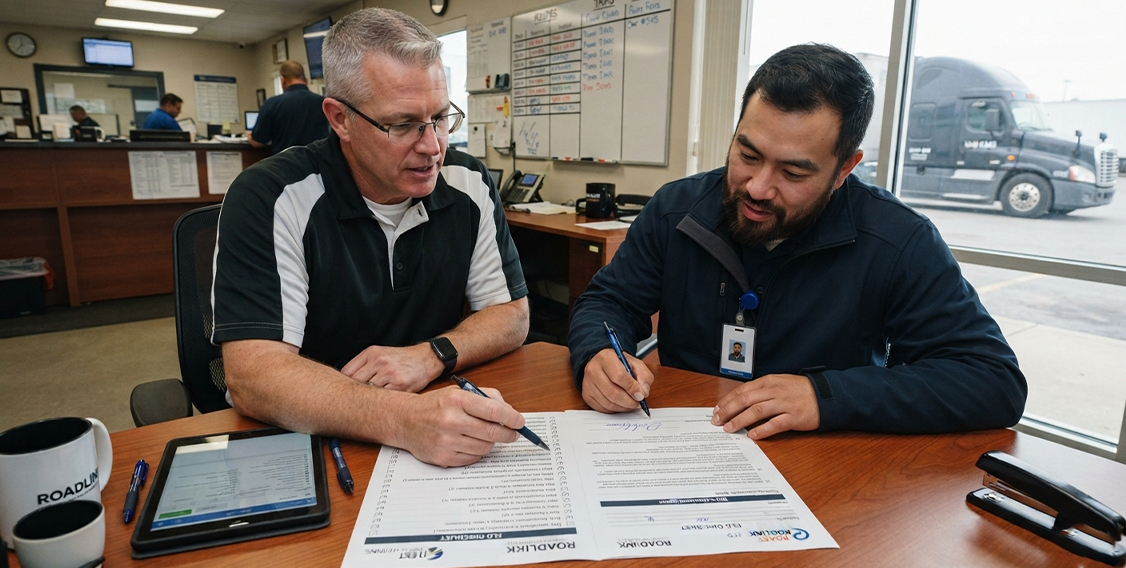
The factors above tell you what to look for. These 8 questions are how you actually surface that information in a conversation with a provider, before you’re locked into a contract rather than after.
Has this provider’s device ever been removed from FMCSA’s registered list?
Search the FMCSA registered ELD list directly rather than relying on the provider’s own claim. A past removal that was later corrected is not automatically disqualifying, but the provider should be able to explain clearly what caused it and what they changed.
What are the actual support hours, and how do I reach a live person outside business hours?
Ask for a direct phone number and confirm specifically how a call is handled at night or on a weekend. Unclear or evasive answers here are worth following up on directly.
What is the documented process if a device malfunctions?
Ask what happens once a driver reports a malfunction, how the provider documents the issue, and how quickly it can diagnose, repair, replace, or service the device. Under 49 CFR 395.34, the motor carrier generally has eight days from discovery of the malfunction or the driver’s notification, whichever occurs first, to correct, repair, replace, or service the ELD unless FMCSA grants an extension. A provider’s internal support delays do not extend that regulatory timeline automatically.
Which complete data transfer option does the device support, and how are drivers trained on it?
Confirm whether the device supports the full telematics option (web services and email) or the full local option (USB and Bluetooth), and that drivers are trained on whichever one applies.
What does your contract commit us to?
Ask about the term length, cancellation process, and any fees tied to adding or removing vehicles mid-contract.
What are the trial, return, and warranty terms specifically?
Ask for these in writing rather than relying on a general promotional claim. A trial period is one useful signal among several, not proof on its own that a provider stands behind its product.
How does the provider describe engine synchronization for my specific vehicles?
Ask them to walk through compatibility for your fleet by vehicle type, not in general terms.
What happens to my historical data if I switch providers later?
Confirm how historical records will be exported, retained, and accessed after the provider relationship ends. Under 49 CFR 395.8(k)(1), motor carriers must retain RODS and required supporting documents for six months from the date of receipt, and FMCSA also requires a separate backup copy of ELD records for six months. Before switching providers, make sure your fleet can preserve and retrieve all required records without depending on continued access to the outgoing provider’s system.
Common Questions About ELD Providers and Compliance
About Compliance Context for Provider Decisions
What was the focus of CVSA’s 2026 Roadcheck?
CVSA’s 2026 International Roadcheck, held May 12–14, included ELD tampering, falsification, and manipulation as a driver focus area. CVSA reported 58,382 falsification-of-record-of-duty-status violations in 2025, reinforcing the importance of accurate logs and proper ELD use.
Is a provider required to notify me if their device gets removed from the list?
ELD providers are not generally required by FMCSA to notify every motor carrier directly when a device is removed. FMCSA maintains the revoked-device information on its website and recent removal notices have included industry-wide email alerts. Fleets should therefore verify device status independently and not rely solely on the provider for notification.
About Choosing the Right ELD Provider
How is choosing a provider different from choosing a device?
The ELD device is the specific hardware and software registered with FMCSA, while the provider is responsible for testing the device, self-certifying that it meets FMCSA’s technical specifications, registering it, maintaining the product, and supporting customers. A fleet should evaluate both the exact ELD model and the provider’s compliance, support, and service practices.
How can I check a provider’s compliance history?
Search FMCSA’s Registered ELDs list for the exact device model and review FMCSA’s published removal notices for that device and provider. A current listing shows the device is presently registered, while past removal notices can provide context on earlier compliance issues and whether deficiencies were corrected.
Does contract length matter when comparing providers?
Yes. A longer lock-in with no clear exit terms shifts more risk onto the carrier if the provider’s support or hardware underperforms, so it’s worth asking specifically what the cancellation process looks like.
What should I do if my current provider’s device gets removed from the registered list?
Review the specific FMCSA removal notice for the affected ELD and follow the replacement deadline and temporary recordkeeping instructions in that notice. Recent FMCSA notices have commonly allowed up to 60 days for replacement, but fleets should not assume every removal follows the same timeline. After the applicable deadline, continued use of the removed device can result in citation and out-of-service enforcement under applicable criteria.
Does a device’s durability rating matter when comparing providers?
Yes. A documented environmental or durability specification can be a useful data point when comparing hardware. Ratings such as ingress protection, operating-temperature range, vibration tolerance, and shock resistance provide more meaningful information than a general claim that a device is simply “rugged.”
How is this different from a general ELD buying guide?
A general buying guide typically focuses on device features. What matters here is what to check with a specific provider before signing: support responsiveness, compliance history, and contract terms.
Conclusion
Choosing an ELD provider means evaluating more than the device itself. Fleet managers should consider how the provider responds if FMCSA removes a device from the Registered ELDs list, how quickly it handles malfunctions and replacement hardware, how clearly it communicates compliance changes, and what the contract allows if your fleet’s needs change.
Use the checklist and questions above during your next provider conversation. Confirm support hours, verify the exact ELD model on FMCSA’s Registered ELDs list, review any relevant removal history, and read the contract terms before focusing on price alone. These checks cannot eliminate every operational risk, but they provide a more informed basis for comparing providers than a sales presentation by itself.
If questions come up about how a provider’s support, compliance history, or contract terms fit your fleet, you can schedule a call or reach us at (800) 261-4361.