Key Takeaways
- HOS violations rose from 410,000 in 2023 to more than 500,000 in 2025, according to RigDig data cited by Overdrive in April 2026, making compliance the single area where fleet owners face the most exposure.
- FMCSA can fine motor carriers up to $19,246 per HOS violation and individual drivers up to $4,812 per violation under the FMCSA penalty schedule, with all amounts adjusted annually for inflation.
- 67 ELD devices have been removed from the FMCSA-registered list since January 2025, confirmed by FMCSA Administrator Derek Barrs on May 7, 2026, meaning device selection is now a compliance risk.
- CVSA International Roadcheck ran May 12 to 14, 2026, with its primary focus on ELD tampering and log integrity, showing that enforcement on electronic records is active right now.
- Preventive maintenance schedules run on mileage intervals, with the 3,000 to 5,000 mile mark as the standard inspection point for most commercial fleets, according to CVSA inspection guidance and fleet maintenance standards.
- Over 30% of HOS violations involve dispatchers pressuring drivers or failing to account for driving time, according to the Forward Thinking Systems CSA guide 2026.
- The HOS compliance SMS threshold sits at 65% in 2026, lower than the 80% threshold that applies to most other safety categories, meaning your fleet gets flagged earlier for HOS issues than for most other violations.
- HOS citation rates dropped from 1.19% in December 2017 to 0.69% once full enforcement began in April 2018, according to FMCSA enforcement data, showing that compliance investment produces results you can measure.
Introduction
Running a fleet without a clear structure is one of the most expensive mistakes a fleet owner or manager can make. It does not matter whether you operate 3 trucks or 30. When the foundation is weak, problems stack up fast: missed violations, driver turnover, rising fuel costs, failed audits, and fines that come without warning.
The 5 pillars of successful fleet management give your operation a structure to work from. Each pillar covers a specific area: compliance, driver management, vehicle maintenance, cost control, and safety culture. Together, they form the operating foundation every fleet needs to stay legal, stay profitable, and stay out of trouble with FMCSA enforcement.
This is not a checklist for large carriers with compliance teams and lawyers on retainer. This is for the fleet owner who answers their own phone, the owner-operator managing a small team, and the fleet manager who wears more hats than anyone planned for. If that describes your situation, this article covers exactly what you need to know.
By the end, you will understand where most fleets fail in 2026, what the current FMCSA enforcement environment looks like, and what you can do about each of the five areas before a roadside inspection or DOT audit catches you short.
What Is the First Pillar of Fleet Management and Why Does Compliance Come First?
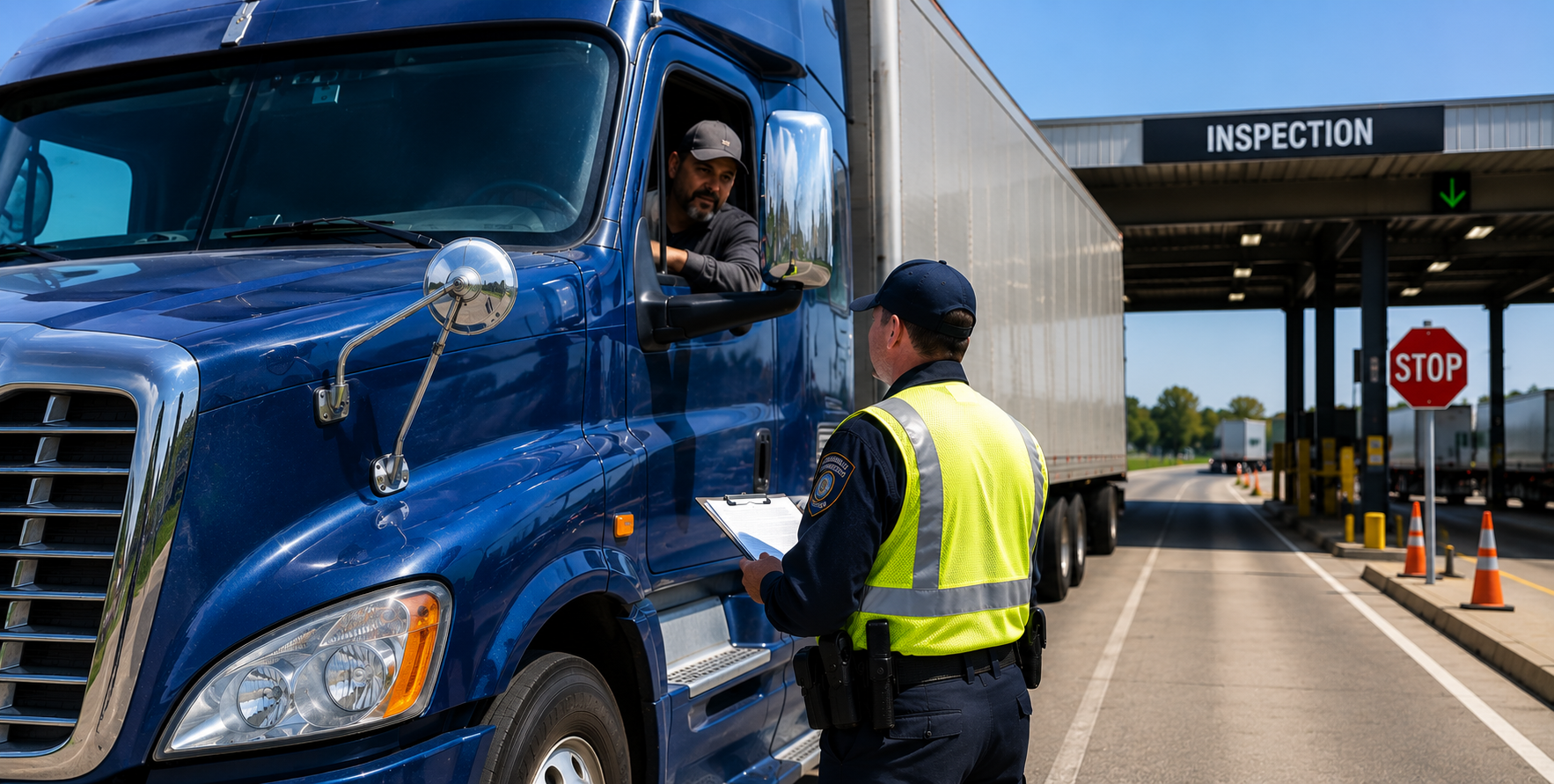
Compliance is the first pillar because it is the one area where failure results in immediate, involuntary consequences. You do not choose whether FMCSA fines you. You do not negotiate whether your driver gets placed out of service at a weigh station. Compliance either holds or it does not, and the consequences come fast.
What Does Fleet Compliance Actually Cover?
Fleet compliance under FMCSA covers Hours of Service rules, ELD use, driver qualification files, vehicle inspection records, and DVIR documentation. The governing regulation for most of this is 49 CFR Part 395 for HOS and electronic logging requirements. Every driver operating a commercial motor vehicle over 10,001 lbs in interstate commerce must log their duty status, and in nearly all cases, that log must come from a registered ELD device.
The FMCSA registered ELD list is not static. As of May 7, 2026, FMCSA Administrator Derek Barrs confirmed that 67 devices have been removed from the registered list since January 2025, with nearly 30 of those removals happening in 2026 alone. Safe ELD and MyLogs ELD were among the most recent removals, and carriers using those devices have until July 7, 2026 to replace them. Once the 60-day grace period expires, a driver running a deregistered device will be cited under 49 CFR 395.8(a)(1) for no record of duty status and placed out of service immediately. You can check whether your device is still registered on the FMCSA-registered ELD list.
What Are the HOS Rules Your Drivers Must Follow?
Under 49 CFR 395.3, property-carrying drivers may drive no more than 11 hours after 10 consecutive hours off duty. The total on-duty window is 14 hours, after which driving must stop regardless of how many hours were actually spent behind the wheel. The weekly limit under 49 CFR 395.3(b) is 60 hours in 7 days or 70 hours in 8 days, depending on your operating schedule. These are not guidelines. They are federal regulations with active enforcement.
That number crossed 500,000 HOS violations in 2025, up from 410,000 in 2023, according to RigDig data cited by Overdrive in April 2026. That increase reflects more inspection activity, not more drivers making mistakes. More officers are checking more logs, and more ELD data is being pulled at the roadside. Your drivers logs are being read in more detail than they were three years ago. If you need to verify what your drivers are required to log and when, our FAQ page gives you clear, straight answers to the most common compliance questions.
What Happens When Compliance Fails?
When a motor carrier falls below the HOS compliance SMS threshold of 65% in 2026, the carrier moves into intervention territory with FMCSA. That is lower than the 80% threshold that triggers action in most other safety categories, meaning your fleet gets flagged sooner for log violations than for almost any other issue. Fines under the FMCSA penalty schedule can reach up to $19,246 per violation for motor carriers and up to $4,812 per violation for individual drivers. Knowing falsification of records carries a maximum penalty of $15,846 per entry. These are maximum civil penalty amounts adjusted annually for inflation. CVSA recorded 58,382 falsification violations nationally in 2024. Those violations did not happen only at large carriers with compliance staff. They happened at fleets of every size.
If your fleet is not already using a registered ELD to keep accurate, tamper-free logs, visit our ELD platform and hardware page to see what a registered device looks like in practice.
What Is the Second Pillar and How Do You Manage Drivers Effectively?
Driver management is the second pillar because your fleet’s performance, safety record, and compliance outcomes all run through the person behind the wheel. Equipment can be replaced. Good drivers and the records that protect them legally take time and effort to build.

What Goes Into a Driver Qualification File?
Every driver you put on the road needs a qualification file that meets FMCSA requirements. That file includes a completed application, a motor vehicle record check, a medical examiner’s certificate, a road test record or equivalent, and documentation of prior employment history going back three years under 49 CFR 391.23. These are not optional records. They are the paper trail that protects you during a DOT compliance review.
English proficiency enforcement under 49 CFR 391.11(b)(2) has been active since June 25, 2025. If your driver cannot speak and read English well enough to communicate with enforcement officers and understand road signs and cargo documents, they are not legally qualified to operate a commercial motor vehicle under federal rules. This is an area that many fleets skip during hiring and that DOT auditors are now checking more actively.
How Do HOS Violations Connect to Dispatch Decisions?
Over 30% of HOS violations involve dispatchers pressuring drivers or failing to account for driving time properly, according to the Forward Thinking Systems CSA guide 2026. That means the problem is not always a driver making a bad choice. Sometimes it is a dispatch system that books loads without checking available hours, or a back office that does not look at ELD data before assigning a run.
If your back office is not checking your drivers’ available hours before dispatch, you are creating HOS violations before the truck leaves the yard. Driver management is not just about training drivers. It is about building the back-office process that supports legal operations.
If driver harassment or pressure to violate HOS rules is a concern in your fleet, 49 CFR 390.36 covers coercion protections. For a full breakdown of how the coercion rule applies to dispatchers and third parties, see the FAQ section of this article.
What Should Driver Scorecards Track?
A driver scorecard that actually tells you something useful tracks on-time departures against available HOS hours, pre-trip and post-trip DVIR completion rates under 49 CFR 396.11, any roadside inspection outcomes, and whether the driver had any log edits or annotation gaps in their ELD record. These are the metrics that show you where a driver needs coaching before a violation shows up in your SMS score.
What Is the Third Pillar and What Does Vehicle Maintenance Really Cost You?
Vehicle maintenance is the third pillar because an unplanned breakdown costs more than a scheduled service every time, in parts, labor, lost loads, and driver pay for hours spent waiting. The math on preventive maintenance always comes out ahead.
What Does a Basic Preventive Maintenance Schedule Look Like?
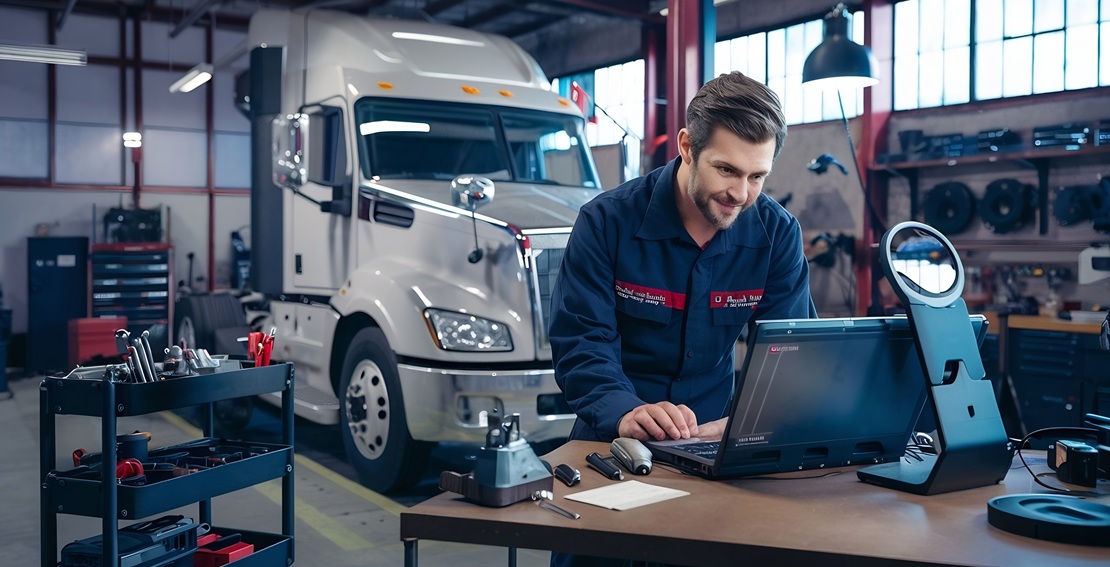
A preventive maintenance schedule for a long-haul truck runs on mileage intervals, and the 3,000 to 5,000-mile mark is where most fleets set their standard inspection points. That standard inspection covers engine oil, air filters, tire pressure and tread, brake lining, lighting, and fluid levels. Seasonal checks before winter should include battery condition, coolant mixture, and wiper systems. A full DVIR completed by your driver at the start and end of each shift under 49 CFR 396.11 catches the defects that develop between scheduled service intervals.
The goal is not to inspect everything at once. The goal is to catch small problems before they become large ones. A tire pressure issue found at pre-trip costs nothing to fix. The same issue found 400 miles from the nearest truck stop costs you a tow, a delay, and potentially a cargo claim.
How Do Maintenance Records Protect You During a DOT Audit?
During a DOT compliance review, auditors will ask for maintenance records going back at least 12 months. They are looking for evidence that your vehicles are being inspected, that defects are being reported, and that repairs are being documented. Gaps in maintenance records are not a minor administrative issue. They are a sign of broader compliance failure and can trigger a deeper audit of your entire operation.
Your ELD data and your maintenance records tell the same truth from two different angles. If your ELD shows a truck operating for 180,000 miles with no service records attached, that is a red flag in an audit. Keeping those records clean and current is part of running a fleet that can pass inspection when it matters. If you have questions about what records to keep and for how long, our support team can walk you through the documentation requirements.
What Is the DVIR Requirement and Who Is Responsible for It?
Under 49 CFR 396.11, every driver must complete a Driver Vehicle Inspection Report at the end of each workday if any defect or deficiency is found that would affect the safe operation of the vehicle. The carrier must certify that the defect has been repaired, or that it does not need repair, before the vehicle operates again. The driver must sign off the next day, confirming the repair was made.
Skipping DVIRs is one of the most common compliance failures in small fleets. It is also one of the easiest things to fix. If your drivers are not completing DVIRs consistently, the issue is usually a training gap or a process gap, not an equipment problem. Our Geosavi support team is available 24 hours a day, seven days a week if you need help getting your documentation process in order.
What Is the Fourth Pillar and How Do You Control Fleet Costs Without Cutting Corners?
Cost control is the fourth pillar because profit margins in trucking are thin, and the costs that destroy margins fastest are the ones that were preventable. Fuel, unplanned repairs, fines, and insurance premiums are the four areas where fleet owners lose money they did not have to lose.

Where Does Fuel Waste Actually Come From?
Fuel is typically the single largest operating cost for a trucking fleet. The waste comes from a predictable list of causes: excessive idling, aggressive acceleration and braking habits, overloaded vehicles running above the rated weight, poorly inflated tires, and routes that add unnecessary miles.
Idle time is one of the easiest costs to cut. A long-haul truck burning fuel while parked at a shipper dock or truck stop can burn 0.8 gallons per hour or more. Across a fleet of 10 trucks, even one extra idle hour per driver per day adds up to a fuel cost that runs into thousands of dollars per month. Tracking idle time through your ELD data gives you the numbers you need to take up with your drivers directly, without guessing or relying on driver self-reporting.
How Does CSA Scoring Affect Your Insurance Costs?
Your Compliance, Safety, Accountability score is public. Insurance carriers check it. Shippers check it. A poor CSA score in the HOS or Vehicle Maintenance categories raises your premiums and, in some cases, costs you loads from shippers who have minimum score requirements for their carrier lists.
The connection between compliance and cost control is direct. Every HOS violation that goes into your SMS record is not just a potential fine. It is a factor in your insurance renewal and your ability to win new freight. Keeping your HOS compliance score above the 65% SMS threshold in 2026 is not just a regulatory obligation. It is part of protecting your revenue.
What Should You Budget for Compliance in 2026?
The cost of compliance includes your ELD subscription, your driver qualification file management, your maintenance documentation system, and whatever training or process work it takes to keep your logs clean. These are known, fixed costs that you can plan for. Maximum carrier fines under the FMCSA penalty schedule reach $19,246 per violation. One fine from a single inspection can cost more than a full year of ELD subscriptions across your entire fleet. The math on investing in compliance is not close.
You can use our price calculator to see what a registered ELD costs per truck and compare it against the cost exposure from running without one or running a deregistered device. You can also browse hardware options directly in the Geosavi shop if you need to replace a device before your next dispatch.
What Is the Fifth Pillar and How Do You Build a Real Safety Culture?
Safety culture is the fifth pillar because all the rules, devices, and documentation in the world mean nothing if the people operating your fleet do not take safety seriously as a daily habit. Safety culture is what happens when no one is watching.

What Does a Safety Culture Look Like in a Small Fleet?
In a small fleet, safety culture is set by the owner or manager. If you skip pre-trip inspections when you are running late, your drivers will skip them too. If you dispatch a driver who is close to their HOS limit because you want the load covered, you have told your whole team that hours are flexible when it is convenient. That message spreads faster than any training program.
A real safety culture in a small fleet comes down to three practices. First, driver logs and DVIRs are reviewed consistently, not just when something goes wrong. Second, drivers who flag a safety issue or refuse an unsafe load are supported, not pressured. Third, near-miss incidents are talked about openly so the whole team can learn from them, not buried to protect a record.
How Does FMCSA’s Coercion Rule Protect Your Drivers and Your Fleet?
Under 49 CFR 390.36, it is illegal for a carrier, shipper, broker, or freight forwarder to coerce a driver into violating HOS rules, vehicle condition requirements, or other federal safety regulations. The coercion rule applies the moment a threat is made, whether or not the violation actually occurs, as confirmed by FMCSA’s coercion FAQ update cited by overdriveonline.com in May 2026.
For fleet managers, this rule matters in two directions. It protects your drivers from outside pressure they cannot control, like a shipper threatening to pull freight if a driver does not make an unrealistic delivery window. It also means that pressure from inside your own operation, from dispatch, from a manager, or even from you as the owner, creates FMCSA liability regardless of whether the driver actually violates a rule. If a dispatcher tells a driver to make it work when that driver is out of hours, that statement is coercion under federal law.
Why Does Safety Culture Show Up in Your Safety Scores?
FMCSA’s Safety Measurement System tracks your fleet’s safety record over a rolling 24-month window. Violations, crashes, and roadside inspection outcomes all feed into your scores across seven Behavior Analysis and Safety Improvement Categories. A fleet with a genuine safety culture maintains better inspection outcomes, fewer violations, and lower crash rates over time. That record shows up in your SMS scores, your insurance rates, and your ability to pass a DOT compliance review.
HOS citation rates dropped from 1.19% in December 2017 to 0.69% once full ELD enforcement began in April 2018, according to FMCSA enforcement data. At ELD mandate adoption, FMCSA also projected the rules would prevent 1,844 crashes, 562 fewer injuries, and 26 deaths per year, according to the FMCSA ELD program page. Both figures point to the same conclusion: when fleets build compliance into daily operations rather than reacting to enforcement pressure, the numbers improve across every measure. One without the other does not produce those results.
If you want to understand how your current ELD setup supports your safety culture and compliance record, visit our ELD platform and hardware page for the full picture of what a registered device tracks and reports.
The 5 Pillars at a Glance: How They Compare
| Pillar | Primary Risk if Ignored | Key Regulation | FMCSA Enforcement Tool | Immediate Cost of Failure |
|---|---|---|---|---|
| Compliance | Out-of-service orders, fines | 49 CFR Part 395 | ELD mandate, SMS scoring | Up to $19,246 per HOS violation (motor carrier) |
| Driver Management | Disqualified drivers, coercion liability | 49 CFR 391.11, 390.36 | DOT compliance review | Driver OOS order, carrier fine |
| Vehicle Maintenance | Roadside OOS, cargo delays | 49 CFR 396.11 | CVSA roadside inspection | Load loss, towing, repair costs |
| Cost Control | Margin erosion, insurance hikes | 49 CFR Appendix B to Part 386 | CSA score, audit findings | Unbudgeted fines and premium increases |
| Safety Culture | Crash exposure, coercion violations | 49 CFR 390.36 | SMS rolling 24-month record | Insurance increases, loss of shipper contracts |
Questions to Ask Before You Act on Any of the 5 Pillars
Is every ELD in my fleet still on the FMCSA-registered list?
Device deregistration has been accelerating fast. Check the FMCSA-registered ELD list before your next dispatch. A deregistered device on your truck is treated the same as no ELD at all once the 60-day grace period expires.
Are my driver qualification files current and complete?
A DOT compliance review will pull driver files. If a medical certificate has expired, a motor vehicle record check is overdue, or a prior employment verification is missing under 49 CFR 391.23, those gaps become violations. Set a calendar reminder for every expiration date in your driver files and treat it the same as a truck’s service due date.
Do my dispatch practices account for available HOS hours before assigning loads?
If your back office is booking loads without checking each driver’s available hours in the ELD, you are the source of the violation before the truck moves. More than 30% of HOS violations trace back to dispatch decisions, not drivers, according to the Forward Thinking Systems CSA guide 2026.
Are my drivers completing DVIRs at the end of every shift?
DVIR completion under 49 CFR 396.11 is a federal requirement, not a suggestion. If DVIR completion rates are low in your fleet, find out whether it is a training issue, a process issue, or a time pressure issue. The answer determines what you fix.
What is my current HOS SMS score and has it crossed the 65% intervention threshold?
Your SMS data is available through the FMCSA Safety Measurement System. If your HOS score puts you into the intervention range, find out which violations are driving it and how recent they are. A score built on old violations will improve with clean inspections. A score built on current patterns will not.
Have I verified that my ELD connects correctly to my truck’s engine via J1939, J1708, or OBD-II?
AAn ELD that is not properly connected to the engine will not produce accurate driving time records. The Geosavi ELD supports J1939, J1708, and OBD-II engine connections. You can review compatible connection types and available hardware in the Geosavi ELD shop before placing an order. If your device is not engine-connected, it cannot produce a compliant electronic log under 49 CFR Part 395.
When did I last review my maintenance records for completeness?
During a DOT audit, auditors look for patterns, not just individual records. A gap in service records for one vehicle over a three-month period will draw questions. Pull your maintenance logs now and find the gaps before an auditor does.
How does my fleet handle a driver who refuses a load on safety grounds?
If your answer is that it has never happened or that you would handle it when the time comes, that is a gap in your safety culture. Under 49 CFR 390.36, a driver who refuses a load because it would require a HOS violation is legally protected. Your fleet needs a clear process for what happens next so that neither your driver nor your business faces coercion liability or an FMCSA enforcement action.
Your Fleet Management Questions Answered
About Fleet Compliance and FMCSA Rules
How often does FMCSA update the registered ELD list?
The list is updated continuously. Devices can be added or removed at any time. The safest practice is to check the FMCSA-registered ELD list every time you renew a device subscription or add a new vehicle to your fleet. Do not assume a device that was registered last year is still registered today. The pace accelerated in 2026, with close to 30 devices removed in that year alone, as confirmed by FMCSA Administrator Derek Barrs on May 7, 2026.
What happens to my driver if they get placed out of service at a roadside inspection?
An out-of-service order requires the driver to stop operating immediately until the violation is corrected. If the violation is an ELD issue under 49 CFR 395.8(a)(1), the driver must revert to paper logs for the remainder of that trip with a written annotation documenting the malfunction. The carrier has 8 days to repair or replace the ELD under 49 CFR 395.34. During that window, paper logs must be retained for the full six-month period required under federal rules. The out-of-service event enters the driver’s inspection record and feeds into your SMS score.
Can a short-haul driver skip the ELD requirement entirely?
Yes, under specific conditions. The short-haul CDL exemption under 49 CFR 395.1(e)(1) allows CDL drivers operating within a 150 air-mile radius of their normal work reporting location to use time records instead of logs, provided they return to the reporting location within 14 hours and do not exceed 11 hours of driving. The 150 air-mile radius was expanded from 100 air miles on September 29, 2020. Non-CDL drivers have a similar exemption under 49 CFR 395.1(e)(2). If your driver’s route takes them beyond 150 air miles on even one day, the exemption is lost for that entire day and a full log is required.
What is the difference between a compliance review and a DOT audit?
A compliance review is FMCSA’s formal investigation of a motor carrier’s safety fitness. It is triggered by poor SMS scores, a crash, a complaint, or random selection. During the review, auditors examine driver qualification files, HOS records, vehicle maintenance records, drug and alcohol testing records, and accident registers. A DOT audit is a broader term that can refer to any formal examination of your records by a federal or state enforcement agency. Both result in a safety fitness rating: satisfactory, conditional, or unsatisfactory. An unsatisfactory rating can lead to loss of operating authority. You can review the full FMCSA safety fitness procedures for more details.
How does CVSA Roadcheck affect my fleet’s record even if my trucks are not inspected?
CVSA International Roadcheck sets the enforcement tone for the entire year. The 2026 Roadcheck ran May 12 to 14, with ELD tampering and log integrity as its primary focus. While your specific trucks may not have been stopped during those three days, the violations recorded nationally during Roadcheck inform FMCSA’s enforcement priorities for the months that follow. Fleets with clean records during high-enforcement periods build a better inspection history. Fleets with violations during those periods face faster SMS score increases.
About Driver Management and Safety
What qualifies as coercion under FMCSA rules, and who can be held responsible?
Under 49 CFR 390.36, coercion occurs when any party, including a carrier, shipper, broker, or freight forwarder, threatens or pressures a driver to violate federal safety regulations. The coercion applies the moment the threat is made. It does not matter whether the driver actually commits a violation. A dispatcher who tells a driver to make it work when the driver is out of hours has made a coercive demand under this rule. Carriers can be held liable even if the pressure comes from a third party operating under their authority, as confirmed by FMCSA’s coercion enforcement guidance updated in May 2026.
How long must driver qualification file records be retained?
Driver qualification records must be retained for the duration of the driver’s employment and for three years after separation from the carrier. HOS records must be retained for six months under 49 CFR 395.8(k)(1). Drug and alcohol testing records have their own separate retention timelines, ranging from one year to five years depending on the test result and type. Keeping all of these records in one organized system is one of the most practical things you can do to prepare for a compliance review. Our support team can help if you have questions about record retention for your specific operation.
Can a fleet manager be held personally liable for HOS violations committed by drivers?
FMCSA enforcement actions are primarily directed at the motor carrier as a legal entity under 49 CFR Part 386. Individual fleet managers or dispatchers can face personal liability in cases involving knowing violations or coercion, particularly when there is documented evidence that the manager directed a driver to violate HOS rules. The knowing falsification penalty under 49 CFR 395.8(e)(1) carries a maximum of $15,846 per violation and can apply to anyone who knowingly creates or approves a false record. If your operation raises these questions, consult a transportation attorney for guidance specific to your situation.
What is Level VIII electronic inspection and why does it matter in 2026?
Level VIII inspections are electronic, conducted remotely without stopping the truck. Inspectors pull ELD data, registration, insurance, and operating authority information electronically while the vehicle is in motion or at a designated checkpoint. These inspections are expanding nationwide in 2026. They do not replace roadside physical inspections, but they increase the frequency at which your ELD records are being reviewed. A fleet with accurate, unedited logs benefits from this expansion. A fleet with pattern errors or missing annotations gets flagged for follow-up physical inspections.
What should a new fleet owner prioritize in the first 90 days of operations?
In the first 90 days, your three most important actions are: getting every driver set up on a registered ELD and trained on proper log completion, building complete driver qualification files for every person operating under your authority, and setting up a documented vehicle maintenance and inspection schedule that produces records you can hand to an auditor. Everything else, fuel savings, route planning, CSA scoring, can be built on top of that foundation. Visit our ELD products store to see device options, or use our price calculator to plan your compliance costs.
Conclusion
Fleet owners who treat compliance, maintenance, and driver management as separate tasks instead of connected pillars are the ones who get caught short during an inspection. These five areas reinforce each other. Strong compliance protects your drivers. Solid driver management keeps your records clean. Consistent maintenance keeps your trucks on the road. Cost control turns all of it into a business that runs in the black. Safety culture is what holds everything together when pressure is high and no one is watching.
Enforcement is not slowing down. The question is whether your operation is built to meet it. Level VIII electronic inspections are expanding nationwide. CVSA Roadcheck 2026 targeted ELD tampering directly. And the HOS compliance SMS threshold of 65% means your fleet gets flagged faster for log violations than for almost any other issue. Fleets that are not actively managing all five pillars are not standing still. They are falling behind.
If you have questions about where your fleet stands or want to see how a registered ELD fits into your compliance picture, contact our team at Geosavi. We back every device with a 30-day money-back guarantee and 24/7 technical support, so you are never left without help when you need it most. Call us at (800) 261-4361.