Key Takeaways
- Does an ELD violation go on your record? If it is documented on a roadside inspection, it can appear in the driver’s three-year PSP inspection history and contribute to the motor carrier’s SMS data for the applicable 24-month window.
- PSP, SMS, a state motor vehicle record, a citation, and a federal safety rating are different records. An event does not necessarily appear in all of them.
- PSP does not give drivers a federal “CSA score.” It reports crash and roadside-inspection history from FMCSA’s MCMIS database.
- Not every ELD-related violation produces the same severity, penalty, or out-of-service result. Use the exact violation code, current SMS methodology, applicable regulations, and current CVSA criteria.
- Incorrect or incomplete federal crash and inspection data can be challenged through DataQs, but fixing a condition after an inspection does not make the original violation incorrect.
Introduction
An ELD-related roadside violation can affect both a driver and the motor carrier, but the phrase “go on your record” needs context. The driver’s Pre-Employment Screening Program record contains three years of roadside-inspection history and five years of crash history. The carrier’s Safety Measurement System profile uses on-road performance data from the previous 24 months for intervention prioritization.
That does not mean every device alert, citation, or company coaching event automatically appears in both systems. What matters is whether the event was documented as a violation on a qualifying roadside inspection, how the state handled any citation, which carrier the driver was operating for, and whether the data were later corrected.
When Does an ELD Violation Become Part of a Federal Record?
A roadside inspector records inspection findings using specific violation codes. Those inspection data are submitted to FMCSA’s Motor Carrier Management Information System and can feed products such as PSP and SMS.
An ELD warning inside the cab is not automatically a federal violation. A carrier’s internal coaching note is not automatically a PSP event. A citation issued by a state or local authority can create a separate court or motor-vehicle-record process. Always start with the inspection report and the exact code rather than the general label “ELD violation.”
Inspection records can contain a violation even when no citation was issued. Conversely, disputing a citation in court does not automatically change the federal inspection record; the adjudication result may need to be submitted through DataQs.
How Do PSP, SMS, MVRs, and Safety Ratings Differ?

| Record or system | What it contains or does | Typical time window |
|---|---|---|
| PSP | Driver crash and roadside-inspection history from MCMIS; available to the driver and, with required consent, participating prospective employers | Five years of crash data and three years of roadside-inspection data |
| Carrier SMS | Uses inspection, crash, and investigation data to prioritize motor carriers for interventions by BASIC | Generally 24 months of on-road performance data; investigation results use their applicable window |
| State MVR or CDL record | State licensing and conviction information | Varies by state and type of event |
| Citation or court record | State, local, or administrative enforcement matter | Depends on the issuing jurisdiction and disposition |
| Federal safety rating | Satisfactory, Conditional, or Unsatisfactory rating issued through the Part 385 process | Based on the most recent applicable federal rating action |
FMCSA states that SMS prioritization is not itself a federal safety rating. Drivers also do not receive a public federal “CSA score.” PSP reports the driver’s inspection and crash history; it does not assign the driver a federal safety score.
What Types of ELD and HOS Violations May Appear?
ELD-related findings can involve different rules and facts, including:
- failing to use a required registered ELD;
- having no required record of duty status;
- exceeding an applicable driving, on-duty, break, or 60/70-hour limit;
- failing to maintain or present required records during a malfunction;
- failing to provide a supported transfer, display, or printout during an inspection;
- missing required ELD transfer instructions, malfunction instructions, or blank graph grids;
- unidentified driving or log edits that were not handled correctly;
- using a revoked device after the applicable FMCSA transition deadline; or
- false records of duty status.
These are not interchangeable. The inspection report should identify the cited regulation and violation code. Review that specific code in the current SMS methodology and violations list before drawing conclusions about severity or carrier impact.
What Is a Form-and-Manner or Record-Presentation Issue?
People often use “form and manner” informally for incomplete or improperly presented log information. The safer approach is to identify the exact violation. A driver may have accurate hours yet still be unable to transfer or display the required data, may lack required information, or may not have the current onboard instructions and blank graph grids.
A failed electronic transfer does not always mean there is no record. Depending on the device and circumstances, an officer may use another supported transfer method or review the required display or printout. Drivers should know the installed device’s roadside process before an inspection occurs.
What Is an Hours-of-Service Violation?
An HOS violation involves an applicable operating limit or recordkeeping rule under Part 395. For property-carrying drivers subject to 49 CFR § 395.3, core limits can include the 11-hour driving limit, 14-hour driving window, applicable 30-minute break, and 60/70-hour limits.
Exceptions and other operating categories can change what applies. A short-haul driver, passenger carrier, or driver operating under a specific exception should be evaluated under the relevant rule rather than a generic ELD checklist.
What Happens When an ELD Malfunctions?
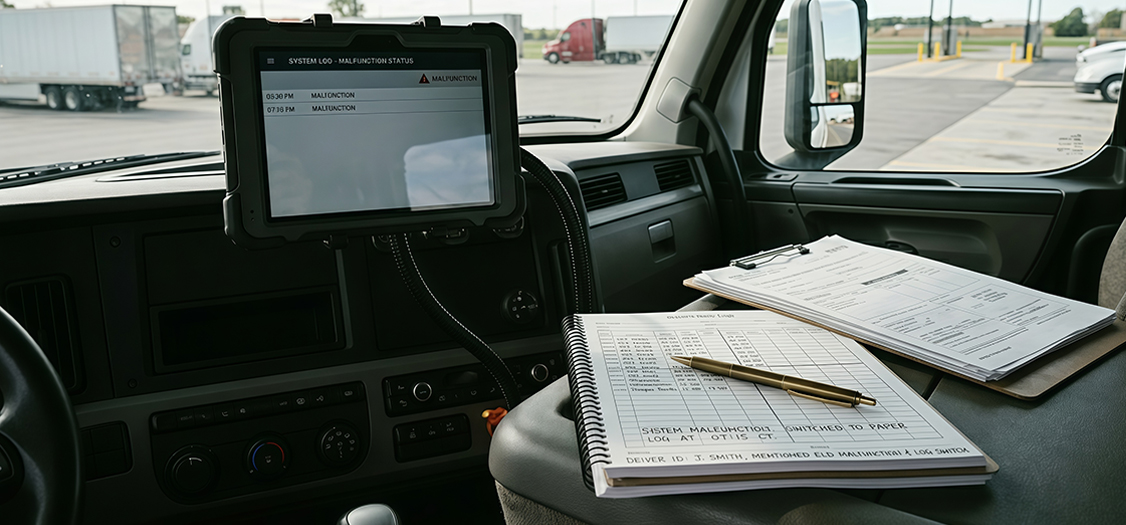
A malfunction does not automatically become a violation when the driver and carrier follow § 395.34. The driver notes the malfunction, gives written notice to the carrier within 24 hours, reconstructs records when they are not possessed or retrievable, and manually records HOS when the device cannot accurately record and present the data.
The carrier must correct the malfunction within eight days of discovery or driver notification, whichever occurs first, unless the extension process applies. Arriving at an inspection without accessible electronic records or the required manual records can create a separate problem.
How Does a Roadside Violation Affect the Carrier’s SMS Data?
SMS organizes carrier performance into Behavior Analysis and Safety Improvement Categories, including Hours-of-Service Compliance. FMCSA evaluates violations using the methodology and current violation-severity values, gives greater weight to more recent events, accounts for relevant inspection exposure, and compares carriers in safety-event groups.
There is no single public “CSA score” that tells the whole story. A violation’s effect depends on its code, age, whether it was out of service, the carrier’s other inspections, and the applicable BASIC methodology. One violation does not mechanically guarantee an investigation, but a pattern can contribute to prioritization.
FMCSA’s SMS overview explains that the system is used to prioritize interventions. It should not be described as a federal safety rating or as a direct formula for insurance pricing.
Does Every ELD Violation Produce a Fine?
No. A roadside inspection finding, a citation, a civil penalty, an out-of-service order, and an SMS impact are different consequences. An inspection may document a violation without a separate monetary penalty. A state citation follows the issuing jurisdiction’s process, while federal civil penalties depend on the legal authority, facts, responsible party, enforcement action, and penalty schedule in effect at that time.
Avoid treating an annually adjusted maximum penalty as the expected fine for every driver or carrier. For a specific notice or citation, review the exact allegation and seek qualified legal or compliance advice when necessary.
When Can an ELD or HOS Violation Lead to an Out-of-Service Order?
Out-of-service decisions follow the current North American Standard Out-of-Service Criteria and the facts found during the inspection. Serious HOS overages, false records, absence of a required record, or use of certain revoked ELDs after an announced transition deadline can result in an out-of-service action.
Not every technical or record-presentation issue has the same result. The inspection report should identify the reason and applicable code. The driver must comply with the order and should not resume operation until the required condition or rest period has been satisfied.
Final 2026 International Roadcheck results show why precise language matters: most inspected vehicles and drivers had no out-of-service violations, while HOS, false records, licensing, medical-card, and ELD-tampering issues remained enforcement priorities.
What Counts as Falsification of a Record of Duty Status?
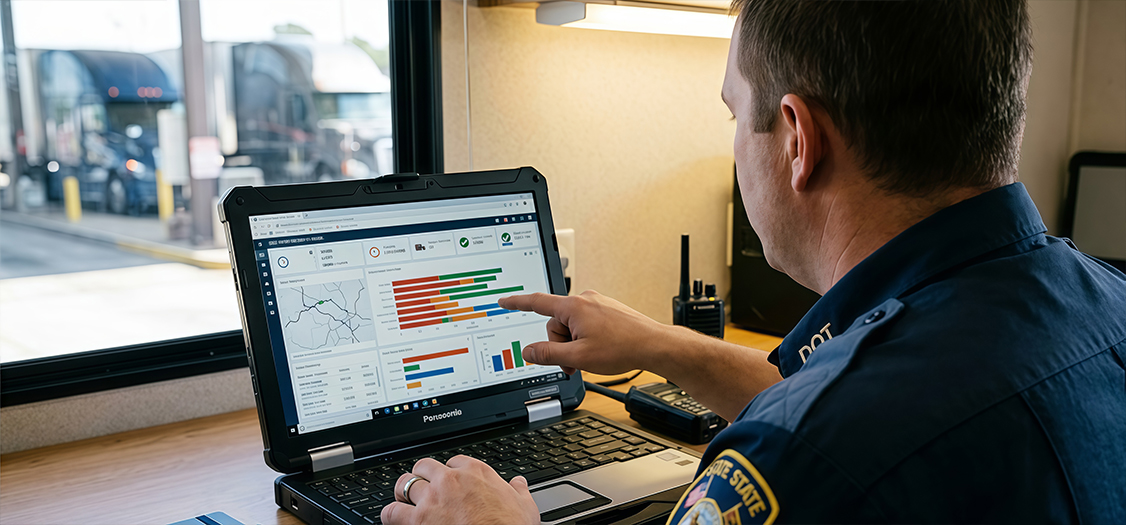
49 CFR § 395.8 requires accurate records of duty status. Falsification can involve knowingly recording duty status that does not reflect what occurred, concealing driving time, using another person’s account, or manipulating records or supporting information to create a false timeline.
Not every edit is falsification. The ELD rules permit authorized edits and annotations while preserving the original record, and a driver generally accepts or rejects carrier-proposed edits. Corrections should explain what changed and why. Intent and evidence matter, so do not label a mistake as deliberate falsification without support.
A falsification finding can affect employment, inspection history, carrier SMS data, and enforcement exposure. Whether it affects a state license or another background record depends on the related citation, conviction, and jurisdiction.
What Happens When FMCSA Removes an ELD From the Registered List?
FMCSA may move a device to the revoked list when it does not meet the technical specifications. The agency’s notice normally identifies the affected models, transition instructions, and deadline. After that deadline, FMCSA may direct enforcement officials to cite drivers using the device under § 395.8(a)(1) and apply current CVSA out-of-service criteria.
Do not rely on an old total number of revoked devices or assume every removal has the same deadline. Check the exact model on the registered and revoked ELD lists and review current FMCSA ELD notices.
What Rights Do Drivers Have When Pressured to Violate HOS Rules?
Coercion and ELD harassment are related but distinct:
- Coercion: 49 CFR § 390.6 addresses pressure by covered parties to make a driver violate specified safety, commercial, or hazardous-materials rules, or punishment for refusing.
- ELD harassment: § 390.36 addresses a motor carrier’s use of ELD information or related technology in connection with specified underlying HOS conduct.
- Retaliation protection: the Surface Transportation Assistance Act provides a separate Department of Labor process for qualifying retaliation claims.
FMCSA guidance says a written coercion or harassment complaint generally must be filed within 90 days through the National Consumer Complaint Database or the appropriate FMCSA Division Administrator. Preserve dispatch messages, ELD records, emails, trip documents, and other evidence. A driver considering a legal claim should obtain advice appropriate to the facts and deadline.
How Can Incorrect Inspection Data Be Challenged?
FMCSA’s DataQs system allows drivers, carriers, and other interested parties to request review of federal and state crash or inspection data believed to be incomplete or incorrect.
A strong Request for Data Review identifies the inspection, exact field or violation at issue, requested correction, and supporting evidence. If a related citation was adjudicated, submit the disposition through the appropriate DataQs request type.
DataQs is not a substitute for contesting a citation in the issuing jurisdiction. Correcting a defect after an inspection also does not prove that the original finding was wrong. FMCSA’s DataQs guidance explains that removal generally requires evidence that the violation did not exist, was recorded in error, or was duplicated.
How Can Fleet Managers Prevent ELD Violations?
- Verify every installed model on FMCSA’s registered list and monitor removal notices.
- Train drivers to transfer records, use the display or printout, manage edits, resolve unidentified driving, and follow malfunction procedures.
- Keep current transfer instructions, malfunction instructions, and at least eight days of blank graph grids onboard.
- Review HOS exceptions and dispatch practices by operating type rather than using one rule for every driver.
- Audit records and supporting documents promptly, with a process for documenting legitimate corrections.
- Monitor carrier SMS and inspection reports, and use DataQs when evidence supports a correction.
- Do not pressure drivers to accept inaccurate edits or operate in violation of the rules.
The Geosavi ELD platform can support log review and fleet workflows. Compliance still depends on correct configuration, training, record handling, and operational decisions.
What Should You Ask an ELD Provider?
- Is the exact model and software version currently registered with FMCSA?
- Which complete data-transfer option does it support: telematics or local transfer?
- How does the driver provide a roadside display or printout?
- What do each malfunction and data-diagnostic indicator mean?
- How are original records, edits, annotations, and driver certifications preserved?
- How quickly is support available during an inspection or malfunction?
- How can the carrier export and retain required records?
- What happens if FMCSA removes the model from the registered list?
- What hardware, installation, subscription, replacement, and support terms are included?
Review Geosavi’s price calculator and support resources, then confirm the exact device and contract details before purchasing.
Frequently Asked Questions
Does an ELD violation go on a driver’s PSP record?
If the violation is documented on a roadside inspection submitted to MCMIS, it can appear in the driver’s three-year PSP inspection history. A device alert or internal carrier note alone is not a PSP inspection event.
How long does an inspection stay in PSP?
PSP reports the most recent three years of roadside-inspection data and five years of crash data.
Does a driver have a CSA score?
No public federal CSA score is assigned to an individual driver. PSP reports inspection and crash history, while SMS primarily evaluates and prioritizes motor carriers.
Can an employer view a driver’s PSP report?
A participating prospective motor carrier may request a PSP report for pre-employment screening with the driver’s required consent. Drivers can request and review their own records.
Can an ELD violation be removed?
Incorrect or incomplete inspection data can be reviewed through DataQs. Evidence that a condition was repaired later is not, by itself, evidence that the original inspection finding was incorrect.
Does every ELD violation create a fine?
No. Inspection findings, citations, civil penalties, out-of-service orders, and SMS effects are separate consequences.
Can an owner-operator be affected as both driver and carrier?
Yes. The inspection may appear in the driver’s PSP history, and violations can also be attributed to the operating carrier’s USDOT number for SMS purposes.
What should a driver do if an ELD malfunctions?
Follow § 395.34: note the malfunction, notify the carrier in writing within 24 hours, reconstruct records when they are unavailable, and use compliant manual records when the device cannot accurately record and present HOS data.
Does improper personal-conveyance use create a violation?
It can. Personal conveyance is off-duty use of a commercial motor vehicle under qualifying circumstances. Misclassifying work-related movement may produce an inaccurate record and an HOS violation.
What if an inspector cannot read transferred ELD data?
The driver should follow the device’s transfer instructions and use another supported transfer method or the supported display or printout when available. Document technical problems and follow the malfunction process if the device cannot accurately record and present the required data.
Conclusion
An ELD-related roadside violation can follow a driver through the three-year PSP inspection window and affect the operating carrier’s SMS data, but the details depend on the actual inspection record. PSP is not SMS, SMS is not a safety rating, and neither automatically determines a state conviction or insurance result.
Read the inspection report, identify the exact code, preserve relevant records, and use DataQs when the federal data are incomplete or wrong. Fleets can reduce risk by using a currently registered device, training drivers on roadside and malfunction procedures, reviewing logs fairly, and keeping dispatch decisions within the applicable Hours of Service rules.