Yes, drivers can edit certain ELD log entries to correct errors or add missing information. But an edit does not erase history, and automatically recorded driving time is tightly restricted. Drivers remain responsible for reviewing and certifying their records, while motor carriers may only propose edits after a driver submits the record.
For fleet managers and drivers, the practical goal is not to avoid every correction. It is to make accurate, timely, well-documented corrections that preserve the ELD audit trail.
Key takeaways
- Drivers may correct inaccurate entries, add missing information, and annotate ELD records within the device’s edit limits.
- Every change or addition must include an annotation explaining why it was made.
- A carrier may propose an edit only after the driver submits the record. The driver must confirm or reject the change, then recertify and resubmit when appropriate.
- The ELD must retain the original information and the edit history. Records cannot simply be deleted.
- Automatically recorded driving time generally cannot be shortened or converted to non-driving time, although FMCSA recognizes limited assignment and correction scenarios.
- Drivers and carriers should use supporting documents to confirm what actually occurred.
Can drivers edit ELD logs?
Under 49 CFR 395.30, a driver must review ELD records, correct inaccurate records, enter missing information, and certify the record. The rule also allows a driver to edit, add, and annotate events, subject to the ELD’s technical limitations.
An edit should make the record more accurate. It should never be used to conceal driving, reduce hours without a factual basis, or create a record that does not match the driver’s actual activity.
After the final required entry or correction for a 24-hour period, the driver certifies that the record is true and correct. If a later edit becomes necessary after submission, the driver must recertify the record.
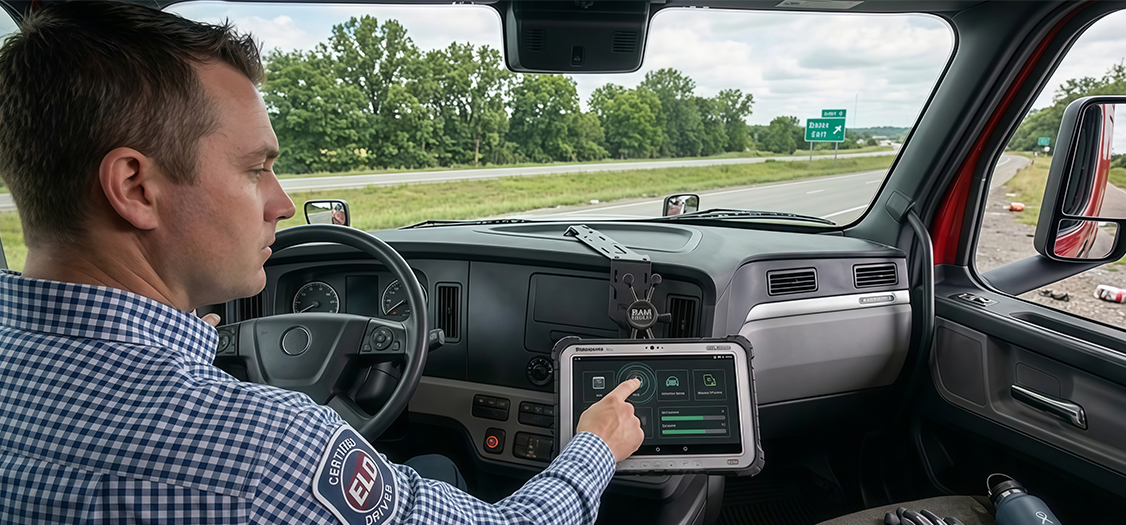
ELD edit versus annotation
An edit changes or adds a record entry, such as correcting an incorrectly selected duty status or entering duty time that was omitted. An annotation is a note that explains the event or the reason for the change.
Section 395.30(c)(2) requires the driver or support personnel to annotate each change or addition. A useful annotation is concise, factual, and specific enough for the driver, carrier, or safety official to understand the correction later.
For example, an annotation such as “Changed 2:00-2:30 p.m. from off duty to on duty; loading at customer dock” is more useful than “fixed log.” The note should describe what occurred without speculation or unnecessary personal information.
What can and cannot be changed?
| ELD record situation | What the rules allow | Required control |
|---|---|---|
| Incorrect manual duty-status entry | The driver may correct the entry if the new status reflects what actually happened. | Annotate the reason and certify or recertify the record. |
| Missing non-driving activity | The driver may add the missing information. | Annotate the addition and keep supporting documents consistent. |
| Carrier finds an apparent error | The carrier may propose an edit after the driver has submitted the record. | The driver must confirm or reject it. A proposed change does not take effect without the driver’s action. |
| Driving assigned to the wrong team driver | Driving time may be reassigned between team drivers when both were identified as co-drivers for the period. | Use the ELD-supported process and obtain the required confirmations. |
| Unidentified driving | The proper driver should assume driving that belongs to that driver. The carrier must review unassigned records. | Assign the record correctly or annotate why it remains unassigned. |
| Automatically recorded driving while the CMV was moving | It generally cannot be shortened or changed to non-driving time. | Use only the limited correction or reassignment processes allowed by the ELD specifications and FMCSA guidance. |
| Original ELD record | It cannot be erased or overwritten. | The system must preserve the original information and the edit history. |
For the account handoff and correction workflow, see how two drivers can use the same ELD.
Limits on automatically recorded driving time
The ELD technical specifications in 49 CFR part 395, subpart B, Appendix A are designed to preserve driving recorded while a commercial motor vehicle is in motion. That time cannot ordinarily be changed to off duty, sleeper berth, or on-duty not driving.
FMCSA’s current ELD editing and annotations guidance describes limited situations where assignment or correction is permitted:
- Team drivers may reassign driving time that was recorded to the wrong co-driver when both drivers were properly identified as co-drivers.
- Driving accepted from the unidentified-driver profile in error may be returned so the correct driver can assume it.
- A driver may assume only the portion of an unidentified-driving event that belongs to that driver, while the total automatically recorded driving time remains intact.
- A narrow correction may apply when an ELD continued recording driving after the vehicle was powered off and the vehicle was not in motion during the corrected period.
Personal conveyance and yard-move designations deserve special care. Drivers must select an applicable special driving category at the proper time. A driver generally cannot retroactively convert unidentified driving to personal conveyance or a yard move merely because the designation was forgotten. In that situation, an accurate annotation can provide context, but it does not rewrite the automatically recorded driving event.
How drivers should correct an ELD record
- Review the entire 24-hour period. Check duty statuses, locations, vehicle information, shipping information, co-driver details, and any unidentified-driving prompts.
- Confirm the facts. Compare the record with dispatch information, bills of lading, fuel receipts, toll records, inspection reports, and other supporting documents.
- Make only the necessary correction. Select the inaccurate entry or add the missing event using the ELD’s normal edit process.
- Add a factual annotation. State what was wrong and why the change reflects the driver’s actual activity.
- Review the result. Confirm the corrected timeline does not create overlaps, gaps, or a new inconsistency.
- Certify or recertify. The driver must complete the certification step after the correction.
- Escalate technical problems. If the ELD will not permit a correction that appears legitimate, follow the carrier’s malfunction and support procedures rather than attempting to work around the device.
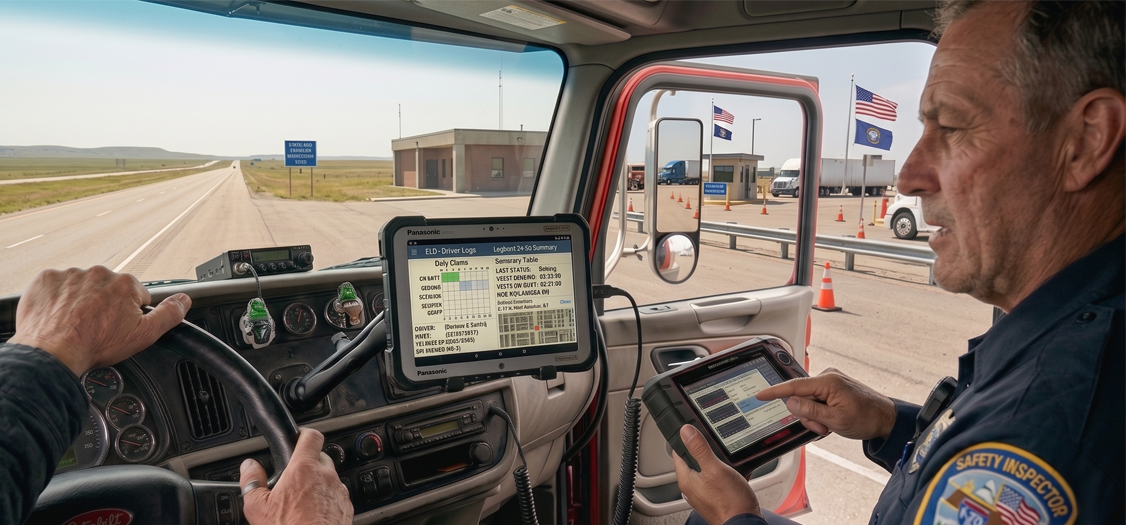
How carrier-proposed edits work
A carrier’s safety or support team may identify an apparent error during log review. Under section 395.30(d), the carrier may request an edit only after the driver has submitted the record. The carrier cannot silently rewrite the driver’s record or require the driver to certify a false entry.
A compliant process looks like this:
- The carrier documents the apparent discrepancy and reviews available supporting records.
- After the driver’s submission, the carrier sends a proposed edit with a clear annotation.
- The driver reviews the proposal against what actually occurred.
- The driver confirms or rejects the proposal.
- If the record changes, the driver recertifies and resubmits it.
- The ELD retains the original record, proposed edit, driver response, and resulting history.
The driver is not required to accept a proposal that is inaccurate. A disagreement should be resolved through facts and records, not pressure. Section 395.30 expressly prohibits a carrier from coercing a driver to make a false certification.
Managing unidentified driving
When a CMV moves without an authenticated driver, 49 CFR 395.32 requires the ELD to place that operation in an “Unidentified Driver” account. When prompted, a driver must assume records that belong to that driver or indicate that they do not.
The carrier must review unidentified driving and either assign it to the correct driver or annotate why it remains unassigned. Unidentified-driving records must be retained for at least six months and made available during an authorized inspection, audit, or investigation.
A sound fleet process reviews unidentified events routinely, while details are still fresh. Waiting until the end of a month can make it harder to identify a yard movement, maintenance road test, or driver who did not log in.
What roadside inspectors and auditors may review
A correction is not automatically suspicious. What matters is whether the final record is accurate and whether the history supports it. During a review, officials may compare ELD events, annotations, certifications, location data, unidentified-driving records, and supporting documents.
Common problems include unexplained edits, repeated late corrections, driving left under the unidentified profile, missing recertification, conflicting documents, and annotations that do not explain the change. These patterns are not proof by themselves, but they can lead to closer review.
Under 49 CFR 395.8, false duty-status reports and ELD tampering are prohibited. Motor carriers also must retain required records of duty status and supporting documents for at least six months from receipt.
ELD data-integrity best practices for fleets
- Use a written correction policy. Explain who reviews logs, when carrier proposals may be sent, how drivers respond, and when issues are escalated.
- Train with real scenarios. Include missed duty-status changes, carrier-proposed edits, team-driver assignment, unidentified driving, personal conveyance, yard moves, and recertification.
- Require meaningful annotations. A short template can help, but the reason should reflect the actual event rather than generic language.
- Review exceptions consistently. Focus on missing certifications, unidentified driving, unusual edits, and conflicts with supporting documents.
- Protect driver control. Carrier staff may identify errors and propose changes, but the driver must confirm or reject proposed edits.
- Preserve records. Do not delete original entries, manipulate source data, or use administrative access to bypass ELD controls.
- Document disagreements. Keep a factual record when a driver rejects a proposal and investigate the underlying discrepancy.
- Audit the process. Periodically verify that review queues, annotations, confirmations, and retention practices match the written policy.

Questions fleet managers should ask about ELD editing
- Can drivers review, edit, annotate, and certify records from the in-cab device and an approved back-office system?
- Does the system prevent automatically recorded driving time from being shortened?
- Can team drivers correct a mistaken assignment through the required confirmation process?
- Are proposed carrier edits clearly separated from accepted driver edits?
- Does the system retain the original record, edit history, annotations, identities, dates, and times?
- How are unidentified-driving events routed, reviewed, assigned, and retained?
- Can the carrier produce the required records and supporting information during an inspection or audit?
- Are drivers trained to certify again after an accepted post-submission edit?
Frequently asked questions
Can a carrier edit a driver’s ELD log?
A carrier may propose an edit after the driver has submitted the record. The driver must confirm or reject the proposed change. If accepted, the driver implements the appropriate correction, recertifies, and resubmits the record before it takes effect.
Can a driver delete an ELD event?
No. The driver can make an allowed correction, but the ELD must preserve the original record and the edit history. Deleting the event would defeat the required audit trail.
Can automatically recorded driving time be changed to off duty?
Generally, no. Driving recorded while the CMV was in motion cannot ordinarily be shortened or converted to non-driving time. FMCSA guidance recognizes limited correction or assignment situations, including certain team-driver, unidentified-driver, and powered-off stationary-vehicle scenarios.
Does every ELD edit need an annotation?
Yes. Section 395.30(c)(2) requires the driver or support personnel to annotate each change or addition to the record. The annotation should explain the factual reason for the correction.
What happens if a driver rejects a carrier-proposed edit?
The rejection remains part of the ELD record. The carrier should investigate the discrepancy using supporting documents and the driver’s explanation. It may not coerce the driver to certify a false record.
Build accuracy into the process
The answer to “can drivers edit ELD logs?” is yes, within defined limits and with a preserved audit trail. Good compliance depends on timely driver review, precise annotations, controlled carrier proposals, proper certification, and consistent handling of unidentified driving.
Geosavi helps fleets organize driver, vehicle, and compliance information in one system. A strong ELD correction policy works best when it is paired with clear responsibilities, reliable supporting records, and regular review of exceptions.