Key Takeaways
- The federal ELD rule applies nationwide to covered interstate motor carriers and drivers who must prepare records of duty status (RODS). Crossing a state line is not the only way an operation can be interstate commerce.
- For intrastate-only operations, state hours-of-service and electronic-recording rules may differ. Drivers and carriers must check the current rules of the state commercial-vehicle authority.
- Not every commercial driver needs an ELD. The federal rule includes limited exceptions for qualifying short-haul drivers, drivers who need RODS no more than eight days in any 30-day period, certain driveaway-towaway operations, and qualifying pre-2000 vehicles or engines.
- A compliant ELD must be on FMCSA’s registered, self-certified list and used according to the rule. Registration is not an FMCSA endorsement.
- The safest “state-by-state” process is to determine whether the trip is interstate or intrastate first, then apply the federal rule or verify the current state rule with the responsible agency.
What States Require ELDs?
For covered interstate operations, the answer is all states. The federal electronic logging device rule applies throughout the United States when a motor carrier or driver operates in interstate commerce, is subject to 49 CFR part 395, and must maintain RODS under 49 CFR §395.8(a), unless an exception applies.
The rule does not create 50 different federal ELD standards. A covered interstate driver does not move in and out of the federal ELD requirement based solely on the state being traveled through. The same federal baseline applies across state lines and while a covered interstate movement is occurring within one state.
Intrastate-only operations require a separate analysis. FMCSA explains that the Federal Motor Carrier Safety Regulations generally do not apply to commerce conducted exclusively within one state, while states maintain similar rules that can vary. An intrastate carrier should verify the current hours-of-service, logging, exception, and device requirements with its state department of transportation, state police, highway patrol, public service commission, or other commercial-vehicle authority.
Interstate vs. Intrastate Commerce Comes First

Whether a trip crosses a border is important, but it is not the only factor. Under FMCSA’s interstate and intrastate commerce guidance, interstate commerce includes transportation:
- Between a place in one state and a place outside that state, including another country
- Between two places in one state when the route passes through another state or country
- Between two places in one state as part of trade, traffic, or transportation that begins or ends outside the state or the United States
A vehicle can therefore travel only within one state and still be engaged in interstate commerce when the shipment is part of a continuing interstate movement. FMCSA states that the essential character of the movement and the shipper’s fixed and persistent intent help determine the classification. Carriers should not label an operation intrastate merely because a particular driver does not cross the state line.
Intrastate commerce generally means the trade, traffic, or transportation remains exclusively within the carrier’s domicile state and is not part of an interstate movement. When facts are unclear, the carrier should obtain guidance from the appropriate enforcement authority or qualified counsel rather than relying on a map or a vendor’s summary.
Who Must Follow the Federal ELD Rule?
FMCSA’s general ELD guidance states that the rule applies to most motor carriers and drivers who must maintain RODS under part 395. It covers commercial trucks and buses and also applies to Canada- and Mexico-domiciled drivers while operating in the United States, unless an exception applies.
A practical federal screening sequence is:
- Determine whether the operation is subject to the Federal Motor Carrier Safety Regulations.
- Determine whether the driver is subject to the hours-of-service rules in part 395.
- Determine whether the driver must prepare RODS under §395.8.
- Determine whether an ELD exception or a broader HOS exception applies.
- If an ELD is required, use a currently registered, self-certified device in the registered configuration.
An ELD records duty-status and required vehicle information; it does not decide whether a carrier, driver, vehicle, or trip is legally subject to the rule.
Federal ELD Exceptions to Check
The federal rule includes limited exceptions. Eligibility depends on the exact facts, and an exception from ELD use does not always eliminate the underlying HOS or RODS requirements.
- Short-haul operations: A property-carrying driver using the short-haul exception in §395.1(e)(1) must operate within a 150 air-mile radius, report and return to the normal work reporting location, and be released from work within 14 consecutive hours. Qualifying drivers use time records rather than RODS and therefore do not need an ELD for that operation.
- RODS needed no more than eight days in 30: A driver who must prepare RODS on no more than eight days within any rolling 30-day period may use paper logs or another permitted method on those days. The count concerns days on which RODS are required, not every day the driver works.
- Driveaway-towaway: The exception can apply when the vehicle being driven is the commodity being delivered or when the transported vehicle is a motorhome or recreational-vehicle trailer, as described in the rule.
- Pre-2000 vehicle or engine: Current FMCSA guidance says the exception generally applies when the vehicle model year shown by the VIN is before 2000. It can also apply when the currently installed engine predates model year 2000, including certain glider-kit or engine-swap situations, even if the vehicle registration reflects a later model year. The carrier should retain documentation of vehicle and engine changes at its principal place of business.
- Agricultural and covered-farm-vehicle operations: Separate HOS exceptions can remove the need for an ELD during qualifying operations. The rules depend on the commodity, source, distance, planting and harvesting period, vehicle status, and other facts.
Review the detailed Geosavi guide to current ELD exceptions and confirm important decisions against FMCSA and the current regulation.
How State ELD Rules Affect Intrastate Drivers
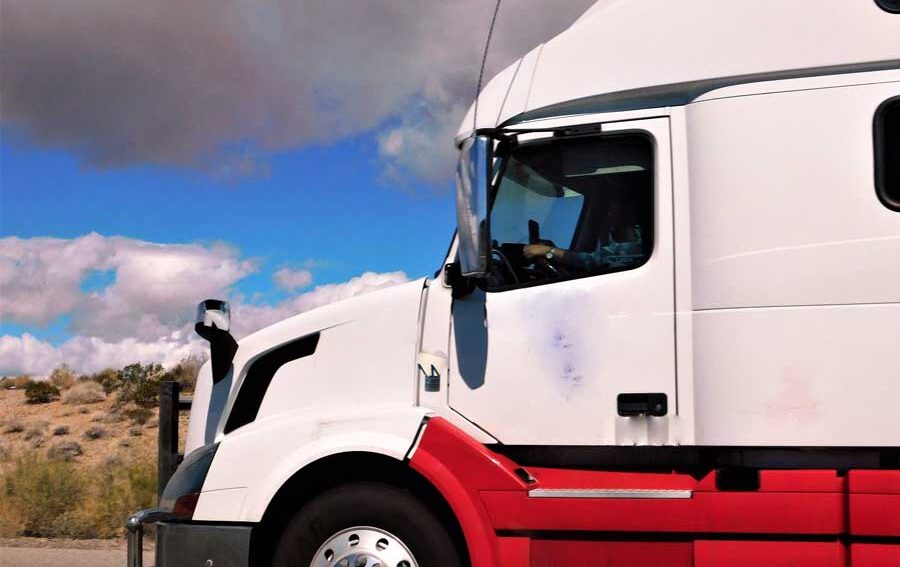
State rules matter most when the operation is genuinely intrastate. A state may adopt federal hours-of-service and ELD provisions by reference, adopt them with a different effective date, create intrastate exceptions, use different vehicle thresholds, or require another form of recordkeeping. Enforcement agency names and published guidance also vary.
Because state rules and adoption dates can change, a static list can become misleading. For each state where an intrastate driver operates, verify:
- The current version of the state’s commercial motor vehicle and hours-of-service rules
- Whether federal part 395 is incorporated by reference and the incorporation date
- Which intrastate drivers must keep RODS or electronic records
- State-specific short-haul, agricultural, utility, emergency, seasonal, or vehicle exceptions
- Device, display, transfer, supporting-document, and retention requirements
- Which agency conducts roadside enforcement and answers applicability questions
Do not assume that a federal exception automatically has identical wording or application in an intrastate rule. Likewise, compliance with an intrastate exception does not excuse a driver from the federal rule when the driver begins a covered interstate operation.
Three Common Operating Scenarios
Interstate Carrier Operating in Several States
A driver transports property from Arizona to Florida and must maintain RODS. The federal ELD rule follows the covered interstate operation through each state. The carrier uses one compliant federal ELD program rather than applying a different federal device rule at every border.
Shipment Stays in One State but Is Part of Interstate Commerce
A driver moves freight between two locations in one state, but the shipment originated outside that state or will continue to an out-of-state destination. The movement may still be interstate commerce. The carrier should analyze the shipper’s intent and the complete movement, not just the driver’s route segment.
Operation Is Exclusively Intrastate
A carrier operates only within its domicile state, and the transportation is not part of interstate trade. The carrier should apply that state’s current safety, HOS, and logging rules. FMCSA specifically advises intrastate drivers to check with state commercial motor vehicle authorities because requirements may vary.
Federal ELD Compliance Basics
If the federal rule requires an ELD, the carrier must use a device that appears on FMCSA’s registered ELD list. Providers self-certify their products; FMCSA does not endorse listed devices. Carriers should match the exact model, software version, identifier, platform, provider, and data-transfer methods and monitor the revoked-device list.
A compliant ELD must meet the technical specifications in Appendix A to subpart B of part 395. Important requirements include engine synchronization, automatic recording of specified events and vehicle data, driver accounts, record certification, required displays, and standardized roadside output. Depending on its registered configuration, the ELD supports a complete telematics or local-transfer option.
Portable ELDs, including phone- or tablet-based solutions, must be fixed-mounted during CMV operation and visible to the driver from the normal seated position under §395.22(g). For more detail, see FMCSA requirements for using an ELD on a phone.
ELD Compliance Checklist
- Classify the operation. Document why the movement is interstate or intrastate.
- Confirm regulatory coverage. Check the vehicle, carrier, driver, commodity, and operation against the applicable rules.
- Determine the logging requirement. Establish whether the driver must use RODS, time records, an ELD, or another permitted method.
- Validate exceptions. Record the facts supporting any short-haul, eight-in-30, driveaway-towaway, pre-2000, agricultural, or other exception.
- Verify the device. Confirm the exact ELD remains on FMCSA’s registered list and matches the installed configuration.
- Train drivers and support staff. Cover login, duty statuses, edits, annotations, certification, unidentified driving, inspections, transfer, diagnostics, and malfunctions.
- Carry required materials. Maintain the transfer and malfunction instruction sheets and enough blank RODS graph-grids for at least eight days.
- Protect and retain records. Retain federal ELD RODS and supporting documents for six months, maintain the required separate backup, and protect driver privacy.
- Audit the program. Review unassigned driving, missing certifications, edits, diagnostics, malfunctions, supporting documents, and state-rule changes.
ELDs support recordkeeping, but they do not replace driver and carrier responsibility for HOS compliance. Alerts are aids, not legal determinations.
What ELD Data Does and Does Not Show
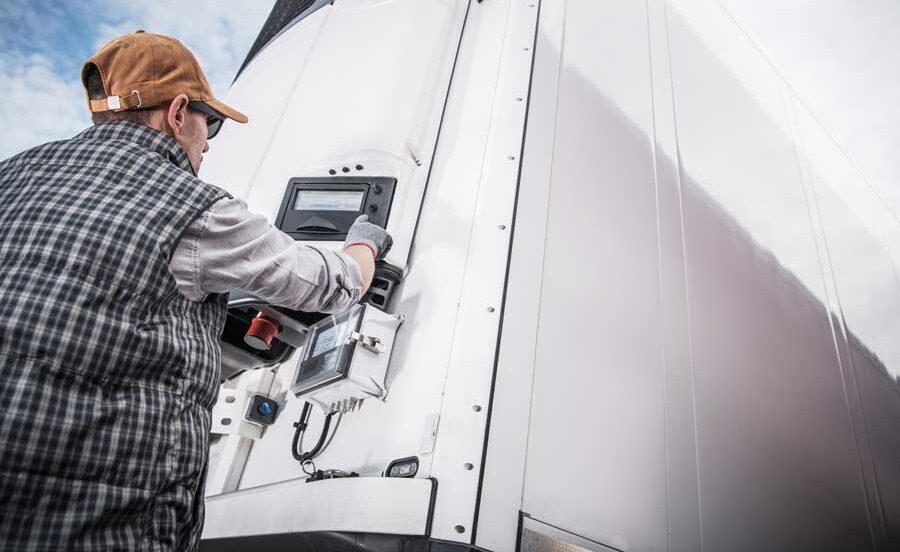
An ELD records required hours-of-service events and associated data. It can make RODS easier to prepare, review, certify, transfer, and retain. It does not automatically guarantee compliant schedules, prevent fatigue, or eliminate inaccurate entries.
Some products combine ELD functions with GPS tracking, dispatch, video, fuel, maintenance, or driver-behavior tools. Those are fleet-management features, not proof that every ELD performs the same functions. Carriers should distinguish regulatory ELD requirements from optional telematics capabilities when evaluating a system.
Keep State and Federal Requirements Current
The reliable answer to “what states require ELDs?” starts with the nature of the operation. Covered interstate drivers follow the federal ELD rule nationwide. Intrastate-only drivers must verify their state’s current rules and exceptions. Mixed operations require careful classification and procedures that can support both federal and applicable state requirements.
Maintain written applicability decisions, monitor FMCSA’s registered and revoked device lists, review state regulatory updates, and retrain personnel when rules or operations change. For an implementation review, see Geosavi’s guide to preparing for an ELD compliance audit.
Discuss ELD Compliance Tools with Geosavi
Geosavi provides registered ELD and fleet-management tools for carriers that need electronic RODS and operational visibility. Device selection does not replace an applicability review, and carriers remain responsible for applying the correct federal and state rules.
Contact Geosavi to discuss ELD configuration, installation, training, and support for your fleet.